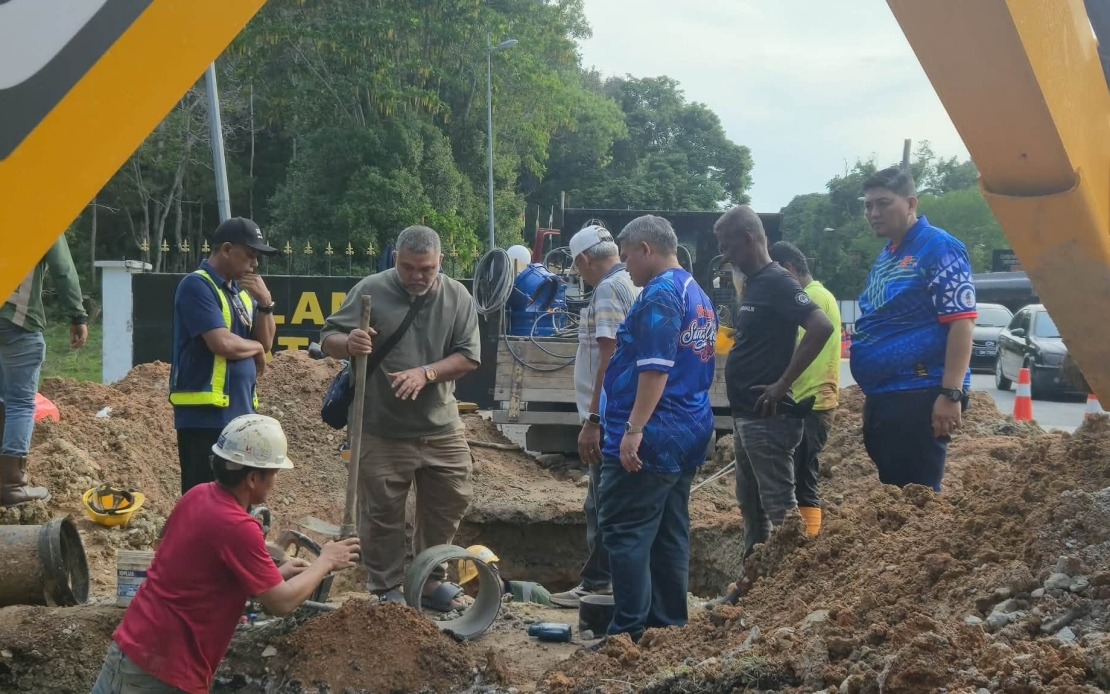
The Melaka state government has unveiled plans to construct a temporary water storage facility at Kem Terendak in Sungai Udang as part of efforts to resolve persistent water supply failures that have plagued the military installation. The proposal, championed through state water authority Syarikat Air Melaka Berhad (SAMB), represents an interim solution designed to provide relief while longer-term infrastructure improvements move forward. Officials acknowledged that the camp's water challenges stem from systemic weaknesses in the distribution network rather than isolated incidents, making immediate intervention necessary to protect the welfare of residents and personnel stationed there.
Datuk Rais Yasin, the senior executive councillor overseeing housing, local government, drainage, climate change and disaster management, articulated the state's commitment to addressing the crisis during a site visit. Rais, who also represents Sungai Udang as a state assemblyman, framed the temporary tank initiative as a pragmatic stopgap measure whilst the state awaits completion of the Development and Upgrade of the Water Reticulation System project, which carries a target completion date of April 2028. The extended timeline for this comprehensive overhaul underscores why interim measures have become essential; affected parties cannot reasonably wait years for fundamental repairs to commence.
Crucially, the viability of the temporary tank proposal hinges on securing formal approval from the Ministry of Defence, a requirement that reflects the unique jurisdictional complexity surrounding military facilities. The water infrastructure at Kem Terendak technically falls under the purview of both the Public Works Department and Mindef, creating administrative layers that must be navigated. Rais indicated that SAMB would formally submit the proposal to Mindef whilst simultaneously identifying suitable locations for the temporary installation, demonstrating that planning is already underway despite pending bureaucratic clearance.
The immediate trigger for this initiative was a catastrophic pipe rupture along Jalan Kampung Payasum in Sungai Udang that created a cascading water shortage across the camp. Initial emergency repairs were projected for completion on the evening of the announcement, but Rais cautioned that full restoration to normal supply levels would require an additional one to two days. This phased recovery timeline illustrates the severity of the damage and the complexity of restoring service to a facility serving such a large population.
The scale of the disruption is substantial. Approximately 2,000 military personnel and civilian household members within the camp perimeter have experienced the water supply interruptions over a five-day window. Additionally, five educational institutions located within the camp, including a MARA Junior Science College, have been affected, potentially disrupting academic schedules and administrative functions. The simultaneous impact on military operations, residential areas, and educational facilities demonstrates why this crisis demanded immediate political attention and executive-level intervention.
To mitigate the immediate humanitarian impact, SAMB mobilised a substantial emergency response involving the daily delivery of 25,000 gallons of water transported by a fleet of 25 tanker lorries dispatched from July 19 onwards. Despite this considerable effort, Rais candidly acknowledged that the emergency supply remained insufficient relative to actual demand from the affected population. The water container distribution programme extended to schools, ensuring that educational activities could proceed without complete disruption despite the wider infrastructure failure. This multi-pronged emergency response reflected the state government's desire to minimise inconvenience whilst pursuing longer-term solutions.
Rais issued a formal apology to all Kem Terendak residents and affected families, a gesture that carried political significance in acknowledging the state's responsibility for service delivery. He reiterated that the state government remains committed to standing by affected communities throughout the resolution process. This language reassured residents that the temporary tank proposal represented genuine commitment rather than mere rhetoric, particularly important given that the comprehensive reticulation upgrade would not arrive for several years.
The temporary tank proposal gains relevance within Malaysia's broader water security challenges, particularly in urban and semi-urban areas where aging infrastructure creates vulnerability to supply disruptions. Military installations like Kem Terendak are critical national assets requiring reliable utilities, and chronic water failures carry implications beyond mere inconvenience. Such disruptions can affect operational readiness, personnel morale, and the ability to maintain daily functions. The Melaka government's proactive stance in proposing interim solutions whilst pursuing permanent fixes offers a template for addressing similar challenges elsewhere.
Regionally, this situation reflects wider Southeast Asian infrastructure pressures, particularly in countries where rapid urbanisation and military facility expansion have outpaced utility infrastructure development. Kem Terendak's water challenges are not unique to Melaka or Malaysia, and the state's approach to bridging the gap between emergency response and long-term capital projects may offer lessons for neighbouring jurisdictions facing comparable difficulties. The emphasis on interdepartmental coordination between SAMB, local government, and federal agencies also underscores the importance of institutional cooperation in resolving infrastructure crises.
Looking forward, the success of the temporary tank proposal will depend on swift approval from Mindef and effective implementation of the installation plan. The 2028 completion target for the comprehensive reticulation upgrade remains critical; if delays occur, the temporary tank may require extended deployment or supplementation. Planning must account for the possibility that permanent fixes might slip beyond current projections, a realistic scenario given Malaysia's track record with infrastructure timelines. The state government's messaging should manage expectations appropriately while maintaining momentum toward substantive long-term improvements.

