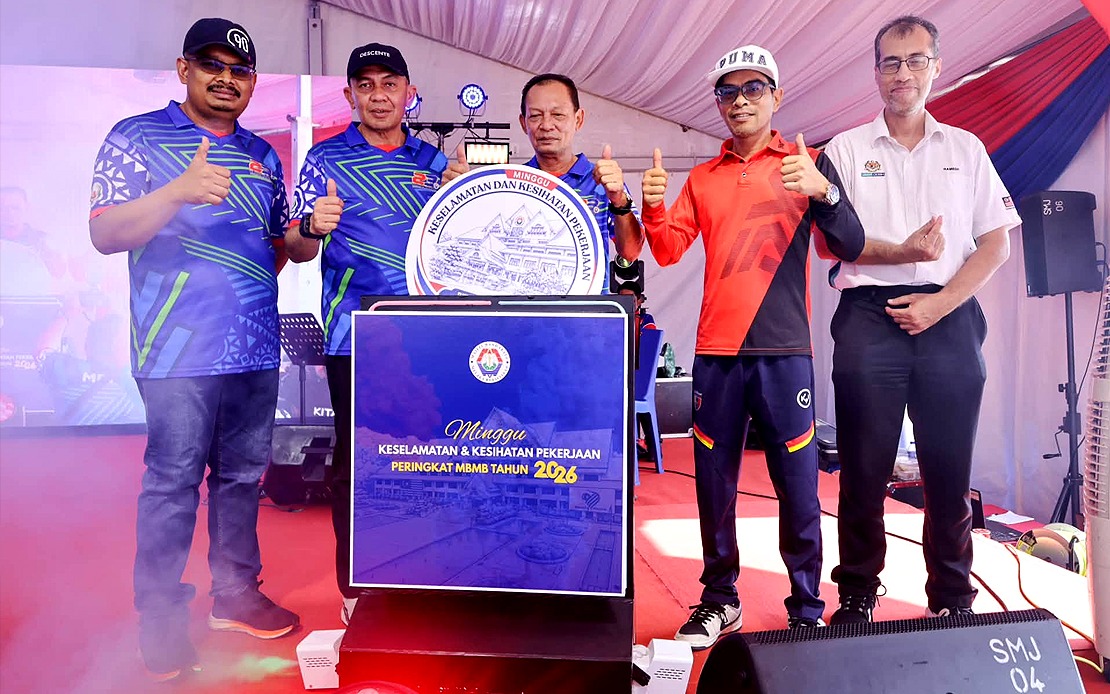
Workplace safety remains a pressing concern in Melaka as official records reveal a substantial rise in occupational incidents during the opening months of 2026. The state's Department of Occupational Safety and Health (DOSH) has confirmed that 277 accidents caused permanent or temporary disabilities across multiple industrial sectors in the first six months of the year, underscoring persistent vulnerabilities in how companies manage workplace hazards.
The toll extends beyond injuries. Three workers lost their lives during the same period—two in construction and one in manufacturing—a sobering reminder that Malaysia's economic growth comes with human cost. These fatalities highlight how safety lapses in high-risk sectors continue to claim lives despite decades of regulatory oversight. The construction industry, which drives much of the nation's infrastructure expansion, has proven particularly deadly, accounting for two of the three deaths recorded.
Ramesh Zakir Shamsul, director of Melaka DOSH, characterised the overall situation as "relatively under control" but acknowledged the need for sustained vigilance. His comment reflects a cautious optimism that isn't entirely reassuring—the sheer number of incidents suggests that control remains fragile. The framing also hints at a gap between official assessment and ground reality, a common tension in occupational safety reporting across Southeast Asia where economic pressures often outweigh enforcement priorities.
Under the Occupational Safety and Health Act 1994 (Act 514), employers face legal obligations to report every workplace accident promptly and submit to detailed investigations. Yet the persistence of these incidents raises questions about compliance. Are companies fully reporting accidents, or do unreported cases inflate the true figure? Are investigations genuinely rigorous, or do they remain perfunctory exercises? Melaka DOSH's commitment to monitoring must translate into meaningful deterrents that change employer behaviour.
The announcement came during Melaka's launch of the 2026 Occupational Safety and Health Week celebration, an annual observance organised by the Melaka Historic City Council (MBMB). State deputy senior executive councillor Datuk Zulkiflee Mohd Zin officiated the event, signalling high-level political support for the safety agenda. Yet such ceremonies risk becoming performative if not backed by substantial resources, training programmes, and enforcement mechanisms that reach frontline workers.
A critical dimension of the challenge lies in the shared responsibility model that Malaysian authorities increasingly emphasise. Ramesh Zakir stressed that DOSH cannot shoulder the burden alone—employers and local councils must equally champion occupational safety. This collaborative approach reflects international best practices but also reveals a potential weakness: diffused accountability often means diluted action. When multiple agencies share responsibility without clear hierarchies or funding structures, oversight frequently falters.
Melaka DOSH's partnership with MBMB illustrates how local government can amplify safety messaging. The council has supported workshops and ceramah (talks) aimed at building awareness among employers and workers. These grassroots efforts matter, particularly in small and medium enterprises that may lack dedicated safety personnel. However, awareness alone insufficient; workers need enforceable rights, access to safety equipment, and genuine power to refuse dangerous work without fear of retaliation.
The construction sector's particular vulnerability demands targeted intervention. Construction sites operate under compressed timelines and complex subcontracting arrangements that can obscure accountability chains. Workers, often migrant labourers with limited bargaining power, face intense pressure to meet deadlines. Without robust inspection regimes and stiff penalties for violations, the cycle of preventable deaths will persist. Malaysia's rapid urbanisation and infrastructure development mean construction activity will only intensify, making this sector's safety culture crucial to broader occupational health outcomes.
Manufacturing, which accounted for one fatality, also presents systemic challenges. Modern factories increasingly employ temporary workers and outsourced labour, fragmenting safety responsibility. Machinery hazards, chemical exposures, and repetitive strain injuries remain common, yet enforcement focuses disproportionately on large multinational corporations rather than smaller subcontractors where accidents are often underreported.
For Malaysian readers and businesses, these Melaka figures carry broader implications. As the nation competes regionally and globally, occupational safety increasingly affects investment decisions and corporate reputation. International buyers and multinational clients scrutinise supply chains for safety compliance. Companies operating in Melaka and beyond must recognise that safety investment isn't merely a regulatory checkbox—it protects human life, reduces costly downtime from accidents, and strengthens competitiveness in an era of conscious consumption.
Government initiatives must move beyond annual celebrations toward sustained, data-driven enforcement. Publishing detailed accident statistics by company, sector, and violation type would create pressure for improvement. Meaningful penalties that exceed accident-related losses would incentivise prevention. Worker compensation schemes must extend to all employees, particularly informal and migrant workers often excluded from protections.
The path forward requires acknowledging that occupational safety in Melaka, like elsewhere in Southeast Asia, remains subordinate to production targets and cost minimisation. Changing this equation demands political will to prioritise worker welfare over immediate economic gain. As 2026 progresses, sustained monitoring and aggressive enforcement will test whether Melaka DOSH's commitment translates into falling accident rates or remains aspirational rhetoric.

