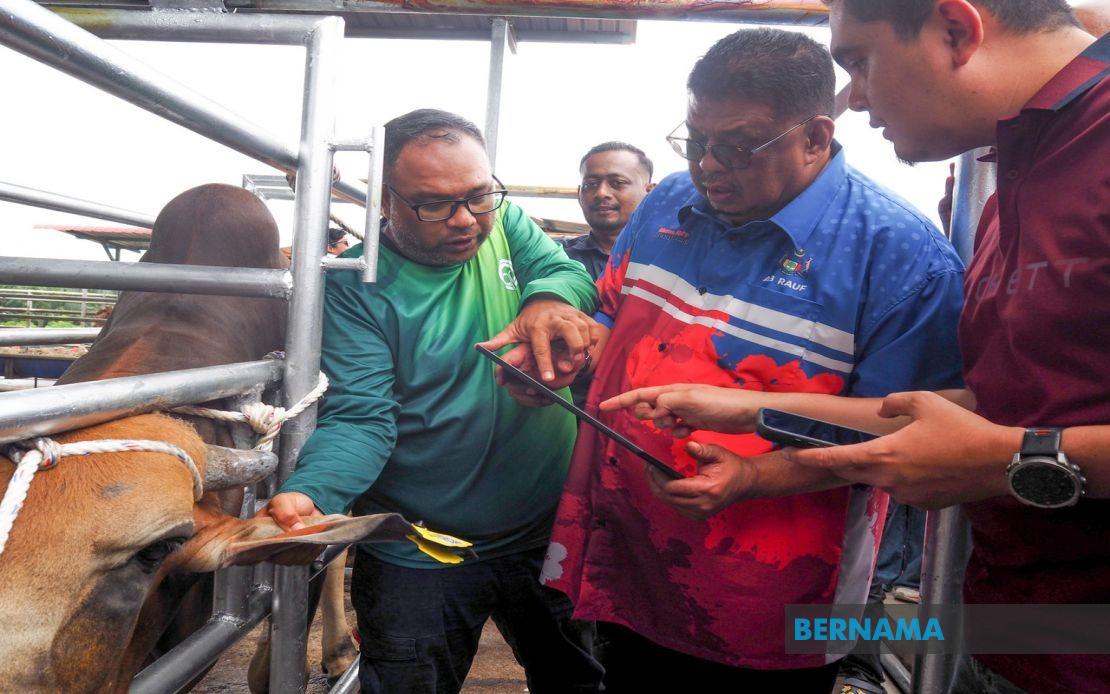
Melaka has taken a technological leap forward by deploying a QR tag identification system across its livestock population, marking a significant shift toward digitalised agricultural management in the state. The initiative, unveiled in collaboration between the Melaka state government and its Veterinary Services Department, represents Chief Minister Datuk Seri Ab Rauf Yusoh's vision to modernise the livestock sector while simultaneously addressing mounting public safety concerns. This move positions Melaka as one of the earlier Malaysian states to embrace such comprehensive digital tracking for farming communities.
At the heart of this system lies a straightforward yet effective concept: each registered animal receives a durable tag embedded with a unique QR code and identification number. Farmers and authorities alike can instantly access essential farm data—owner details, premise identification, and location information—by simply scanning the tag with a smartphone. This accessibility removes traditional bottlenecks in livestock identification and ownership verification, a critical advantage when incidents occur. The Melaka Chief Minister Department's Local Government Unit chief assistant secretary Mahathir Mustafa underscored how this approach represents a more systematic and efficient pathway toward livestock management excellence, aligning with the state's broader ambition to become a smart and livable destination.
The urgency driving this initiative stems from a troubling pattern of stray livestock incidents across Melaka. Since 2023, the state has recorded 835 accidents directly involving livestock, alongside more than 50 formal complaints about stray animals roaming public areas. These figures reveal not merely a nuisance problem but a genuine threat to road user safety and community wellbeing. When loose cattle or buffalo wander onto highways or into residential zones, the consequences can range from minor property damage to serious injuries or fatalities. Traditional methods of tracking down animal owners have proven slow and ineffective, often leaving residents frustrated and authorities scrambling for information during emergencies.
By early June this year, approximately 2,000 livestock had already received the QR tags, demonstrating steady progress toward the state's ultimate goal. Melaka authorities estimate that the registered cattle and buffalo population throughout the state exceeds 32,000 animals, meaning this initial cohort represents just six percent of the targeted total. The state government has committed to gradually expanding deployment across all eligible livestock, creating a comprehensive registry that fundamentally transforms how the sector is monitored and managed. This phased approach allows breeders to adapt to the new system without overwhelming either farms or administrative resources.
One particularly innovative aspect of the QR tag framework is its permanence and transferability. Unlike temporary identification methods, each tag serves as the animal's official identity throughout its entire lifespan. Should ownership transfer through sale or other transaction, the physical tag remains unchanged—only the digital records in the eVetPermit Malaysia system require updating. This design prevents the administrative confusion and gaps that plague manual record-keeping systems and ensures that regulatory bodies maintain accurate, current ownership information regardless of how many times an animal changes hands. Such clarity proves invaluable during disease investigations, enforcement actions, or accident scenes.
Beyond immediate safety benefits, the QR tag system strengthens accountability among livestock breeders while simultaneously elevating the reputation of Melaka's agricultural sector. Farmers have responded positively to the initiative, recognising that improved tracking ultimately protects their own interests by documenting legitimate ownership and reducing theft or misidentification disputes. When the broader public perceives that livestock operators maintain professional standards and control over their animals, public confidence in the industry rises. This psychological and practical dimension of the programme addresses not only technical livestock management but also the social contract between farmers and their communities.
The disease control and movement monitoring capabilities built into the system represent another significant advantage for veterinary authorities. In an era where livestock diseases can spread rapidly across borders and regions, the ability to track animal movements in near real-time offers enormous public health value. If disease outbreaks occur, veterinary teams can immediately identify potentially exposed animals and their locations through the QR system, enabling swift quarantine and control measures. This capacity becomes increasingly important as Malaysia integrates further into regional trade networks, where imported or exported livestock must meet stringent health certification requirements.
Financial incentives have been carefully structured to maximise breeder participation. Until the end of 2024, Melaka's government absorbs the entire cost of tag installation at RM6.50 per animal, essentially removing financial barriers to adoption. Farmers need only register their livestock with the Melaka Veterinary Services Department to receive tags at no charge. This temporary subsidy represents smart policy design—by normalising the technology now at government expense, authorities build habits and infrastructure that persist even after subsidies end. From 2027 onwards, breeders will bear replacement costs at RM5 per head, a modest fee relative to overall farming expenses and well justified by the operational benefits.
The successful implementation of this system hinges on genuine cooperation between three key institutional players: the Local Government Unit managing the registration framework, the Veterinary Services Department handling technical oversight, and local authorities responsible for field enforcement. Mahathir Mustafa explicitly identified this inter-agency collaboration as fundamental to achieving stated objectives. In practice, such coordination often presents challenges—different departments operate under separate budgets, hierarchies, and performance incentives. Melaka's willingness to integrate these systems suggests forward-thinking leadership willing to overcome traditional silos in favour of comprehensive solutions.
From a broader Southeast Asian perspective, Melaka's QR tag initiative offers a replicable model for other states and countries wrestling with similar livestock management challenges. As urbanisation accelerates across the region and farming communities find themselves increasingly adjacent to urban populations, the frequency of stray animal incidents will likely rise unless proactive systems are deployed. Nations with larger livestock populations—such as Indonesia and Thailand—could potentially adapt Malaysia's approach to their own circumstances, scaled according to local needs and resources. The technology itself is neither sophisticated nor expensive, making it accessible to developing agricultural systems throughout the region.
Looking ahead, Melaka's commitment to technology-driven governance extends well beyond livestock management. The state government has signalled its intention to expand digital tools across multiple sectors, seeking efficiency, transparency, and improved service delivery throughout the public sphere. This livestock initiative serves as both a practical solution to a genuine problem and a symbolic demonstration of willingness to modernise. As Malaysians increasingly expect government services to leverage available technology, projects like the QR tag system establish benchmarks that other state governments may find difficult to ignore. The question is no longer whether such systems are feasible, but rather how rapidly they can be rolled out.

