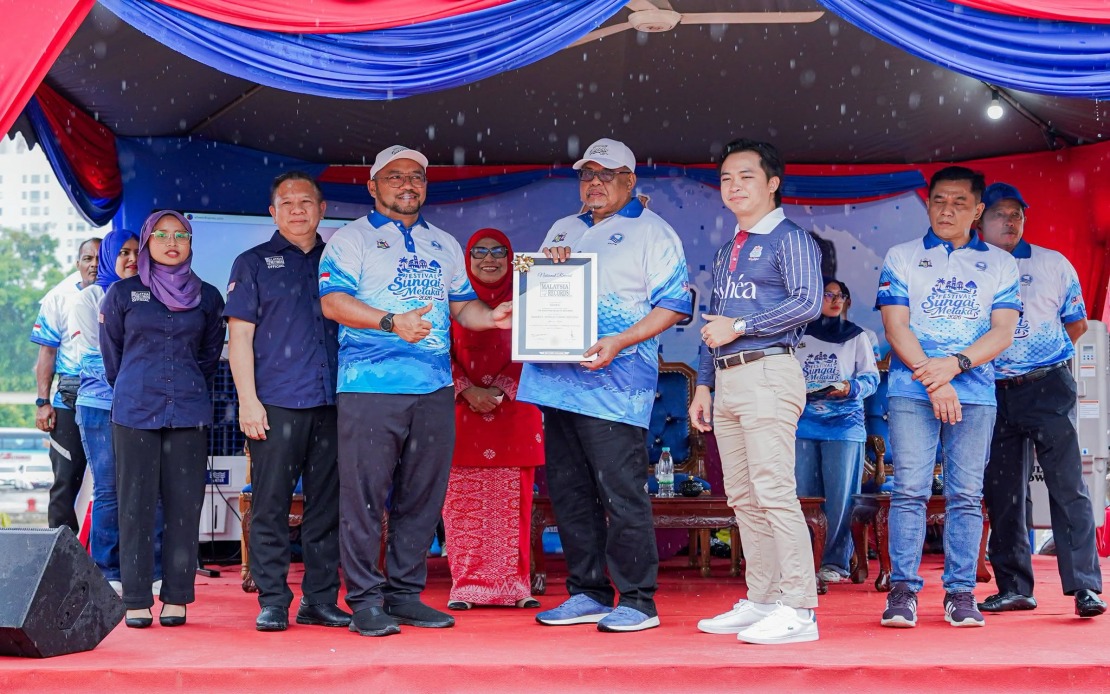
Melaka's tourism sector has reached a significant milestone, securing four Malaysia Book of Records (MBOR) recognitions within a three-year span—a pace that underscores the state government's determination to position itself as a destination of choice for regional and international visitors. The latest achievement reflects a broader strategy to harness creativity and innovation in attracting people to the historic port state, moving beyond merely celebrating past glories to forging a contemporary tourism narrative.
Chief Minister Ab Rauf Yusoh, speaking at the MBOR Certificate Presentation and Prize Giving Ceremony held at Dataran Pengkalan Rama, stressed that these accolades must serve as catalysts rather than trophies. His remarks signal a frustration with tourism achievements that remain superficial—framed certificates gathering dust while underlying economic benefits plateau. Instead, he envisioned these records as launching pads for more ambitious projects that can genuinely extend visitor stays and circulate spending throughout Melaka's economy, benefiting hawkers, hotels, transport operators, and artisans.
The state's approach to tourism development extends beyond marquee attractions to grassroots community engagement. The 17th Sungai Melaka Festival, which showcased the latest MBOR recognition, exemplifies this philosophy. With over 30 programmes distributed across Melaka's three districts, the festival functions not merely as a tourist spectacle but as a vehicle for community activation along the river that once defined the sultanate's maritime prosperity. By reconnecting residents with the Sungai Melaka waterfront through diverse activities, the state government aims to recreate organic interest that can sustain long-term visitation patterns.
The freshwater fishing competition, a flagship element of this year's festival, demonstrated unexpected commercial potential. Drawing 1,123 anglers from across Malaysia and beyond, the event generated substantial participation despite early morning schedules and physical demands. The competition distributed RM30,000 in prize money, with the winner claiming RM10,000—a purse substantial enough to motivate serious competitors and signal the state's commitment to professionalising what could otherwise remain a casual recreational activity.
For Southeast Asian observers, Melaka's strategy offers instructive lessons about tourism diversification. Rather than relying solely on heritage sites and architectural remnants, the state has recognized that contemporary tourism thrives on participatory experiences, competitive events, and community-centred attractions. The fishing competition's unexpected success suggests untapped niches—cultural competitions, culinary challenges, outdoor sports—that could generate visitor arrivals without requiring massive infrastructure investment.
The involvement of the Melaka River and Beach Development Corporation (PPSPM), represented by chief executive officer Shaharul Azuar Idris, indicates sustained institutional focus on waterfront revitalization. This contrasts sharply with many Malaysian cities where waterfront rehabilitation remains episodic or incomplete. By embedding the MBOR achievements within an institutional framework designed specifically for river and coastal management, Melaka demonstrates how recognition can translate into operational commitments rather than remain symbolic.
The scale of the fishing competition offers particularly relevant insights for Malaysian tourism policy. The event attracted participants willing to wake before dawn and travel considerable distances—indicating genuine enthusiasm rather than artificially stimulated attendance. This organic appeal suggests that future tourism development in Melaka could follow similar patterns, identifying existing recreational cultures and scaling them through strategic investment in prizes, infrastructure, and marketing. The state government appears to have discovered that authenticity in tourism attraction often surpasses manufactured spectacle.
Expanding such competitions to broader scales, as the Chief Minister indicated, would require careful planning. Prize pools would need to grow proportionally to maintain competitive appeal while managing budget constraints. Marketing to specialist communities—fishing enthusiasts, nature lovers, competitive gamers—would demand targeted digital campaigns and partnerships with recreation-focused media. Yet the foundation already exists: real enthusiasm from real participants, suggesting sustainable commercial potential.
Melaka's accumulation of four MBOR recognitions within three years also reflects the state's willingness to pursue niche records rather than competing solely in overcrowded categories. This strategy—securing recognition for specific achievements rather than seeking conventional superlatives—allows smaller states to gain international attention without requiring economy-of-scale advantages possessed by larger entities. Other Malaysian states and Southeast Asian destinations could replicate this approach, identifying unique cultural assets or contemporary activities that merit formal recognition.
The economic implications for Melaka extend beyond tourism receipts. Record-holding status attracts media coverage, provides marketing narratives, and generates repeat visitation from people motivated by curiosity or competitive ambition. These secondary effects—journalism, word-of-mouth promotion, specialist tourism packages—often exceed the primary event's economic impact. A state achieving multiple records becomes identified with innovation and quality, reshaping its brand positioning.
However, sustaining this momentum requires more than ceremonial recognition. The Chief Minister's emphasis on transforming records into actionable tourism products reflects awareness that MBOR achievements represent means, not ends. Subsequent programming must leverage the initial publicity and credibility gained through record recognition, converting one-time visitors into repeat customers and generating secondary spending through accommodation, dining, and commercial activities.
Looking forward, Melaka's trajectory suggests that mid-sized tourism destinations can compete effectively through strategic innovation and community engagement rather than massive capital expenditure. The fishing competition model—leveraging existing cultural practices, professionalizing through structured competition, and distributing meaningful prize money—offers a template potentially applicable across Southeast Asia. As tourism increasingly emphasizes authentic experiences over standardized attractions, Melaka's approach of celebrating and amplifying grassroots interests may prove more durable than conventional heritage-focused strategies that can appear dated to younger visitors seeking interactive, participatory experiences.

