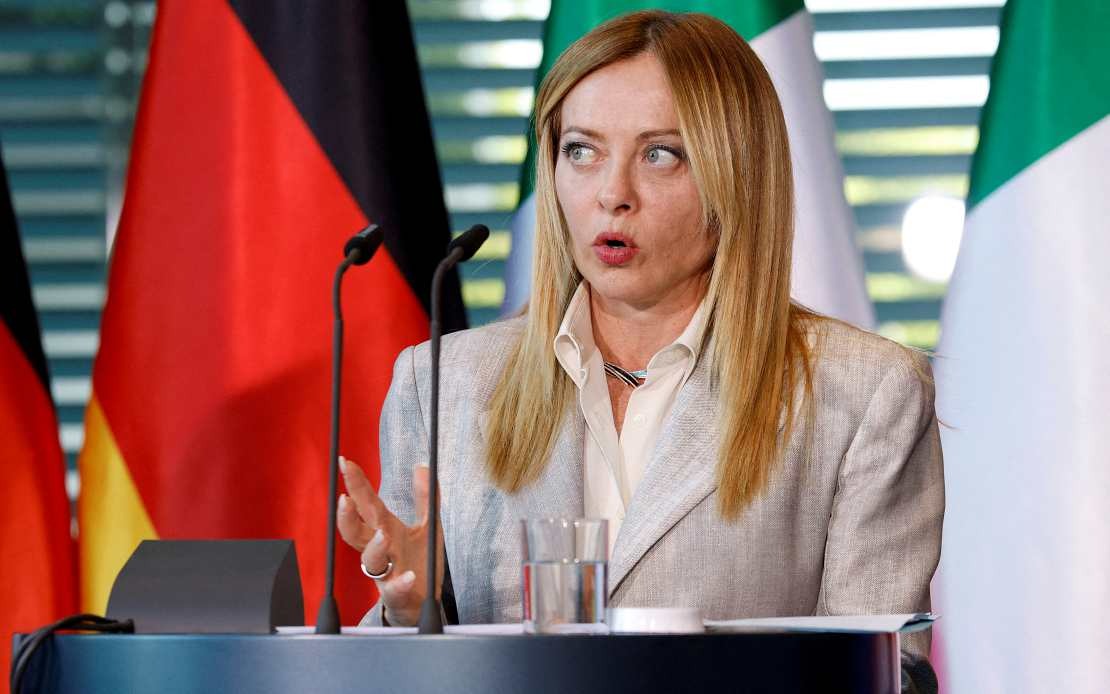
Italian Prime Minister Giorgia Meloni has revived a controversial proposal to create migrant processing and return centres outside European Union territory, positioning the initiative as a comprehensive response to irregular migration flows challenging multiple member states. The proposal, which will feature prominently at an upcoming informal gathering of EU interior ministers, reflects mounting pressure from frontline nations struggling with asylum applications and border security.
Meloni's vision centres on establishing dedicated facilities in third countries where migrants would be processed, their asylum claims evaluated, and, where deemed necessary, arranged for deportation. The Italian leader envisions these hubs becoming operational as early as 2027, with negotiations on bilateral agreements expected to conclude by year's end. This approach deliberately mirrors Rome's existing arrangement with Albania, where Italy has been directing irregular arrivals for preliminary processing since 2024. Interior Minister Matteo Piantedosi will represent Italy at the informal online meeting, underscoring the government's commitment to advancing discussions.
The financial architecture supporting these external centres would rely substantially on European Union funding, transforming what might otherwise remain a bilateral Italian initiative into a collective European endeavour. This funding mechanism proves crucial for convincing reluctant member states and ensuring sustained operations. Rome's calculation that Brussels might shoulder the burden has attracted broader diplomatic support, particularly from Northern European countries grappling with their own migration pressures.
Danish Prime Minister Mette Frederiksen has emerged as a key ally, endorsing Italy's approach as pragmatic policy. Beyond Copenhagen's backing, twenty-two EU member states collectively petitioned European Commission President Ursula von der Leyen and European Council President Antonio Costa, specifically requesting that leadership seriously contemplate enhanced border protection mechanisms targeting undocumented arrivals. This unprecedented coalition signals that migration management has transcended traditional left-right political divides, becoming instead a unifying concern across ideologically diverse governments.
Rwanda and Uganda have progressed furthest in preliminary negotiations with European counterparts, positioning themselves as potential host nations for these controversial facilities. Denmark, Austria, the Netherlands, and Germany constitute the vanguard of nations actively promoting the concept, suggesting that traditionally generous welfare states now view external processing as compatible with their broader policy frameworks. Greece, itself a migration crisis frontline state, has similarly committed to launching parallel experiments by 2027, effectively creating a coordinated European approach to extraterritorial processing.
Italy's existing experience with foreign-based migration operations provides both a template and cautionary lessons. Currently, Rome operates migrant centres beyond its borders under exclusive Italian sovereignty, tasked with processing asylum petitions and executing deportations of undocumented foreigners. However, this arrangement has encountered persistent obstacles from the domestic judiciary. Italian courts have repeatedly intervened to prohibit prolonged migrant detention within these facilities, mandating the return of individuals to Italian territory where fuller legal protections apply. These judicial decisions have effectively constrained executive branch capacity to expedite border procedures for nationals from countries officially designated as secure.
Statistical outcomes from Italy's Albanian experiment starkly illustrate the gap between administrative expectations and practical results. Between May 2025 and mid-July 2026, Albania received 685 migrant transfers, yet fewer than 15 per cent of these individuals were ultimately repatriated. This underwhelming expulsion rate reflects multiple complications: limited bilateral repatriation agreements, humanitarian considerations constraining forced removals, and the broader reality that many migrants possess legitimate asylum claims or face protection circumstances that international law recognises. The persistent problem of migrants returning to Italian jurisdiction following release from Albanian centres complicates cost-benefit calculations.
Cost considerations underscore the fiscal dimensions of this debate. Italy's Gjader centre in Albania incurred approximately €50 million in operational expenses during 2025 alone—a staggering sum for a facility processing fewer than seven hundred individuals annually. Scaling this model across multiple third countries with anticipated higher throughput would demand substantial financial commitments, lending credibility to Italy's insistence on EU-wide funding. These expenditures must be evaluated against social welfare and integration costs in member states themselves, which European governments increasingly resist.
The Ceuta crisis of late July crystallised the political urgency underpinning Meloni's proposals. Spain's North African enclave experienced an extraordinary surge in migrant arrivals originating from neighbouring Morocco, with Mayor-President Juan Jesus Vivas reporting approximately 60,000 individuals entering Ceuta within a single twenty-four-hour period. Given that Ceuta's total population comprises merely 85,000 residents, this inflow represented a demographic shock of unprecedented proportions. Spain responded by mobilising supplementary police units, Civil Guard contingents, and military personnel to reinforce border defences and discourage ongoing irregular crossings.
The Ceuta incident crystallised arguments that unilateral border reinforcement proves insufficient without corresponding European burden-sharing mechanisms. Meloni's external hub proposal frames itself as offering precisely such burden distribution, allowing migrants to be processed, assessed, and potentially redirected before arrival in EU territory. From this perspective, the initiative addresses not merely Italian or Spanish concerns but represents a structural answer to irregular migration patterns affecting the entire bloc.
Critiques of the proposal emphasise sovereignty complications and human rights considerations. Establishing processing facilities beyond EU jurisdiction introduces enforcement challenges, as third-country governments might prioritise immigration control over procedural fairness. Whether Rwanda, Uganda, or other potential hosts would provide adequate legal safeguards and humane conditions remains contentious. Additionally, the model assumes third countries will cooperate indefinitely with European migration management objectives—an assumption bearing geopolitical risks, particularly as African nations increasingly assert negotiating leverage regarding migration agreements.
The proposal simultaneously reflects European frustration with international migration governance frameworks perceived as inadequate. The 1951 Geneva Refugee Convention and subsequent protocols establish rights for asylum seekers that external processing hubs could theoretically circumvent through technicalities of jurisdiction and location. Whether this represents clever institutional innovation or dangerous legal manoeuvring depends substantially on implementation specifics and safeguard robustness. For Malaysia and Southeast Asian nations observing European developments, the Meloni initiative offers instructive lessons regarding managing irregular migration pressures while balancing humanitarian obligations and national security considerations.

