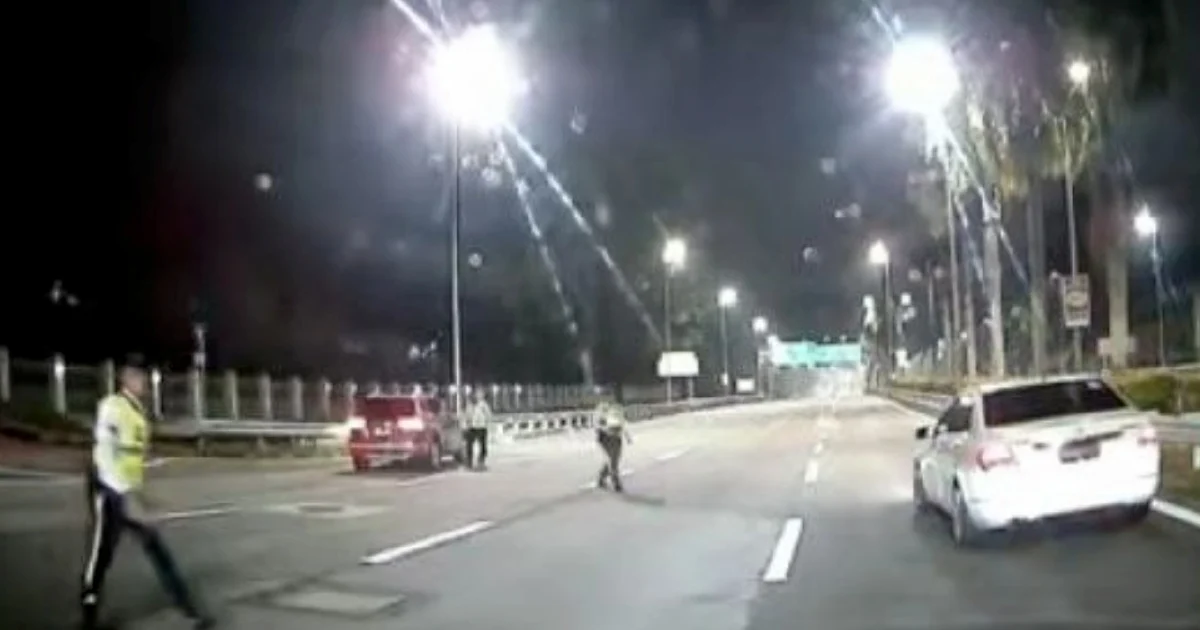
A 20-year-old motorist has been taken into custody following a dramatic collision at a police roadblock on Sprint Expressway, an incident that rapidly gained attention on social media platforms. The driver was operating a white Mercedes when the vehicle struck the checkpoint positioned near the National Institute of Public Administration (Intan), after which he continued driving at high speed along the expressway rather than stopping for police.
The incident represents a concerning case of deliberate non-compliance with law enforcement, particularly given the potential risks posed to other road users. Rather than remaining at the scene or submitting to police inspection, the suspect's decision to accelerate and flee created a dangerous situation across a major thoroughfare that handles substantial daily traffic volumes. The nature of the breach suggests either panic response or an intentional disregard for legal authority, both outcomes that warrant thorough investigation.
The Sprint Expressway, a key north-south route serving the Klang Valley region, regularly accommodates commuters, commercial vehicles, and travellers heading toward or away from the federal territories and surrounding states. Incidents of this nature disrupt traffic flow and create hazardous conditions for innocent motorists who may not anticipate sudden vehicular manoeuvres or police activity ahead. The location near Intan, an important government institution involved in public administration training, places the incident in an area of significant administrative and institutional importance.
The viral nature of the incident on social media reflects broader public interest in road safety enforcement and police operations. Malaysian internet users frequently share content related to traffic incidents, police actions, and dramatic roadside events, often sparking wider conversations about driving discipline and law enforcement effectiveness. The circulation of footage or accounts of this particular incident demonstrates how quickly such events gain public visibility in the digital age, potentially influencing public perception of both traffic conditions and police capability.
Police roadblocks serve multiple enforcement functions, including checking vehicle documentation, investigating specific crimes, managing traffic safety, and conducting targeted operations. When drivers breach these checkpoints, whether accidentally or deliberately, it undermines the operational integrity of these enforcement mechanisms and potentially impedes legitimate police objectives. The suspect's actions therefore carry implications beyond the immediate incident, potentially affecting how future roadblocks operate and how resources are allocated to traffic enforcement.
The detention of the 20-year-old to facilitate investigations follows standard procedural protocols when individuals are suspected of criminal conduct or traffic violations of sufficient severity. During this investigative period, authorities will seek to establish the circumstances surrounding both the initial collision and the subsequent flight, including potential mechanical failure, driver incapacity, outstanding warrants, or intentional behaviour. Understanding motivation becomes particularly important in determining appropriate charges and assessing whether this represents an isolated incident or part of a pattern of behaviour.
Such incidents occur periodically across Malaysia's expressway network and urban road systems, though those resulting in police roadblock breaches remain relatively uncommon. The combination of property damage, fleeing from police, and the use of a motor vehicle in a manner potentially endangering other road users creates multiple potential charges depending on jurisdictional factors and prosecutorial assessment. These might range from negligent driving to obstructing police, depending on evidence gathered during investigation.
For ordinary motorists, roadblock encounters are routine and require only cooperation with police requests for documentation and vehicle inspection. The overwhelming majority of drivers comply without incident, making cases where individuals elect to breach checkpoints noteworthy from a law enforcement perspective. Such compliance demonstrates the effectiveness of existing traffic culture and respect for authority in most situations, though each breach incident reminds authorities of the necessity for continued enforcement efforts.
The incident also raises practical questions about roadblock design and police safety during checkpoint operations. Officers manning roadblocks face inherent risks, particularly when dealing with vehicles that fail to slow appropriately or comply with hand signals. Equipment and positioning considerations become relevant when evaluating how to manage situations where drivers do not respond as anticipated to checkpoint presence.
As investigations progress, the police will likely release additional details regarding charges, circumstances, and the suspect's background. The outcome of this case may contribute to broader discussions about traffic enforcement strategy, driver behaviour, and the effectiveness of current approaches to compelling motorist compliance at checkpoints. Meanwhile, the incident serves as a reminder to the driving public that breaching police roadblocks carries serious legal consequences alongside the safety risks involved.

