Putrajaya transformed into a sea of patriotic fervour on August 31 as tens of thousands of Malaysians congregated at Dataran Putrajaya to commemorate the nation's 69th National Day. Citizens spanning diverse ages, ethnicities, and backgrounds converged along the parade route, their collective enthusiasm underscoring the enduring resonance of Malaysia's independence narrative. The festivities, anchored by the theme "Malaysia MADANI: Kesejahteraan Dinikmati" (Malaysia MADANI: Shared Prosperity), emphasised unity and inclusive development—core pillars of the current administration's governance philosophy.
The federal capital's selection as the primary venue for national-level celebrations continues a well-established pattern. Putrajaya has become the preferred ceremonial location for this occasion, having hosted the main festivities across seven previous iterations: 2003, 2005, 2018, 2019, 2023, 2024, and 2025. This concentration reflects the city's role as Malaysia's administrative heart and its symbolic importance in representing national governance and state authority. The return to Dataran Putrajaya each year reinforces the site's position as the nation's paramount civic gathering space, serving as a physical embodiment of Malaysian statehood.
Proceedings commenced with considerable pomp when Prime Minister Datuk Seri Anwar Ibrahim and his spouse, Datuk Seri Dr Wan Azizah Wan Ismail, arrived at the ceremonial stage at 7.53 am. Their presence was marked by the ceremonial rendition of "Hormat Perdana," establishing the formal tenor for the day's events. The early arrival of the Prime Minister underscored the high-level political commitment to the occasion and set expectations for subsequent ceremonies that would follow.
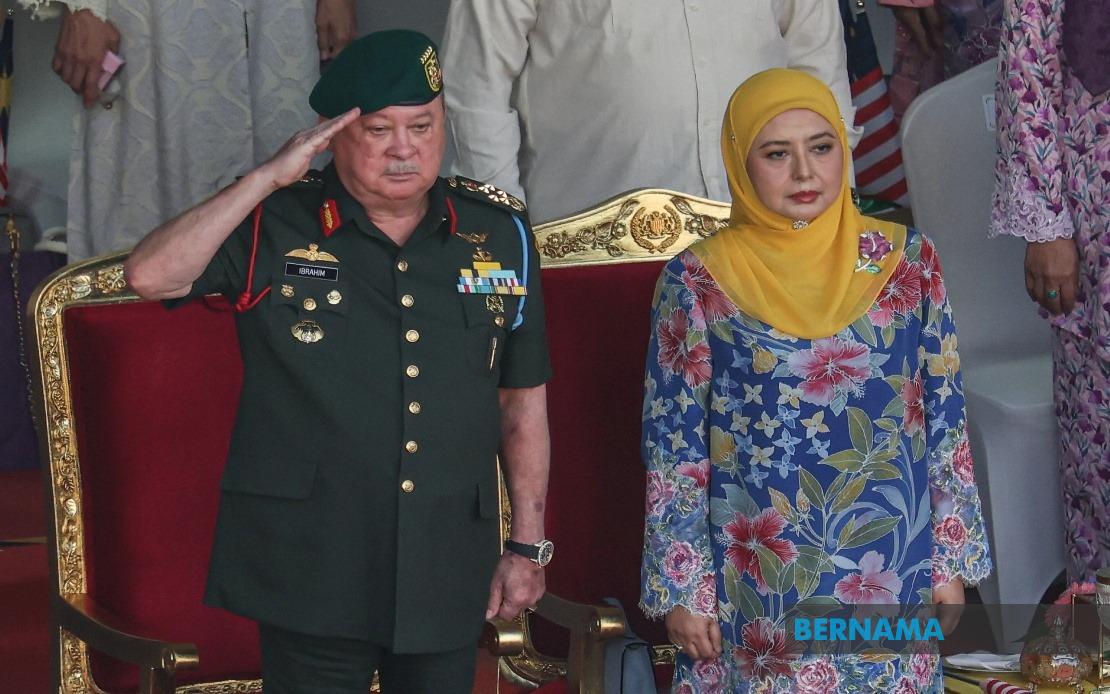
The centrepiece of the morning came when Their Majesties Sultan Ibrahim and Raja Zarith Sofiah made their entrance at 8 am, precipitating a moment of national significance. The arrival of the constitutional monarchs, who serve as paramount symbols of Malaysian sovereignty and unity, commanded the rapt attention of assembled crowds and represented a pivotal juncture in the celebration's progression. Their attendance validated the ceremonial weight of the occasion and reinforced the constitutional monarchy's continued centrality to Malaysian national identity.
Aerial pageantry underscored the grandeur of the moment as five military helicopters executed a coordinated flypast bearing the Jalur Gemilang flag across Dataran Putrajaya skies. This dramatic manoeuvre, synchronised with the national anthem Negaraku and the royal salute "Hormat Diraja," created an audiovisual tableau that merged martial precision with symbolic patriotism. Such displays serve multiple functions: they demonstrate military capability, honour the monarchy, and create memorable imagery that reinforces national pride among spectators and television audiences alike.
The gathering included Malaysia's highest echelons of political leadership and diplomatic representation. Deputy Prime Minister Datuk Seri Dr Ahmad Zahid Hamidi stood alongside numerous Cabinet-level officials, including Communications Minister Datuk Seri Fahmi Fadzil, who chairs the central organising committee overseeing both National Day and Malaysia Day commemorations for 2026. The presence of international diplomats and foreign delegations added an external dimension to the proceedings, projecting Malaysia's standing and celebrating its place within the global community.
The formal ceremony proceeded with traditional elements that have become hallmarks of National Day observance in Malaysia. The national anthem Negaraku was sung collectively, followed by the hoisting of the Jalur Gemilang accompanied by a ceremonial 14-gun salute—each volley representing one of Malaysia's 14 constituent states. The 41st Battery of the Royal Artillery Regiment (Ceremonial), under Major Hafizan Mat Ghani's command, executed this protocol with military precision, lending solemnity and formal weight to the flag-raising ritual.
A particularly significant moment arrived with the recitation of the Rukun Negara, Malaysia's national philosophy enshrining principles of belief in God, loyalty to nation, upholding the Constitution, respect for rule of law, and mutual courtesy and morality. Led by Malaysian Fire and Rescue Department Deputy Commissioner Datuk Abdul Razak Muda, this recitation was delivered collectively by 69 members of the fire and rescue service alongside sign language interpreter Nur Alyanatasha, ensuring accessibility for citizens with hearing impairments. This inclusive approach reflected contemporary understanding of civic participation and demonstrated commitment to ensuring that national ceremonies remain genuinely representative of Malaysia's diverse population.
The emotional crescendo of the morning arrived with the traditional sevenfold declaration of "Merdeka"—the Malay word meaning independence—which resonated across Dataran Putrajaya following the Rukun Negara recitation. This moment, where thousands of citizens simultaneously raised miniature flags and chorused the proclamation, epitomised the event's fundamental purpose: channelling collective pride in national independence and sovereignty. The repetition of "Merdeka" seven times carries historical resonance, commemorating the original independence declaration in 1957 while reinforcing the principle that independence remains an ongoing commitment rather than a historical artefact.
The Malaysia MADANI theme guiding this year's celebrations carries particular weight within Malaysia's contemporary political context. The concept emphasises inclusive prosperity distributed across all segments of society, addressing long-standing national conversations about equity, economic opportunity, and social cohesion. By positioning shared wellbeing as central to independence celebrations, organisers attempted to connect historical independence narratives with present-day governance priorities, suggesting that true freedom encompasses not merely political sovereignty but also substantive material security and social dignity for all citizens.
For Malaysian observers and Southeast Asian neighbours, the Dataran Putrajaya gathering reinforced Malaysia's institutional stability and the continued vitality of its civic traditions. The orderly assembly of tens of thousands, the participation of constitutional leadership, and the interweaving of military, civilian, and diplomatic elements demonstrated the operational capacity of the Malaysian state and the persistent resonance of national identity narratives. In a regional context marked by varying degrees of political fragmentation and institutional strain, Malaysia's smooth execution of large-scale civic ceremonies speaks to certain strengths in its governance infrastructure and civil society engagement.
The choice of Putrajaya as the recurring venue also carries implicit messages about federal authority and the projection of state power. The administrative capital, purpose-built during the 1990s, represents Malaysia's modernisation trajectory and its ambitions as a developed nation. Holding National Day celebrations in this planned urban centre, rather than in cities with deeper historical associations with independence movements, subtly reshapes the commemoration's narrative orientation—directing focus toward contemporary state capacity and administrative efficiency rather than historical independence struggles.
As Malaysia continues its democratic and developmental trajectory, these annual National Day observances serve multiple functions simultaneously: they constitute ceremonial reaffirmation of collective identity, demonstrate governmental legitimacy through organised pageantry, provide venues for political messaging (such as the Malaysia MADANI emphasis), and create shared memories binding diverse citizens into a coherent national community. The August 31 gathering at Dataran Putrajaya exemplified this multivalent character, blending military spectacle, constitutional symbolism, popular patriotism, and political messaging into a comprehensive statement about Malaysian nationhood in 2026.

