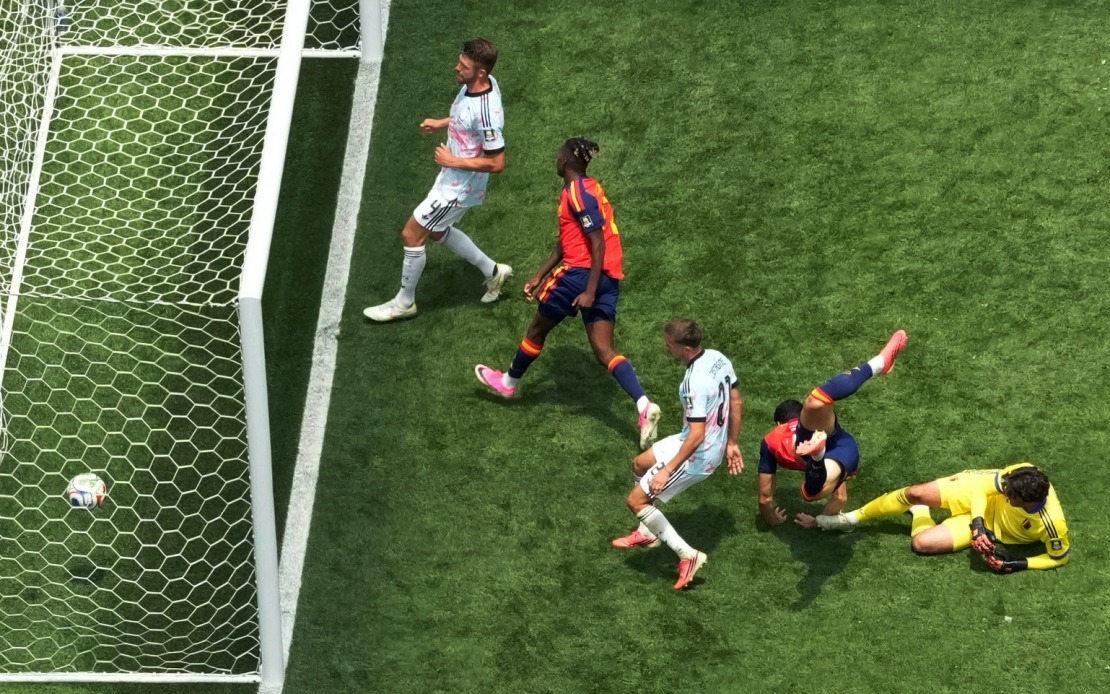
Spain progressed to the semi-finals of the FIFA World Cup 2026 after securing a hard-fought 2-1 victory over Belgium at Los Angeles Stadium in California on Friday, marking their return to the tournament's final four for the first time since 2010. The decisive moment came courtesy of midfielder Mikel Merino, who capitalised on a goalkeeping error in the 88th minute to send La Roja through to face France in Dallas on July 15. The outcome continues an impressive tournament run for the Spanish side, who have now overcome both Portugal and Belgium in knockout matches through the contributions of their bench players.
Spain controlled the opening phases with sustained possession and attacking intent, creating early openings that suggested a comfortable passage through. The attacking prowess was evident in the 21st minute when teenage sensation Lamine Yamal, just eighteen years old, produced a curling attempt that narrowly missed the left post, demonstrating the youth and vibrancy Luis de la Fuente has instilled in the Spanish setup. Such early promise indicated that the 2010 champions possessed sufficient quality to dismantle a Belgium side that, while still competitive, has been showing signs of decline in recent international competitions.
Spain broke the deadlock in the 30th minute when midfielder Fabian Ruiz capitalised on a rebound after Belgian goalkeeper Thibaut Courtois, at thirty-four years old, had produced a crucial save to deny Dani Olmo's winger effort. The save itself underscored the veteran Belgian custodian's continued importance to his nation's defensive resilience, though Spain's ability to follow up and convert the loose ball demonstrated their clinical finishing in dangerous areas. Courtois subsequently denied Spain a second goal minutes later with an impressive low dive to repel a Yamal free-kick destined for the bottom corner, showcasing his shot-stopping abilities despite his advancing age.
Belgium, coached by French tactician Rudi Garcia, struck unexpectedly to level proceedings in the 41st minute when full-back Timothy Castagne delivered an inviting cross from the right flank. Forward Charles De Ketelaere rose above the Spanish defence to power a downward header past goalkeeper Unai Simon, representing the first goal conceded by Spain throughout the entire tournament to that point. This breakthrough reinvigorated the Belgian side and provided genuine hope for an upset, momentarily shifting momentum away from the Spanish possession-based approach.
The second half unfolded with Belgium creating genuine opportunities to seize control, particularly when full-back Maxim De Cuyper narrowly sent a ten-minute effort wide of target. Spain's defence appeared vulnerable at various moments, suggesting that overcoming Belgium would require more than their controlled midfield dominance. However, Courtois produced further heroics in quick succession, denying both Yamal and forward Mikel Oyarzabal with back-to-back saves within a minute, temporarily preserving parity and keeping Belgium in contention for an improbable victory.
The pivotal turning point arrived when Courtois departed the field in the 71st minute due to an apparent leg injury, with Manchester United goalkeeper Senne Lammens introduced as his replacement. This substitution proved fatally costly for the Belgian side, as Lammens immediately struggled to adapt to the intensity of the encounter. In the 88th minute, centre-back Pau Cubarsi unleashed a long-range effort that the substitute keeper fumbled, allowing Merino to pounce with predatory instinct and convert the rebound into an empty net, securing Spain's passage to the semi-finals.
Merino's decisive contribution represented his second match-winning intervention in the knockout stages, having previously scored the solitary goal against Portugal last Monday from a substitute's berth. This pattern of impact from the bench illustrates De la Fuente's tactical acumen in managing his squad rotation and selecting the precise moments to inject fresh energy into the side. The midfielder's poacher's finishing and positioning have become increasingly valuable as Spain navigates the more demanding stages of the competition.
Spain's advancement sets up a fascinating semi-final clash against France in Dallas on July 15, following the two-time champions' comprehensive 2-0 dismissal of Morocco on Thursday. This meeting between two European powerhouses promises to be one of the tournament's most compelling encounters, with France seeking to reclaim glory and Spain aiming to capture a third world championship title. Both nations possess experienced squads, attacking verve, and the tactical sophistication required to compete at the highest level.
The FIFA World Cup 2026, the first edition to feature an expanded format of forty-eight teams, continues to deliver dramatic encounters and unexpected storylines. Jointly hosted by Canada, Mexico, and the United States, this tournament represents the largest international football championship ever organised since the inaugural competition in Uruguay in 1930. The expanded format has enabled more nations to participate while simultaneously creating additional opportunities for dramatic late turnarounds and character-defining performances such as Spain's victory over Belgium.

