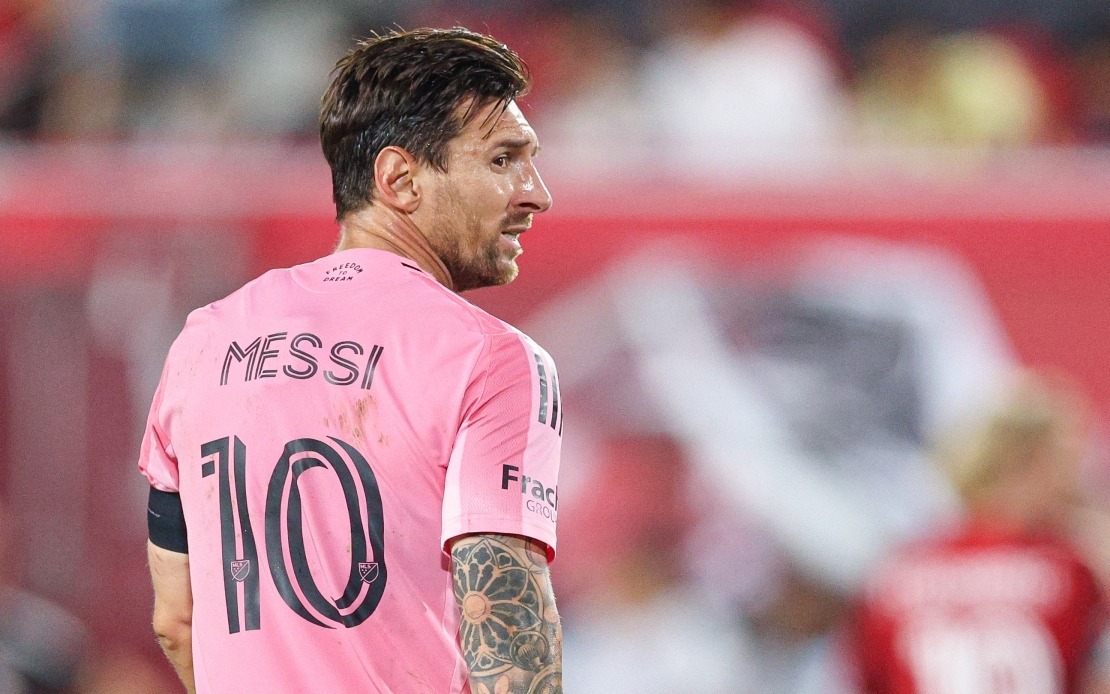
Lionel Messi returned to action for Inter Miami on Wednesday evening as a second-half substitute, playing in the Leagues Cup group stage finale against Leon—a fixture the MLS franchise lost 3-2. The return marked his initial appearance for the club since his father Jorge passed away last week, and came amid deeply personal uncertainty about whether the Argentine captain would continue his storied career at all.
Messi's reemergence on the pitch followed an emotionally raw social media post in which he articulated profound doubts about his ability to persevere without his father's guiding presence. In the statement, he questioned whether he could maintain the mental and emotional reserves necessary to pursue professional football, suggesting that the loss represented a turning point in both his personal life and sporting future. The poignancy of his words resonated globally, illustrating the magnitude of losing someone who had shaped every major decision throughout his playing life.
Jorge had served as Messi's agent and father since the young footballer was fourteen years old, witnessing and facilitating his transformation into one of sport's transcendent figures. Beyond the commercial arrangements and career management, Jorge was present at every pinnacle moment, including Argentina's World Cup triumph in Qatar in 2022, where Lionel captained his nation to glory. The elder Messi had been instrumental in encouraging his son to participate in this past summer's Copa América, despite deteriorating health, according to Lionel's recent reflections.
The striker had already missed Inter Miami's 2-1 defeat to Monterrey the previous Saturday, instead attending a private funeral service at a cemetery in Pérez, a locality near his Rosario hometown. This absence underscored the severity of the situation and his need for private grieving time. That he chose to return to competitive action just days later demonstrates either a remarkable resilience or perhaps a recognition that immersion in football—the language he has spoken his entire adult life—might provide some measure of solace during acute bereavement.
Argentina's involvement in this summer's Copa América tournament had provided recent context for the family's struggles. Although Messi led his team to the final, they fell short against Spain, losing 1-0 in extra time. Jorge's health challenges during this period had reportedly weighed heavily on Lionel, who was simultaneously managing the demands of international competition while witnessing his father's physical decline. The encouragement from Jorge to pursue one final World Cup cycle represented a bittersweet agreement between father and son—a last collaborative achievement that now feels tragically incomplete.
Inter Miami's head coach Guillermo Hoyos, himself experienced in paternal loss, offered measured sympathy following Wednesday's match. He drew parallels to his own experience of losing his father, noting the profound disorientation and isolation that accompanied such grief. Hoyos characterised Jorge's death as a devastating blow to an extraordinary family, emphasising that the trajectory of grief unfolds across an extended timeline rather than through immediate resolution. His remarks suggested an organisation prepared to provide extended support during this period.
The opposing manager, Javier Gandolfi, offered an alternative perspective focused on Messi's enduring excellence despite personal turmoil. Gandolfi's assessment positioned Messi not merely as an outstanding technician but as a human being whose character transcends athletic performance. The external observation of Messi's conduct both during matches and in his wider comportment suggested a figure whose dignity and composure remained intact even amid profound suffering—a quality that transcends football statistics and records.
Messi's appearance in the group stage finale represented a significant statement about his intentions moving forward, though whether it signals definitive commitment to continuing his career remains genuinely uncertain. The trajectory of his decision-making in coming weeks will likely prove instructive, particularly as Inter Miami progresses through the remainder of their seasonal commitments. The club faces a delicate balance between respecting his grief process and maintaining competitive momentum in a league increasingly dependent on his marquee presence.
For Malaysian and Southeast Asian football enthusiasts, Messi's situation underscores the often-overlooked human dimensions underlying professional sport. The narrative of ageing athletes continuing beyond their natural conclusion becomes considerably more complicated when viewed through the lens of family obligation and emotional stability. Messi's potential decision regarding his future will ultimately rest not upon physical capability—which Wednesday's performance demonstrated remains formidable—but upon whether he can reconcile the spiritual void created by Jorge's absence with the singular dedication that championship-level football demands.
The coming months will prove pivotal in determining whether Messi continues his Inter Miami tenure or opts for retirement while at the apex of capability. His father's lifelong investment in his success, extending from adolescence through world championship glory, has left a vacuum that no amount of sporting achievement can immediately fill. What unfolds in the emotional sphere may ultimately matter more than what occurs on the pitch.

