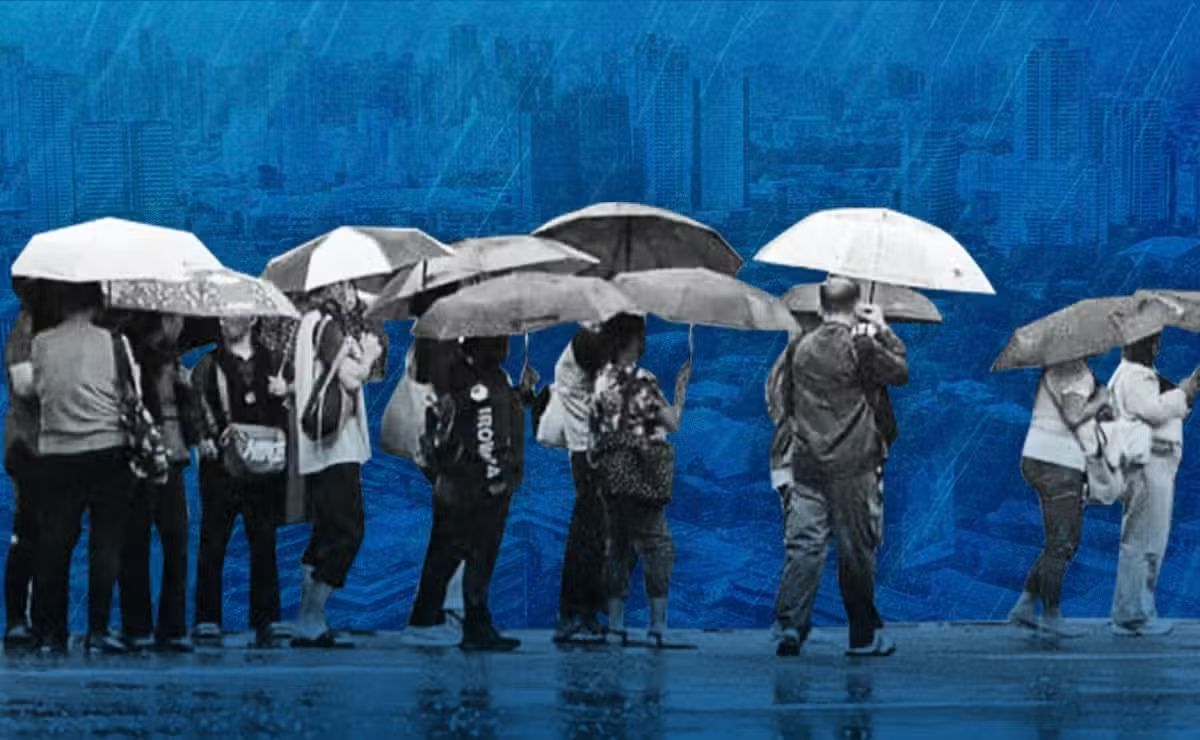
Between August 5 and 14, Metro Manila experienced an exceptional rainfall episode that brought into sharp focus the metropolitan area's vulnerability to intense precipitation and the systemic weaknesses underlying its flood management approach. The southwest monsoon, locally known as Habagat, combined with successive tropical cyclones to drench the capital and surrounding regions with water volumes that tested the resilience of existing drainage infrastructure and raised urgent questions about how effectively public resources dedicated to flood control are being deployed and managed.
Data compiled from 23 monitoring stations operated by the Philippine Atmospheric, Geophysical and Astronomical Services Administration revealed that the metropolitan area averaged 483.4 millimeters of cumulative rainfall across the ten-day period. While this figure represents an average, the distribution was far from uniform, with some locations recording substantially higher totals that underscore the spatial variability of tropical rainfall systems. This average translates to a daily accumulation of approximately 48.3 millimeters, though individual stations tracked significantly different patterns, suggesting that some districts experienced far more severe inundation than others during this weather event.
Dr Alicor Panao, an associate professor at the University of the Philippines specializing in data science, conducted a detailed analysis of the rainfall records and identified a critical pattern: nearly half of the total accumulation fell within just two days, specifically August 9 and 10. On August 9 alone, the Pagasa Airport monitoring station recorded 226.5 millimeters, an intensity that Panao characterized as extraordinary. This concentration of rainfall within such a brief timeframe creates particular challenges for drainage systems, which must process enormous volumes of water in quick succession, often exceeding their designed capacity and causing cascading failures across interconnected infrastructure networks.
Historical context provides perspective on the severity of the event. The rainfall total, while substantial, remained below Metro Manila's single-day record established during Tropical Storm Ondoy in 2009, when the Science Garden station at Pagasa recorded 455 millimeters. That earlier extreme event itself surpassed the previous benchmark of 334 millimeters set in June 1967, illustrating how monsoon systems and tropical cyclones can generate unprecedented precipitation events. However, according to Panao's analysis, the distinctive characteristic of the current episode lies not in breaking daily records but in the cumulative volume of water that fell across an extended period, creating sustained stress on the entire drainage and waterway system.
Translating the rainfall figures into volumetric terms illustrates the scale of water management challenges involved. If 483.4 millimeters of precipitation were distributed evenly across one square kilometer, it would represent approximately 483.4 million liters of water. Scaling this figure across Metro Manila's approximately 620 square kilometers of area yields an staggering total equivalent to roughly 120,000 Olympic-size swimming pools, or approximately 193 such pools per square kilometer. This visual representation demonstrates why infrastructure planners and water resource managers face such formidable technical challenges when designing systems capable of handling the volume, intensity, and frequency of tropical rainfall events.
Certain areas within Metro Manila experienced particularly intense precipitation during the period. Sitio Wawa recorded a cumulative total of 708.0 millimeters, equivalent to 708 liters per square meter, while San Mateo-2 measured 701.0 millimeters over the same ten days. La Mesa Dam received 645.5 millimeters, suggesting that watershed areas feeding into major water supply reservoirs experienced exceptionally heavy inflow. These elevated totals in specific locations create differential stress across the metropolitan region and highlight how rainfall variability within the same storm system can produce widely disparate impacts depending on local topography, proximity to watersheds, and the capacity of localized drainage networks.
Panao's analysis extends beyond rainfall statistics to address the systemic governance challenges that the event illuminates. He emphasizes that rapid successive episodes of heavy rainfall leave drainage systems, rivers, and natural watersheds with insufficient time to recover between precipitation events. Each rainfall episode saturates soils, fills reservoirs, and overwhelms drainage channels, leaving them in a compromised state when the next intense system arrives. This cumulative effect means that absolute precipitation volume alone does not determine flooding severity; the temporal distribution and frequency of rainfall events significantly influence overall impact. Infrastructure systems designed for normal rainfall patterns prove inadequate when facing accelerated sequences of intense events, which climate scientists increasingly associate with changing weather patterns.
Crucially, Panao argues that the flood crisis extending across Metro Manila cannot be adequately addressed through structural solutions alone. Rather, the challenge encompasses proper design, construction quality, and sustained maintenance of existing infrastructure. The metropolitan area requires not simply additional drainage channels, pumping stations, or levees, but rather the institutional capacity to ensure that infrastructure investments translate into functional flood protection rather than evaporating into unaccountable expenditures. He references ongoing investigations into alleged deficiencies in past flood control projects, including cases involving ghost infrastructure that was commissioned without being built, substandard structures that failed to meet engineering specifications, and overpriced contracts that diverted resources without delivering promised protection.
These concerns extend across the broader Southeast Asian context, where many major metropolitan areas face similar governance challenges in translating flood control budgets into effective protection. Cities from Bangkok to Jakarta to Ho Chi Minh City have struggled with balancing rapid infrastructure development, urban sprawl into flood-prone areas, and the institutional capacity to maintain complex water management systems. The Philippines specifically has encountered repeated cycles where major flooding events prompt commitments to infrastructure improvement, yet subsequent investigations reveal that implementation often falls short of stated objectives due to corruption, inefficiency, or misallocation of resources.
For Malaysian observers and policymakers, the Metro Manila case study offers instructive lessons as Southeast Asia's cities confront intensifying rainfall extremes and rapid urban expansion into vulnerable areas. Malaysia's own monitoring of rainfall events and flood response infrastructure may benefit from similarly rigorous data analysis to assess whether precipitation management systems are performing as designed. The broader question raised by Panao's analysis transcends national boundaries: are Southeast Asian cities systematically improving their capacity to manage water, or are they investing substantially without achieving proportionate reductions in flood vulnerability and economic losses?
The August 5-14 rainfall episode in Metro Manila ultimately demonstrates that flood mitigation extends far beyond engineering calculations. It encompasses institutional accountability, transparent project implementation, rigorous quality assurance, and sustained maintenance of existing systems. As climate variability creates more frequent extreme precipitation events across the region, this governance dimension becomes as critical as the technical one. Without addressing corruption and inefficiency in how flood control resources are deployed, even well-designed infrastructure cannot effectively protect growing urban populations from the increasingly severe consequences of tropical rainfall systems.

