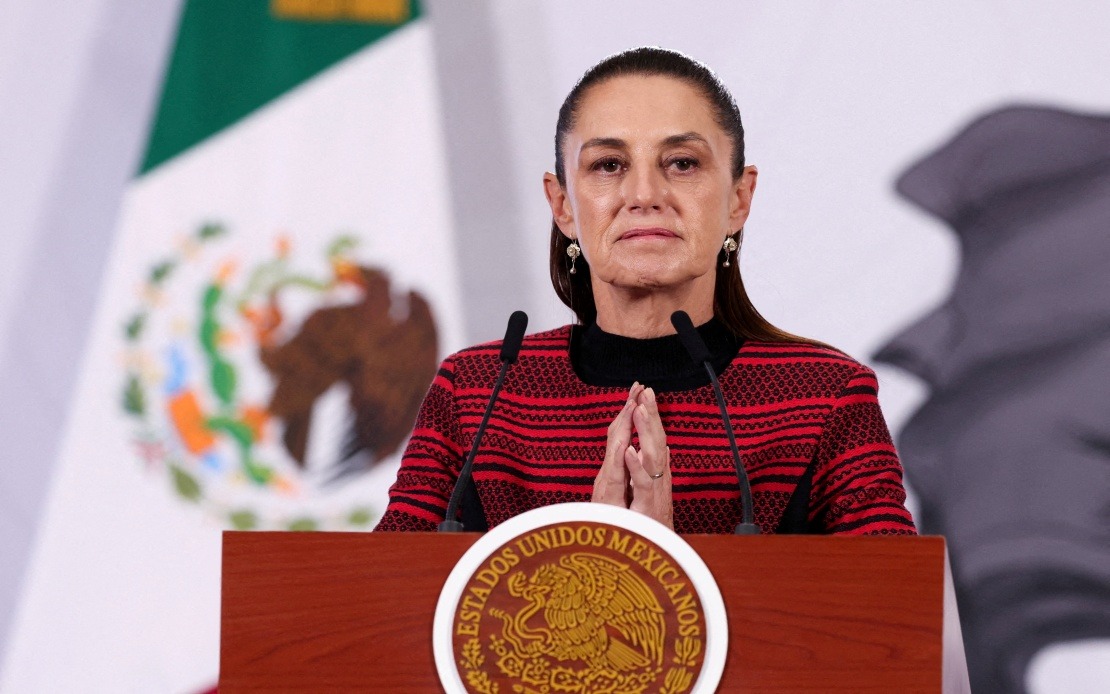
In a diplomatic gesture that underscores the interconnected nature of North American politics, Mexican President Claudia Sheinbaum confirmed on Friday that she will travel to the World Cup final following a direct invitation from United States President Donald Trump. The decision marks a notable pivot for Sheinbaum, who had declined to attend the tournament's opening ceremony at the Azteca Stadium in Mexico City just weeks earlier, instead gifting her ticket to an indigenous woman known for her passion for football. The move highlights how high-profile sporting events often become venues for diplomatic engagement between neighbouring nations.
Sheinbaum disclosed that the invitation came personally from Trump, and she indicated that Mark Carney, Prime Minister of Canada—the third co-hosting nation alongside Mexico and the United States—would also be present at the final. The confirmation came as Sheinbaum addressed reporters, signalling that the three leaders of the co-host countries would be represented at football's marquee event. This alignment of leadership attendance carries symbolic weight in North American relations, particularly given the current complexities in bilateral ties.
The bilateral relationship between Mexico and the United States has faced considerable strain in recent months, with trade disputes and security concerns dominating diplomatic discussions. These tensions have created an underlying wariness between the two governments, making Sheinbaum's acceptance of Trump's invitation potentially significant as a signal of pragmatism despite broader disagreements. Such gestures, though often overshadowed by policy disputes, can provide informal channels for relationship-building between national leaders.
Sheinbaum and Trump have met only once before, during the World Cup draw ceremony held in Washington in December. That encounter was their sole in-person meeting to date, suggesting that the invitation to the final could serve as another opportunity for informal dialogue between the two leaders. In international diplomacy, informal settings at major events frequently yield more candid conversations than formal state visits or structured negotiations.
To accommodate her attendance at the final, Sheinbaum's schedule while in the Mexican state of Quintana Roo underwent modification, according to Mexican media reports. The adjustment was necessary to enable her travel to East Rutherford in New Jersey, where Argentina and Spain will face off in what promises to be a compelling championship match. The logistical rearrangement demonstrates the significance Sheinbaum has placed on this appearance.
The Spanish royal family will be well-represented at the final, with King Felipe VI, Queen Letizia, Crown Princess Leonor, and Infanta Sofía expected to attend to support their national team. The presence of the Spanish monarchy underscores how World Cup finals attract heads of state and members of royal families from competing nations, transforming the event into a gathering of global leadership.
In contrast, Argentina's President Javier Milei has chosen not to attend the final in person, citing superstitious beliefs rooted in Argentine cultural traditions. Superstition has historically played a considerable role in football culture throughout Latin America, and Milei's decision reflects deeply embedded rituals and customs surrounding the sport in Argentina. Many Argentine football supporters maintain specific traditions believed to influence match outcomes, a phenomenon that extends to the highest levels of government and society.
The World Cup final represents far more than a sporting competition for the three co-hosting nations. For Mexico, the tournament has provided a platform to demonstrate its capacity to organize world-class infrastructure and logistics, though the decision by the Mexican president to skip the opening ceremony raised questions about her government's enthusiasm for the event. Sheinbaum's attendance at the final suggests a recalibration of her administration's engagement with the tournament, possibly reflecting political calculations about the value of high-profile international visibility.
For the United States, hosting the World Cup alongside Mexico and Canada represents a significant diplomatic achievement and an opportunity to project soft power across the Americas and beyond. The participation of Trump in extending this invitation, and his apparent success in securing Sheinbaum's acceptance, may be interpreted as a small diplomatic victory, particularly given the contentious nature of recent US-Mexico relations.
The convergence of multiple national leaders at a single sporting event illuminates how globalized power structures operate in the modern era. Major tournaments serve as nodal points where political relationships are simultaneously conducted and symbolized. Sheinbaum's decision to attend the final, despite earlier declining the opening ceremony, reflects the complex calculus that national leaders must navigate when considering their international presence and diplomatic messaging.
The attendance of these leaders will inevitably shape media coverage of the final, adding layers of political significance to what is primarily a sporting contest. In Southeast Asia, where football commands passionate followings and international relations remain delicate, the diplomatic dimensions of such gatherings offer instructive examples of how nations balance competition with cooperation at the highest levels.

