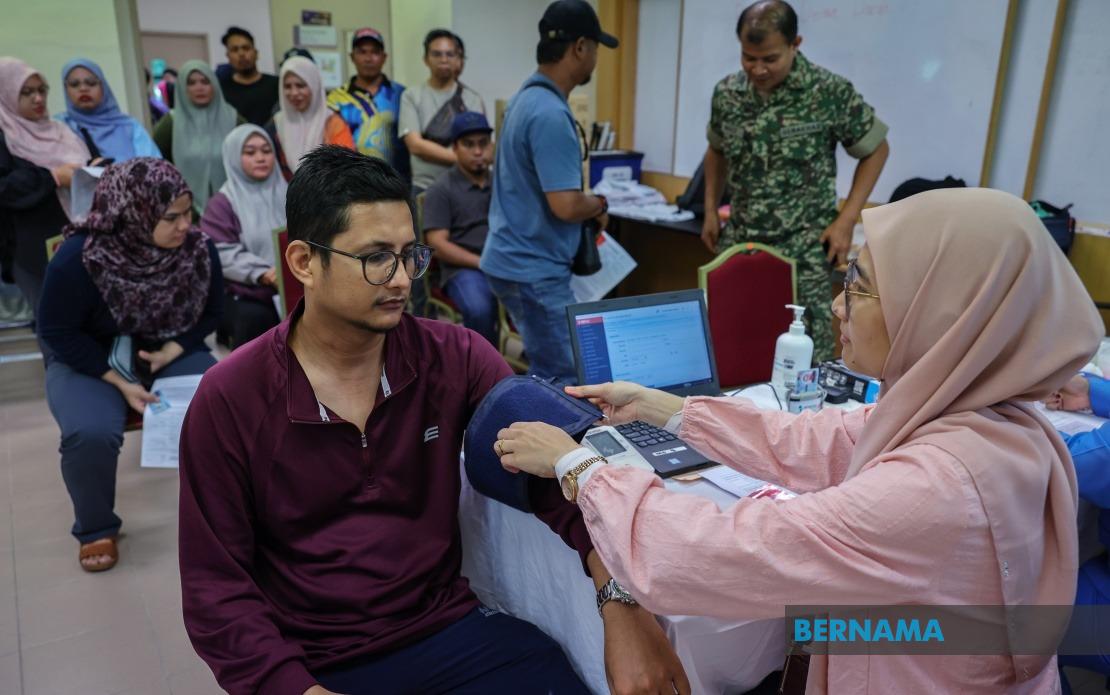
The Royal Malaysian Armed Forces have demonstrated their community engagement capabilities by delivering free healthcare services directly to residents in the Baling district, marking a significant expansion of civil-military cooperation efforts beyond traditional security roles. Held at Sultan Abdul Halim Mu'adzam Shah International Islamic University near Kuala Ketil, the "Military with the People" initiative ran concurrently with the completion of the Basic Commando Course, merging operational activities with public health outreach in a model that could serve as a blueprint for similar programmes across Malaysia.
The healthcare delivery operated through two distinct but complementary channels: the Medical Community Assistance Programme (MEDCAP) and Dental Community Assistance Programme (DENCAP), both operating under the broader Civil-Military Cooperation (CIMIC) framework. This structural approach allowed the armed forces to coordinate specialized medical services while managing patient flow and ensuring quality control. The combination reflected a sophisticated understanding that military infrastructure and personnel, when properly deployed for civilian benefit, can address gaps in healthcare accessibility that often plague rural and semi-urban Malaysian communities.
Dental services formed the primary component of the initiative, with military dentists conducting scaling procedures, filling cavities, and performing tooth extractions on an unprecedented scale for a single community event. Captain Dr Muhammad Afiq Ishak, a dental officer from the 2nd Medical Battalion, explained that the focus remained on fundamental treatments rather than complex procedures, a pragmatic approach that maximized the number of residents who could receive care while maintaining appropriate clinical standards. The emphasis on oral health awareness represented a significant public health value, as many Malaysians lack regular access to preventive dental education and often delay treatment until conditions become severe.
The medical screening component proved equally substantial, extending beyond basic health checks to encompass blood pressure monitoring, blood glucose testing, and body mass index calculations. Lieutenant Dr Atiff Abdul Aziz, the Medical Officer coordinating both MEDCAP and DENCAP at the Special Warfare Training Centre, stressed that the programme incorporated mental health awareness promotion, a particularly sensitive area in Malaysia where social stigma continues to discourage individuals from seeking support. The Baling District Health Office partnered directly with military medical units, demonstrating how government health agencies can leverage armed forces infrastructure to extend their reach during special community initiatives.
Personal testimony from residents revealed genuine appreciation for the accessibility and speed of service delivery. Siti Salmiah Said, a 28-year-old factory worker, highlighted how the on-site treatment eliminated the typical delays associated with civilian dental clinics, allowing her entire family to receive care during a single visit. Her experience reflected a common challenge across Malaysia's healthcare system: waiting times for non-emergency dental procedures often stretch weeks or months, during which patients defer treatment due to scheduling constraints imposed by employment obligations. The military's ability to provide immediate services bypassed these structural bottlenecks.
Adam Ruzlan, a 26-year-old legal assistant, emphasized the dual benefit of receiving both treatment and professional oral health guidance simultaneously. The military medical personnel provided personalized advice about decay prevention, tartar management, and the importance of regular check-ups, converting a service delivery opportunity into a public health education moment. Such guidance carries particular weight when delivered by uniformed medical professionals, as the perceived authority and expertise often translates into behavioural change among recipients who might otherwise dismiss similar advice from pamphlets or mass media campaigns.
Despite the success stories, the programme also addressed urgent medical needs that emerged during the event itself. When a child experienced dizziness and nausea, Civil Defence Force personnel rapidly transported the patient to the MEDCAP tent, where military medical staff conducted vital sign monitoring and administered treatment. Norhasliza Nayan, the child's mother, recognized this rapid response capability as a significant advantage, suggesting that future large-scale public events should incorporate similar medical infrastructure. Her observation touches on an important infrastructure lesson: positioning medical personnel and equipment at community gatherings creates immediate emergency response capacity that might otherwise require transport to distant facilities.
G. Devindran, a 37-year-old factory worker and son of a retired commando, provided comparative perspective across generations. His reference to military medical services from 28 years earlier, now dramatically improved in speed and facility quality, illustrated Malaysia's steady advancement in military healthcare capabilities. The comprehensive nature of his experience—combining dental filling procedures with blood pressure, blood sugar, and BMI assessments—demonstrated how CIMIC programmes can deliver integrated health interventions rather than fragmented services. His decision to attend early despite his afternoon work shift underscored the programme's relevance to working-class residents who typically struggle to access healthcare during standard clinic hours.
The blood donation component operated in parallel with direct healthcare services, with Sultan Abdul Halim Hospital in Sungai Petani managing collections throughout the initiative's duration. Lieutenant Dr Atiff Abdul Aziz indicated a daily collection target of approximately 100 blood bags, emphasizing how CIMIC activities can simultaneously address immediate community health needs while strengthening national blood supply systems. This dual-purpose approach reflected strategic thinking about how military engagement could serve both immediate constituency interests and broader national health infrastructure requirements.
The partnership between the Ministry of Health's Baling District Health Office and military medical units represented institutionalized cooperation rather than ad hoc assistance. This structural relationship suggests potential for scaling similar initiatives across other districts, particularly in areas where civilian healthcare infrastructure remains limited. The model also demonstrated how military assets—trained personnel, medical equipment, organizational capacity—could complement rather than substitute for civilian health systems, creating synergies rather than parallel structures.
For Malaysian policymakers and healthcare administrators, the Baling initiative offers evidence that civil-military cooperation in health delivery generates measurable community benefit when properly structured and executed. The positive reception from residents across different demographic backgrounds—factory workers, legal professionals, housewives, retirees—suggests broad applicability. As Malaysia continues developing its healthcare system to achieve universal coverage and equity, such programmes demonstrate how existing military infrastructure can be strategically deployed to extend access to populations facing geographical or temporal barriers to healthcare.
The initiative also highlighted the potential for military institutions to enhance their community relations and public legitimacy through constructive engagement in civilian health domains. Rather than limiting military visibility to security and ceremonial roles, this approach embedded armed forces personnel in positive, direct service interactions with the public. Such engagement may generate longer-term goodwill and social cohesion benefits that extend well beyond the immediate healthcare delivered during the event itself.

