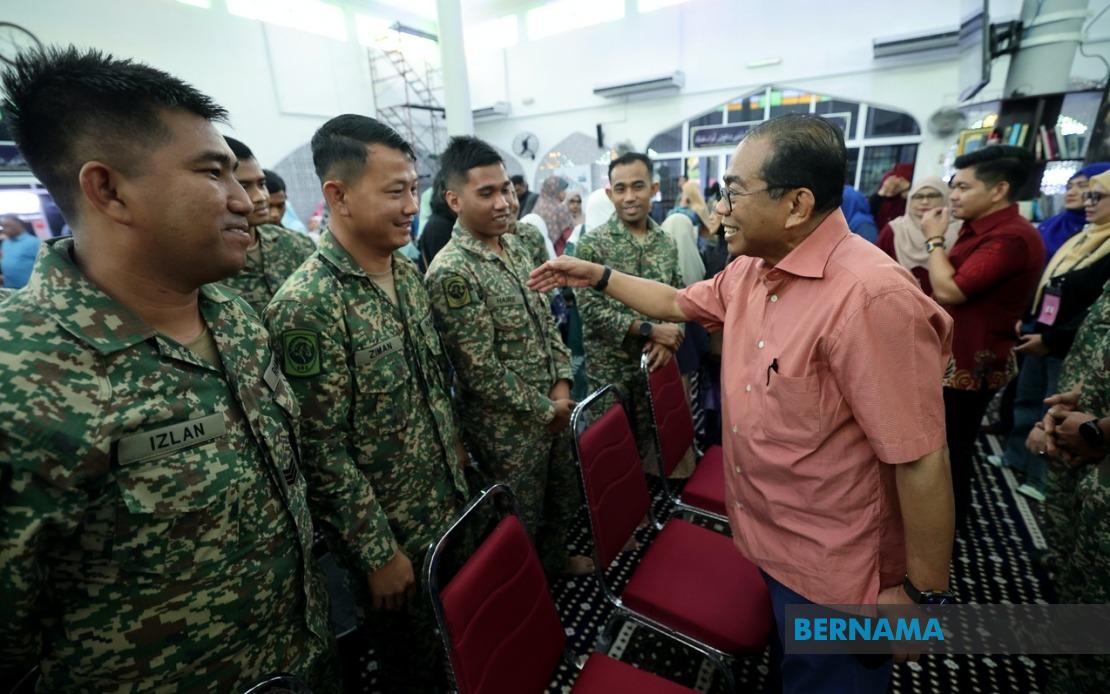
The Malaysian Defence Ministry is bracing for a formal investigation report into a fatal grenade explosion at Hobart Camp in Gurun that claimed two military lives during a June training exercise. Defence Minister Datuk Seri Mohamed Khaled Nordin confirmed that findings are expected to reach his office by the middle of July, with a comprehensive review of the military's training protocols to follow.
The tragedy unfolded on June 16 when Corporal Norazmi Abu Bakar of the Sixth Battalion, Royal Malay Regiment (RAMD), and Private Siti Khadijah Sungip of the First Squadron, Royal Engineers Regiment (RAJD), sustained catastrophic injuries during a routine training exercise. The explosion occurred at approximately 10.57 am. Both soldiers were immediately transported to Sultan Abdul Halim Hospital in Sungai Petani but were pronounced dead en route, marking a significant loss to the military establishment and raising urgent questions about the adequacy of safety protocols during live-fire and ordnance-handling exercises.
The gravity of the situation intensified two weeks after the initial incident when a second accident occurred at the same training facility on June 29. This time, a firearm discharged unexpectedly during a combat enhancement training (LPT) exercise, injuring Sergeant Mohamad Firdaus Che Shaharudin and Corporal Felix Franchis of the Fourth Battalion, Royal Ranger Regiment (4 RRD) with shrapnel-related leg wounds. The 6.15 pm incident, while fortunately not fatal, reinforced concerns that Hobart Camp may have systemic safety deficiencies that demand immediate attention.
Minister Khaled indicated that the Malaysian Army has already been instructed to undertake a comprehensive examination of its training methodology in light of these back-to-back incidents. The review extends beyond investigating the specific circumstances of each accident to encompassing broader questions about whether additional weaknesses exist in the facility's operational framework or in standard procedures applied across the military's training regimen. This proactive stance suggests recognition that isolated incidents at a single location within a fortnight cannot be dismissed as mere coincidence.
The minister's cautious approach reflects an understanding that premature conclusions could be counterproductive. He stated that no definitive action or policy amendments would be implemented until the investigation delivers its full findings and analysis. This measured response, while appropriate procedurally, also underscores the complexity of determining root causes in military accidents—whether they stem from equipment failure, human error, inadequate supervision, or systemic gaps in safety infrastructure.
For Malaysia's defence establishment and regional military observers, these incidents carry broader implications. Military training inherently involves managed risk, yet the frequency and nature of these accidents at a single installation warrant scrutiny. The international military community has increasingly emphasised that rigorous safety protocols and continuous review of training practices are not signs of weakness but rather hallmarks of professional, well-managed armed forces. Other Southeast Asian nations maintain similarly intense training regimens, making lessons learned here potentially valuable across the region.
The families and colleagues of the deceased soldiers, as well as the injured personnel, now await the investigation's conclusions with understandable expectations for transparency and accountability. The Defence Ministry's commitment to providing updates after reviewing the report represents a welcome commitment to public communication on such sensitive matters, particularly given the loss of young lives in what should have been controlled, supervised circumstances.
The incident also highlights ongoing challenges that military institutions face when balancing operational readiness with safety culture. Training exercises, by definition, involve higher risk than routine garrison duties, yet modern military standards demand that this risk be managed through rigorous safety protocols, comprehensive briefings, regular equipment inspections, and appropriate supervision ratios. The clustering of two serious incidents suggests that at least one of these elements may require reassessment.
As the investigation progresses toward its mid-month deadline, stakeholders will closely monitor whether findings pinpoint specific failures or systemic issues. The Malaysian military's reputation for professionalism and its standing in regional security arrangements depend significantly on how thoroughly and transparently these matters are investigated and how comprehensively corrective measures are implemented. The willingness to pause and review, as signalled by Defence Minister Khaled, demonstrates institutional maturity even as it acknowledges that present procedures were inadequate to prevent tragedy.
The road ahead requires careful calibration: maintaining training effectiveness and soldier preparedness while implementing enhanced safety measures. Other military establishments across Southeast Asia will observe how Malaysia navigates this challenge, given that the region faces shared security concerns and often draws from similar training methodologies and equipment.
Ultimately, the investigation report due mid-July represents not merely a bureaucratic exercise but a critical opportunity to prevent future loss of life and to reaffirm the Malaysian Armed Forces' commitment to both operational excellence and the welfare of those who serve.

