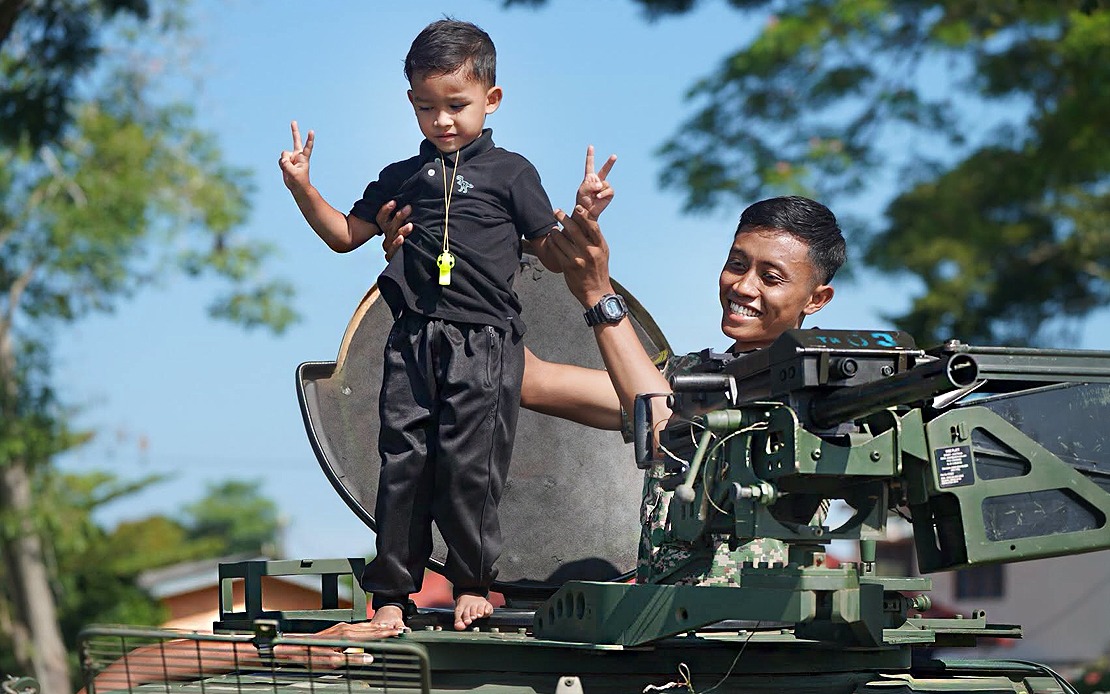
Malaysia's Ministry of Defence has reinforced its commitment to community development and civil-military cooperation in Alor Gajah through an expanded implementation of the 'Program Jiwa Murni MADANI' initiative. The comprehensive outreach effort, conducted at Padang Awam Kampung Gadek, demonstrates the Defence Ministry's strategy of positioning the Malaysian Armed Forces as active stakeholders in addressing local needs beyond traditional security functions. This approach reflects a broader regional shift wherein defence establishments across Southeast Asia are repositioning themselves as development partners, blending security mandates with social welfare responsibilities.
The community-oriented programme operates as a bridge between military institutions and civilian populations, leveraging the MAF's logistical and personnel resources to deliver tangible benefits. Through diverse offerings including medical screenings, skills workshops, entrepreneurship guidance, subsidised goods sales, recreational competitions, and mobile administrative services, the Defence Ministry creates multiple touchpoints with residents. This diversified engagement model recognises that sustainable civil-military relations require addressing everyday citizen concerns—health, economic opportunity, and administrative convenience—rather than relying solely on formal institutional interactions.
On the infrastructure front, the 9th Squadron of the Royal Engineers Regiment invested RM179,200 in five community projects distributed across Alor Gajah's villages. These initiatives encompassed playground refurbishment at Kampung Baru's multi-purpose facility, perimeter fencing repairs for the Tamil national-type school in Durian Tunggal, futsal court improvements in Taman Seri Kelemak, roof restoration work at Madrasah Seri Kemuning, and structural enhancements to Surau Madrasah Khairiah. The deliberate selection of educational, recreational, and religious facilities reveals a strategic approach to infrastructure allocation, strengthening institutional anchors that serve as community gathering spaces and social infrastructure.
Deputy Defence Minister Adly Zahari presented a RM133,000 cheque directed through the Service Centre Initiative, providing financial support to eight community beneficiaries. The recipients encompassed a cross-section of religious and cultural institutions, including five Islamic suraus (prayer halls) across different residential areas, two temples serving Hindu and Confucian congregations, and a Tamil primary school. This inclusive distribution pattern underscores the Defence Ministry's intention to embed civil-military cooperation within Malaysia's plural religious and ethnic landscape, ensuring that defence engagement transcends sectarian boundaries and reinforces interfaith community cohesion.
The religious and educational institutions receiving support represent critical nodes in their respective communities' social infrastructure. Surau facilities in Kampung Ulu Batang Melaka, Taman Dimensi, Taman Sri Sutera, Taman MAIM Rumbia, and Kampung Gubah serve as spiritual centres and community meeting spaces. The temples in Machap Baru and Batang Pondok provide cultural anchors for their constituencies, while SJKT Batang Melaka's selection for a GreenLab development project demonstrates Defence Ministry interest in environmental education and sustainability literacy among younger generations. This deliberate institutional diversity reflects recognition that effective civil-military engagement requires acknowledging and supporting the full spectrum of communities within any given locality.
Complementing these permanent infrastructure and financial commitments, the Defence Ministry distributed 500 RAHMAH baskets to MAF veterans' associations and local residents. The RAHMAH initiative, which provides subsidised essential goods, addresses immediate welfare concerns while maintaining affordability for low-income households. This temporary relief programme operates in tandem with longer-term development projects, creating a comprehensive welfare strategy that combines immediate material support with sustainable institutional strengthening. For Malaysian readers, particularly those in smaller towns, such initiatives carry tangible relevance in managing household expenses and food security.
The 'Program Ilmu dan Muafakat MADANI' (PIKAT) conducted by the Religious Corps of the Malaysian Armed Forces represents a complementary spiritual and educational dimension to broader community engagement. Held at Masjid Kelemak, PIKAT incorporated congregational prayers, religious lectures, charitable contributions, and dialogue sessions with mosque communities. This parallel programme demonstrates that the Defence Ministry's engagement strategy extends beyond material provision into spiritual and intellectual domains, positioning the military as supporter of religious education and faith community development. The combination of PIKAT's spiritual focus and PJM's welfare-oriented activities reveals a holistic conception of community support.
These initiatives directly correspond to Core 4 of the National Defence Strategic Plan 2026-2030, which emphasises strengthening civil-military relations through community involvement. The strategic alignment indicates that ad-hoc community activities are embedded within longer-term defence policy frameworks, rather than representing occasional charitable gestures. This institutionalisation of civil-military engagement across a five-year planning horizon suggests sustained commitment, though also raises questions about resource allocation and scalability across Malaysia's diverse localities. Defence planners must ensure that programmes implemented in Alor Gajah establish replicable models applicable to other constituencies without straining military resources or compromising operational capabilities.
For Southeast Asian observers, Malaysia's approach offers instructive lessons in civil-military relations management. The integration of welfare delivery, infrastructure development, and religious-institutional support within a unified framework demonstrates sophisticated understanding of community dynamics. Unlike military establishments that maintain rigid separation between defence functions and civilian engagement, Malaysia's Defence Ministry positions itself as a comprehensive development partner. This approach carries both advantages—enhanced public confidence, tangible contributions to quality of life—and potential challenges, including scope creep, resource diversion from core defence functions, and expectations of indefinite support that military budgets may not sustain.
The emphasis on CIMIC (civil-military cooperation) as a strategic principle within the National Defence Strategic Plan reflects global defence sector trends toward broader social engagement. Yet Malaysian implementation appears particularly attentive to the multicultural dimensions of effective civil-military relations, ensuring that Malay-Muslim, Tamil, Chinese, and other community institutions receive proportionate support. This inclusive approach mitigates risks of programmes being perceived as vehicles for favouritism or sectarian advancement—concerns that historically complicated defence institution-community relations in diverse societies.
Looking forward, the sustainability of such programmes depends upon consistent resource allocation and institutional support mechanisms. While the RM179,200 infrastructure investment and RM133,000 grant disbursement demonstrate tangible commitment, scalability questions persist. Can Malaysia's Defence Ministry extend comparable programmes to all districts nationwide? How will military budgets balance community welfare initiatives against operational requirements during fiscal pressures? These questions merit examination as Defence Ministry programmes become increasingly embedded in local development landscapes.
The Alor Gajah initiative ultimately reflects a defence establishment confident enough in its institutional strength to invest significantly in community relations and welfare delivery. Whether this approach becomes a durable model for defence-community relations across Malaysia and the broader Southeast Asian region will depend on sustained resource commitment, evidence of positive community outcomes, and successful navigation of the complex balancing act between military preparedness and civilian engagement. For residents of Alor Gajah and similar localities, such programmes provide immediate material and institutional benefits while signalling that security providers recognise obligations extending beyond traditional defence perimeters.

