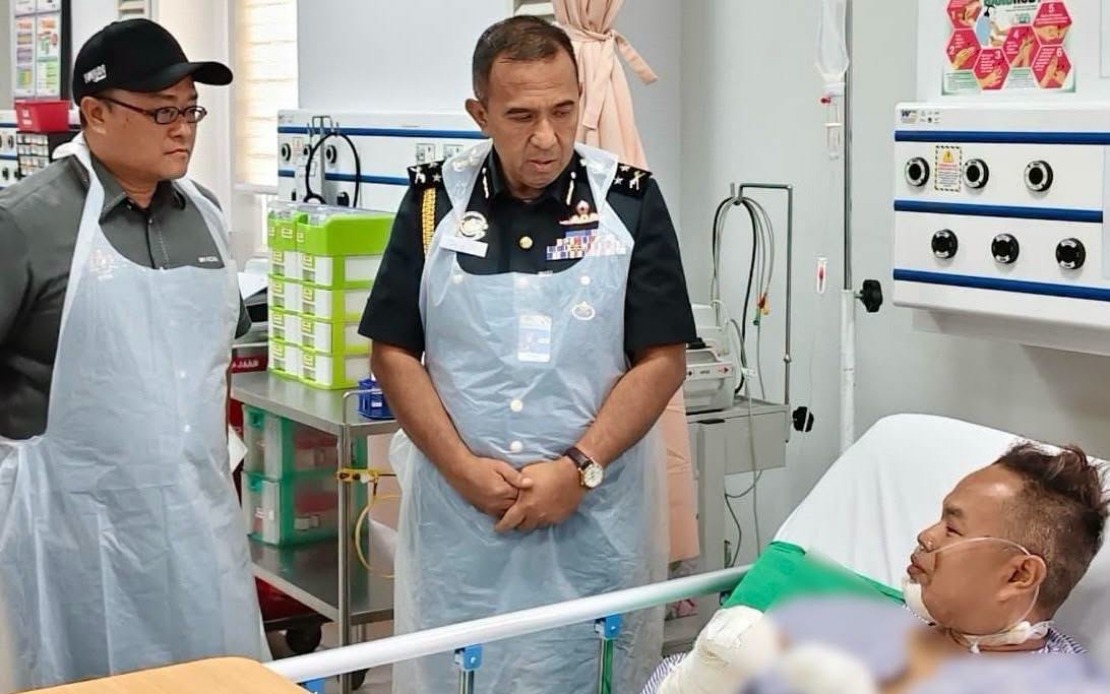
Two enforcement officers with Malaysia's Domestic Trade and Cost of Living Ministry were injured while conducting fieldwork under Ops Tiris 4.0, a targeted operation designed to combat the unlicensed decanting and misappropriation of subsidised liquefied petroleum gas in Selangor. The incidents underscore the operational hazards faced by frontline enforcement personnel tasked with protecting subsidies meant for ordinary Malaysian households.
Assistant Enforcement Officer Mohammad Fauzi Baharuddin sustained injuries classified as fairly serious and continues to receive medical treatment following the incident. In a separate incident, Enforcement Assistant R. Yoghanath suffered minor injuries but was discharged after receiving care. Minister Datuk Armizan Mohd Ali addressed the matter through a Facebook post, acknowledging the personal toll such injuries place on both the officers and their families during the recovery process.
The Minister's statement carried particular weight given the emotional dimension of workplace injuries in enforcement roles. He specifically directed messages of support to Mohammad Fauzi, offering prayers for full recovery and strength throughout his treatment journey. For Yoghanath, Armizan extended wishes for sustained good health and complete recuperation, framing the incidents within a broader narrative of ministerial responsibility toward frontline staff.
Ops Tiris 4.0 represents one of several ongoing initiatives by the KPDN to safeguard Malaysia's fuel subsidy system from exploitation. The operation targets the illegal decanting of LPG, a practice where subsidised gas is transferred from official containers into unauthorised vessels for black-market sale. This activity diverts government subsidies away from intended beneficiaries and generates illegal profits for criminal networks, making enforcement operations essential but inherently confrontational.
Armizan's remarks moved beyond sympathy into a broader acknowledgment of systemic risks within enforcement work. He highlighted how KPDN personnel routinely encounter unpredictable field conditions while executing raids and compliance operations, often separating themselves from families to serve national interests. This framing positions enforcement work as sacrificial, requiring officers to place personal safety secondary to public duty.
The Minister's emphasis on courage and sacrifice serves a dual purpose within Malaysian governance discourse. Publicly recognising the hazards faced by enforcement personnel legitimises the sometimes-aggressive tactics required to combat subsidy fraud effectively. Simultaneously, it appeals to esprit de corps within the KPDN, reinforcing institutional commitment during what may be a demoralising incident for the entire enforcement cadre.
LPG subsidy fraud represents a significant ongoing challenge for Malaysia's fiscal and social policy framework. Decanting operations not only divert government resources but create supply irregularities that can affect genuine consumers relying on subsidised fuel. The existence of such operations reflects broader challenges in monitoring Malaysia's vast informal economy, where enforcement agencies must maintain vigilance against increasingly sophisticated evasion schemes.
The operation's designation as Ops Tiris 4.0 indicates this represents the fourth iteration of systematic enforcement against LPG misappropriation, suggesting both persistence of the problem and institutional commitment to addressing it. Each iteration likely incorporates lessons from previous enforcement cycles, adapting tactics to counter evolving evasion methods employed by fraud networks. This iterative approach reflects the ongoing nature of subsidy protection work, which demands continuous vigilance rather than one-time resolution.
For Malaysian readers, these incidents carry implications for subsidy sustainability and inflation management. Every ringgit diverted through LPG fraud represents reduced fiscal capacity for other priorities, while also feeding into parallel markets that distort pricing signals. Enforcement operations, despite their operational risks, remain essential components of maintaining subsidy system integrity during periods of global energy volatility.
Armizan's closing remarks directed prayers toward the safety of all KPDN enforcement personnel currently engaged in fieldwork. This universal invocation acknowledges that Mohammad Fauzi and Yoghanath represent merely two members of a broader cadre facing similar risks daily. The prayer functions as both genuine expression of ministerial concern and institutional messaging that worker safety remains a priority consideration alongside enforcement effectiveness.
The incident also underscores broader questions about resource allocation within enforcement agencies. Adequate training, proper equipment, and appropriate backup support reduce injury likelihood during confrontational enforcement scenarios. Public ministerial attention to such incidents, while valuable for morale, also implicitly raises questions about operational standards and whether frontline personnel possess adequate protection when engaging potentially hostile actors resistant to subsidy compliance.
Moving forward, the incident may prompt internal KPDN review of operational procedures, safety protocols, and personnel support mechanisms. Ministry statements emphasising officer welfare can influence institutional culture, potentially leading to procedural improvements that reduce future injury risks. Such developments would benefit both the enforcement personnel themselves and the broader efficacy of subsidy protection operations.

