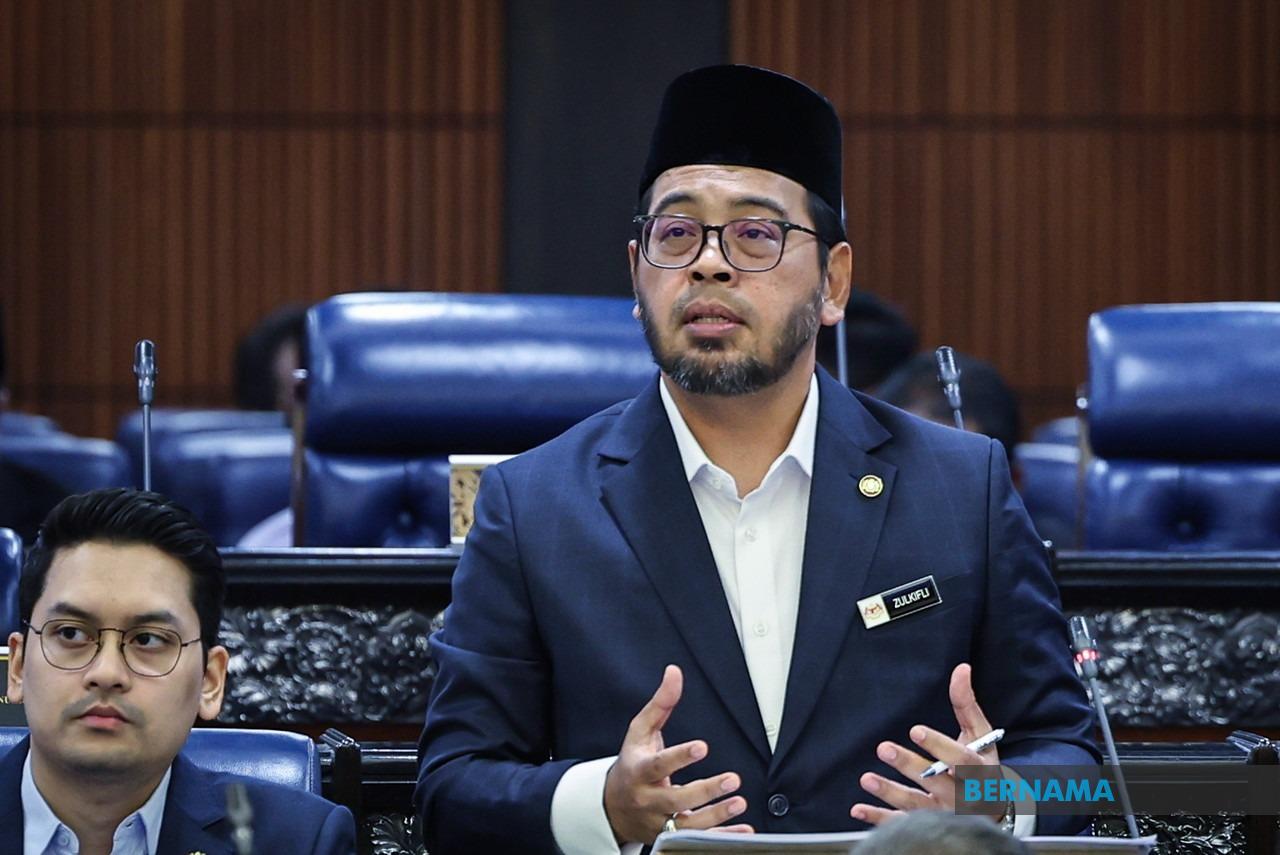
Religious Affairs Minister Dr Zulkifli Hasan has employed a deceptively simple household analogy to illuminate the complex financial fraud that plagued Lembaga Tabung Haji (TH), Malaysia's pilgrimage fund. Speaking during parliamentary debate on the Royal Commission of Inquiry findings, Zulkifli invoked the scenario of a single mother named Mak Cik Senah to crystallise how fund managers created an illusion of prosperity whilst the institution deteriorated into insolvency. The analogy proved particularly potent for Malaysian audiences familiar with the struggles of ordinary households managing limited resources.
According to Zulkifli's explanation, Mak Cik Senah appears satisfied because she receives dividend payouts exceeding her contributions. However, a fundamental legal principle underpins dividend distribution: a fund may only pay returns when its total assets surpass its accumulated debts and liabilities. This straightforward rule forms the bedrock of financial integrity and depositor protection, yet TH systematically violated it through the 2018 period and earlier.
The core problem, Zulkifli articulated, stemmed from deliberate asset value manipulation conducted entirely on paper. Fund managers inflated the nominal worth of holdings solely to fabricate an appearance of profitability, a deception masked by regular high dividend announcements that created confidence among depositors. To unsuspecting contributors, TH appeared a thriving institution delivering excellent returns. Behind this façade, however, the actual savings accumulated by members contracted steadily as the gap between real assets and genuine liabilities widened inexorably.
Zulkifli characterised this scheme as distributing profits from "invisible money"—a designation capturing the fraudulent nature of payments made from assets that existed only in creative accounting ledgers. He drew explicit parallels to Ponzi structures and the infamous Skim Pak Man Telo, Malaysian vernacular references that resonate deeply with the public's understanding of financial schemes designed to deceive. The comparison underscored that TH's misconduct was not merely sloppy accounting but calculated fraud affecting millions of Muslim Malaysians who entrusted their savings to the institution.
The RCI investigation substantiated that TH's pre-2018 financial statements underwent systematic manipulation to project inflated profits. This enabled the fund to declare profit distributions that bore no relationship to its genuine financial performance. The core violation involved dividend announcements that breached the Tabung Haji Act itself, since TH's combined assets—including the pooled depositor funds—did not exceed its liabilities. Rather than adhering to legal requirements, management circumvented safeguards through creative accounting mechanisms.
One particularly revealing methodology involved valuation assessments conducted outside formal audited financial statements, termed Realisable Asset Value (RAV). This technique artificially elevated asset valuations relative to liabilities, creating documentary evidence of solvency where none existed. Zulkifli characterised this as a systematic violation of Malaysian Financial Reporting Standards (MFRS), involving impairment policy adjustments that misrepresented TH's true financial condition. The practices were designed solely to enable announcement of high profit distributions rather than reflecting economic reality.
PricewaterhouseCoopers (PwC) confirmed this manipulation in a 2018 audit report that exposed how asset valuations were fundamentally compromised. Notably, of TH's claimed RM4.6 billion in total assets, merely RM556 million underwent assessment by qualified professional valuers. This meant approximately 88 percent of purported assets lacked independent professional validation. Zulkifli clarified that Ernst & Young, another audit firm, played no role as TH's auditor and therefore bore no responsibility for asset valuations; it only reviewed pro forma statements prepared internally by TH itself.
The decision to distribute dividends whilst the deficit between assets and liabilities expanded constituted a clear violation of the Tabung Haji Act. Zulkifli stressed that this unlawful conduct directly jeopardised TH's financial sustainability for future generations of depositors. The situation mirrored his Mak Cik Senah analogy precisely: through inflated asset values on paper, the fund appeared profitable when it was genuinely incurring losses whilst breaching its governing legislation. Had intervention not occurred, TH would have progressed toward bankruptcy, erasing the accumulated savings of millions of ordinary Malaysians.
The Malaysian government ultimately absorbed the catastrophic consequences through an extraordinary RM10 billion injection to rescue TH from the brink of financial collapse. This bail-out proved essential not merely to protect depositor savings—the hard-earned pilgrim funds of working Malaysians—but to preserve an institution deeply rooted in the nation's Muslim community identity and cultural fabric. Without government intervention, TH would have imploded, leaving millions without recourse or remedy.
Zulkifli concluded by emphasising the opportunity cost of this massive financial intervention. The RM10 billion channelled to rescue TH from mismanagement could instead have constructed dozens or hundreds of hospitals, schools, mosques, and critical public infrastructure serving Malaysian society. This observation carries particular weight in a developing nation context where healthcare, education, and religious facilities represent essential public needs. The scale of resources diverted toward correcting TH's self-inflicted financial collapse underscores the gravity of the institutional failure and the immense human cost of governance lapses affecting national priorities.

