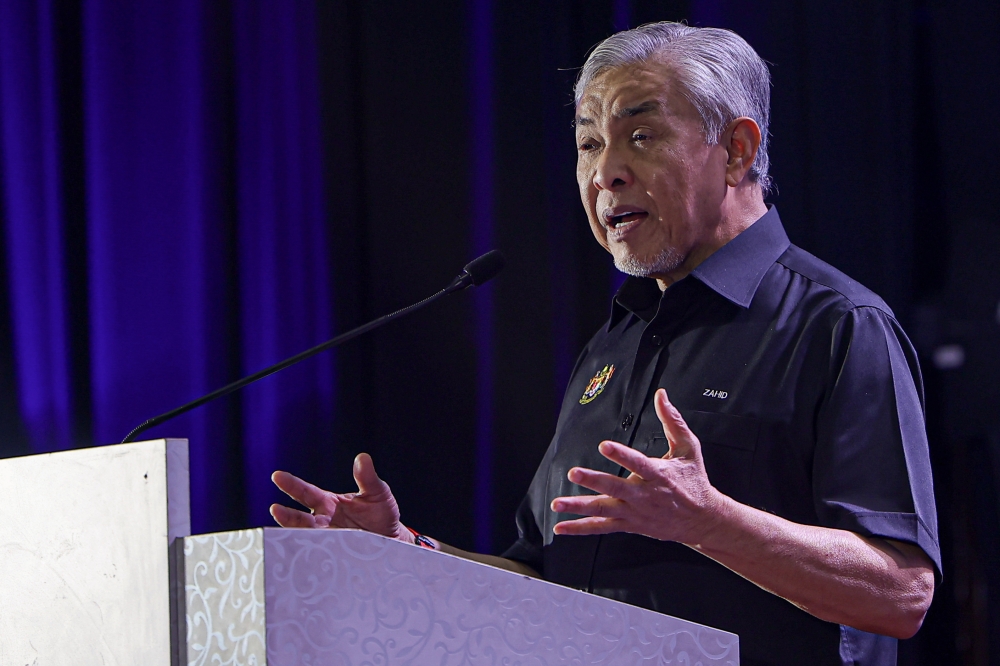
Deputy Prime Minister Datuk Seri Ahmad Zahid Hamidi has alleged that government ministry officers experienced pressure to attend Barisan Nasional-connected events during the recent state elections, reigniting debate over the boundary between political campaigning and civil service impartiality in Malaysia.
Zahid's assertion, made on August 6 in Putrajaya, touches on a perennial tension in Malaysian governance: the expectation that public servants maintain political neutrality while also being members of communities and constituencies where electoral campaigns take place. The claim suggests that pressure may have extended beyond gentle encouragement into coercive territory, wherein officers felt compelled rather than invited to participate in campaign activities.
This disclosure carries significant implications for Malaysia's civil service reform agenda. The country's administrative machinery has long grappled with questions of politicisation, and accusations of systematic pressure on bureaucrats to participate in party activities undermine the principle of a neutral, merit-based public sector. If widespread, such practices could compromise the integrity of government operations and erode public confidence in institutional independence.
The deputy premier's comments merit scrutiny within the context of recent state elections across Malaysia, which saw intensified political mobilisation across multiple constituencies. During election seasons, the line between administrative work and political support often becomes blurred as government resources and personnel are sometimes deployed in ways that benefit the ruling coalition. Malaysian political observers have long documented instances where state apparatus resources appear directed toward incumbent parties, though proving systematic pressure remains methodologically challenging.
Zahid's willingness to publicly air this complaint suggests internal divisions within the Barisan Nasional coalition regarding campaign tactics, or alternatively, an attempt to address grievances that have generated friction among civil servants and their unions. The Public Services Association and other employee organisations have periodically raised concerns about political interference in workplace decisions, though formal complaints are rare given the hierarchical nature of civil service employment.
The allegation also reflects broader Southeast Asian governance challenges. Across the region, newly elected governments and coalitions frequently face accusations of using state machinery to consolidate political advantage, while incumbent administrations counter that mobilising public support through civil servants represents normal political practice. Malaysia's democratic system, though competitive, operates within institutional constraints where the ruling party historically benefited from administrative advantages.
Malaysian election law contains provisions requiring civil servants to refrain from partisan activity during designated campaign periods, yet enforcement remains inconsistent. The Elections Commission oversees compliance, but limited resources and the decentralised nature of alleged pressure—often communicated informally through supervisory channels—make comprehensive monitoring difficult. Zahid's public allegation suggests that existing oversight mechanisms may not be detecting or preventing such conduct effectively.
For ordinary Malaysian civil servants, these dynamics create genuine dilemmas. Declining to attend officially-sanctioned or supervisor-suggested events risks career disadvantage or interpersonal tension, while participation compromises the professional detachment expected of public employees. This psychological burden extends beyond individual officers to affect institutional morale and the attractiveness of civil service careers to talented candidates who value professional autonomy.
The significance of Zahid's claim extends to questions about the legitimacy and competitiveness of Malaysian elections themselves. If state resources and personnel are systematically channelled toward supporting particular parties, the electoral playing field tilts in ways that undermine the principle that voter choice should determine outcomes. While Malaysia's electoral system remains more competitive than those in several neighbouring countries, such allegations demand transparent investigation and corrective action to maintain institutional credibility.
Government officials and Barisan Nasional representatives may counter that attendance at campaign events represents voluntary participation or that such gatherings serve broader community mobilisation purposes. Distinguishing between legitimate civic engagement and improper political pressure requires contextual analysis: whether attendance was suggested by supervisors, whether refusal could result in adverse consequences, and whether the events were framed as optional or mandatory.
The pathway forward requires strengthening internal mechanisms within the civil service to protect officers from political pressure while clarifying permissible forms of off-duty participation in electoral activities. Independent oversight bodies could investigate allegations more thoroughly, while clearer guidelines would help supervisors understand appropriate limits. Additionally, Malaysian political parties might benefit from self-regulation frameworks that establish standards for engaging with government personnel during election campaigns.
Zahid's allegation, whether reflecting isolated incidents or systemic patterns, highlights the enduring challenge of maintaining professional standards within Malaysia's public administration during highly politicised electoral periods. Resolving this tension requires commitment from both the ruling coalition and opposition parties to respect civil service neutrality, coupled with robust institutional mechanisms to detect and prevent coercive practices. Without such measures, public confidence in government impartiality will continue to erode.

