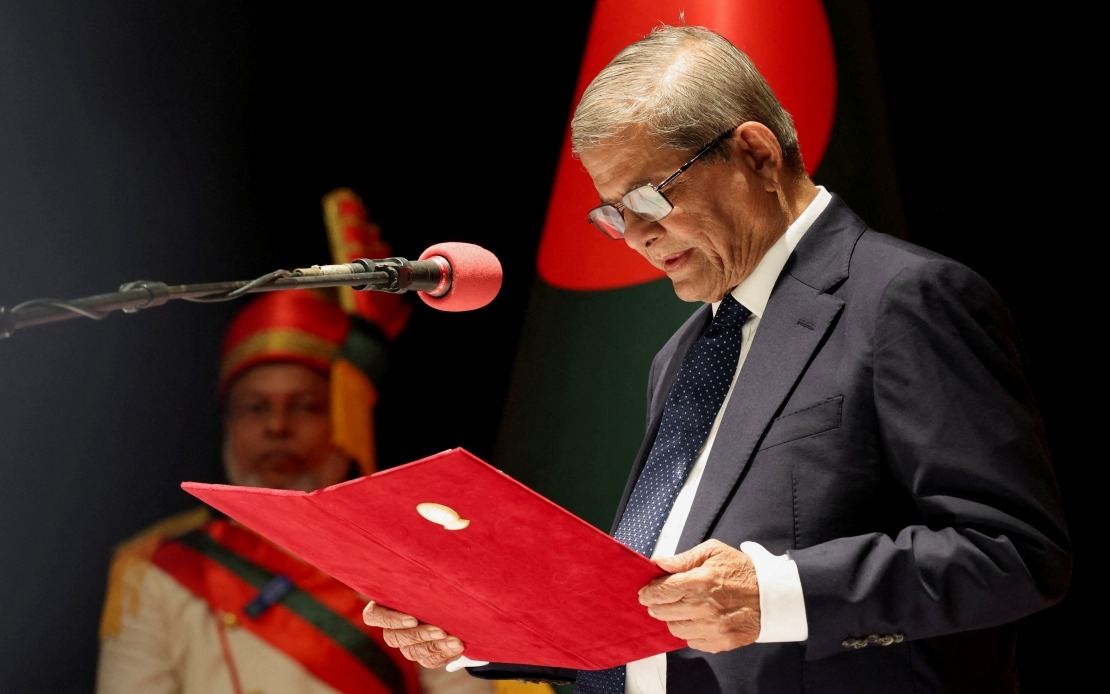
Mirza Fakhrul Islam Alamgir formally assumed office as Bangladesh's 23rd President on Friday evening in a constitutional ceremony held at the Bangabhaban, the presidential residence in Dhaka. The oath-taking took place at 7.30 pm local time in the Darbar Hall, marking a significant transition in the country's leadership structure during a period of considerable political change.
Acting Speaker Barrister Kayser Kamal administered the oath to Alamgir, who arrives at the presidency with extensive experience in Bangladesh's political establishment. The ceremonial proceedings followed constitutional protocols, beginning with Alamgir's formal reception by senior officials upon entering the Bangabhaban compound, followed by a meeting with outgoing Acting President Hafiz Uddin Ahmad Bir Bikram.
The inauguration drew a comprehensive gathering of Bangladesh's political and administrative hierarchy. Prime Minister Tarique Rahman attended alongside the chief justice of Bangladesh, members of the Cabinet, foreign diplomatic representatives, members of parliament, and leading civil and military officials. This broad attendance underscored the significance of the transition and the continuity of state functions during the presidency change.
The symbolic elements of the ceremony reflected Bangladesh's constitutional traditions. Following the administration of the oath, the newly inaugurated president and the acting president exchanged seats in a formal gesture denoting the official transfer of executive authority. Alamgir subsequently signed both the oath of office and the oath of secrecy, binding him to the constitutional duties and confidentiality requirements of the presidency. The ceremony concluded with the national anthem, completing the formal transfer of power.
Alamgir's election to the presidency represents recognition of his prominence within Bangladesh's political landscape. He previously served as secretary-general of the Bangladesh Nationalist Party (BNP), one of the country's two major political forces, positioning him among the most established figures in the nation's governance structures. His ascension to the presidency reflects his standing within political circles and his constitutional eligibility as determined by parliament.
Parliament elected Alamgir to the position in accordance with Bangladesh's constitutional framework, which vests the power of presidential selection in the legislative body. The election process represented the formal mechanism through which the nation transitioned to a new head of state, following established democratic and constitutional procedures that have governed Bangladesh's presidential selections.
The timing of this inauguration occurs within Bangladesh's broader political context, where institutional transitions reflect ongoing developments in the country's governance. The assumption of the presidency by a figure of Alamgir's political background carries implications for how the office may interact with the legislative branch and the executive government headed by Prime Minister Tarique Rahman during the coming constitutional period.
For observers of South Asian politics, Bangladesh's presidential transition demonstrates the continuity of constitutional processes even during periods of political evolution. The ceremony's formal nature and broad participation by state institutions illustrate the importance placed on maintaining procedural legitimacy and institutional stability, elements particularly significant in a nation navigating complex political circumstances.
The presidency in Bangladesh functions as a constitutional office with significant ceremonial responsibilities alongside certain executive and emergency powers. Alamgir's tenure will encompass representing the nation domestically and internationally, performing state functions, and serving as guardian of constitutional provisions. His background in party politics and governance positions him to engage substantively with both domestic constituencies and the international community during his presidency.
Regionally, Bangladesh's presidential transition may hold interest for Southeast Asian and South Asian observers monitoring political developments in a major Muslim-majority democracy. The orderly nature of the constitutional transfer and the participation of key institutions signal institutional resilience, though analysts may watch how the new presidency navigates potential tensions between ceremonial duties and evolving political dynamics within the Bangladesh government structure.

