The Malaysian contingent at the Glasgow 2026 Commonwealth Games faced a sobering reminder of the unpredictable nature of elite sport on Friday, as the delegation experienced both exhilaration and heartbreak across five different disciplines competing on the second day of competition in Scotland. The results underscore the challenge facing Malaysia's athletic representatives in an increasingly competitive Commonwealth Games environment, where marginal improvements in performance can determine success or failure at the international stage.
In the pool at Tollcross International Swimming Centre, para swimmer Ethan Khoo Yin Jun delivered an encouraging performance by securing fourth position in the men's 200 metre freestyle para event with a time of 2 minutes 5.25 seconds, demonstrating that Malaysia retains competitive depth in Paralympic swimming. However, this bright spot was quickly overshadowed by disappointment in the able-bodied swimming events, where four Malaysian swimmers faltered in their heat races. Khiew Hoe Yean finished 10th overall among 27 competitors in the men's 400 metre freestyle with a time of 3:54.23, while teammate Tan Khai Xin placed 14th with 3:57.54. In the men's 50 metre freestyle, both Lim Yin Chuen and Arvin Shaun Singh Chahal tied for 28th position out of 68 swimmers, failing to advance beyond their qualifying rounds and raising concerns about Malaysia's pipeline in sprint freestyle events.
The swimming disappointments highlight a structural challenge for Malaysian aquatic sports: while the nation has produced competitive swimmers historically, maintaining standards across multiple events and distances remains difficult amid competition from powerhouse swimming nations like Australia and Great Britain. These early exits suggest that either the current training methodologies require reassessment or that Malaysia's swimmers face a gap in preparation intensity compared to their Commonwealth rivals. The performances also indicate that selection criteria may need scrutiny, as fielding athletes who cannot advance past heats raises questions about realistic medal prospects in swimming disciplines.
Drama unfolded on the basketball court at Scottish Event Campus, where Malaysia's men's 3x3 wheelchair basketball team suffered a narrow and painful opening loss to Wales in Group B competition. The 13-14 defeat in the final moments represented a crucial missed opportunity, as wheelchair basketball typically offers Malaysia stronger medal possibilities than traditional court sports. This loss carries significant implications for the team's path through the group stage and could complicate their pathway to medal contention, making subsequent matches essentially must-win scenarios for any hope of advancing to medal playoffs.
In sharp contrast, Malaysian lawn bowlers demonstrated the consistency and composure befitting one of the nation's strongest traditional Commonwealth Games sports. Men's singles player Izzat Shameer Dzulkeple secured his third consecutive victory in the group stage competition, while the women's pairing of Aleena Ahmad Nawawi and Syafiqa Haidar Afif Abdul Rahman achieved identical success with a third straight win. These performances suggest that Malaysia's lawn bowling contingent, a sport where the nation has maintained competitive excellence over multiple Games cycles, remains on track to contend for medals as the competition progresses to knockout stages.
Artistic gymnastics delivered another positive result when Rachel Yeoh navigated the qualifying round successfully at Glasgow International Arena, placing third among 49 competitors and securing advancement to the uneven bars final. This achievement is particularly significant given the technical difficulty and judging variability inherent in gymnastics, where incremental improvements in execution translate directly to advancement. Yeoh's qualification demonstrates that Malaysia's investment in artistic gymnastics development is yielding measurable returns, though the challenge of converting qualifying success into medal performances remains steep against gymnastics powerhouses within the Commonwealth.
Looking ahead to Saturday, Malaysian weightlifting emerges as a critical focal point, with two defending Commonwealth Games champions preparing to defend their titles at SEC Armadilo. Mohamad Aniq Kasdan will compete in the men's 60 kilogramme category, while Mohamad Aznil Bidin pursues his third consecutive Commonwealth Games gold medal in the men's 65 kilogramme division. These competitions represent Malaysia's strongest realistic medal prospects in Glasgow, as weightlifting has consistently been a sport where Malaysian athletes punch above their nation's population and economic weight class within Commonwealth competition.
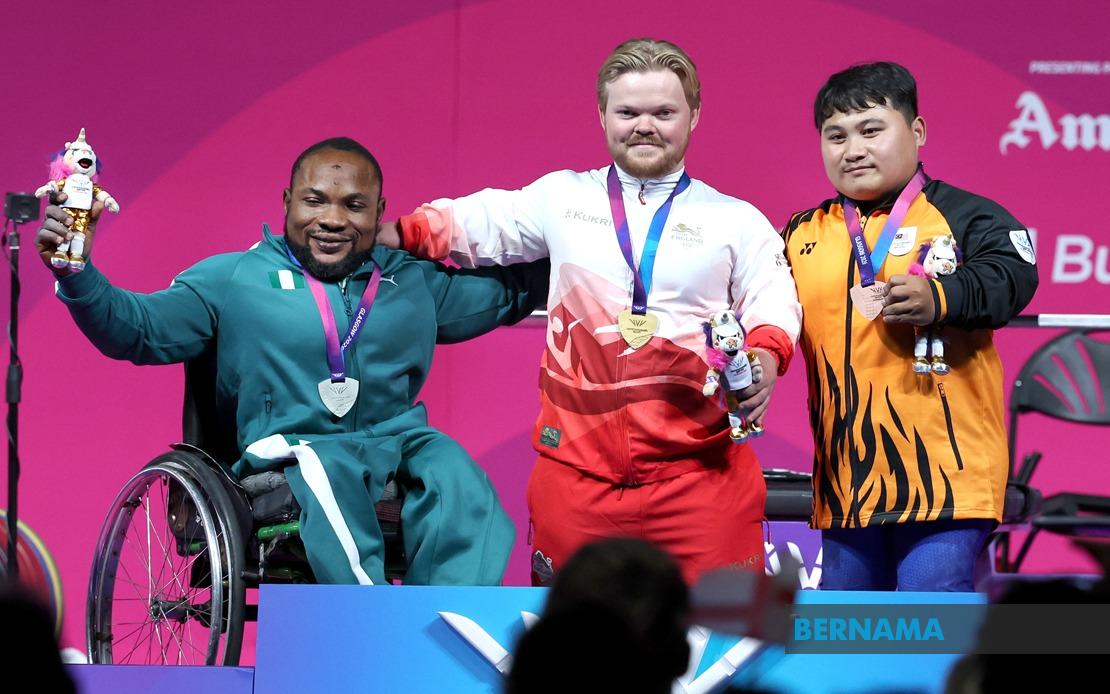
The weightlifting contests carry additional significance beyond the immediate medal count. Successful defence by Kasdan and Bidin would underscore Malaysia's technical excellence in a discipline requiring precise biomechanical execution and dedicated strength training infrastructure. Furthermore, such victories would validate Malaysia's investment in identifying and developing specialist strength athletes and signal to potential future lifters that sustained excellence in the sport can be achieved within the Malaysian system. These performances would also provide psychological momentum during a Games where Malaysia has captured only one medal thus far through Bonnie Bunyau Gustin's bronze in powerlifting in the men's lightweight category.
The swimming contingent receives another chance to demonstrate competitiveness when Hoe Yean, Arvin Shaun, Yin Chuen, and Khai Xin combine for the men's 4x200 metre freestyle relay on Saturday. Relay events often provide redemptive opportunities for swimmers who faltered individually, as the format emphasizes sustained effort across longer distances where pacing and tactical execution can overcome individual limitations. Whether this quartet can convert a group performance into an improved result remains uncertain, but the relay format offers a less individually pressurised environment where teammates can provide encouragement and tactical adjustments.
Malaysia's current medal tally of one bronze, achieved early in the Games through Gustin's powerlifting success, places the nation in an urgent position requiring immediate medal acquisition across multiple sports to meet historical performance benchmarks. The mixed results on day two illustrate the volatile nature of Commonwealth Games competition, where depth and consistency across numerous sports determine final standings. Malaysia must capitalise on its traditional strengths in lawn bowling and weightlifting while simultaneously seeking breakthrough performances in newer medal pursuits such as wheelchair basketball and artistic gymnastics to compile a competitive overall result in Glasgow.

