The Malaysian Maritime Enforcement Agency (MMEA) has released impressive enforcement figures for the first half of 2024, documenting RM2.29 billion in seized assets and the arrest of 516 individuals involved in maritime crimes and regulatory violations. These statistics underscore the agency's expanding capacity to project authority across Malaysia's extensive maritime domain, which remains a critical vulnerability for law enforcement given the country's position as a major shipping hub and gateway to some of the world's busiest sea lanes.
Maritimes Admiral Datuk Mohd Rosli Abdullah, the MMEA director-general, attributed these results to the agency's sustained operational commitment to enforcing national sovereignty over Malaysian waters. He framed the seizures as evidence of the MMEA's capacity to maintain control over a vast ocean territory that extends across the South China Sea, the Sulu Sea, and the Strait of Malacca—regions where maritime enforcement challenges compound across multiple jurisdictions and involve diverse criminal networks.
The breakdown of seized goods reveals the varied nature of maritime infractions detected along Malaysian coasts. Confiscated local vessels accounted for the largest share at RM2.11 billion, suggesting significant smuggling networks operating through legitimate-appearing fishing vessels and merchant ships. Illicit drugs ranked second at RM86.06 million, reflecting the region's established role as a trafficking corridor for narcotics destined for global markets. Foreign fishing vessels seized totalled RM66 million, highlighting chronic incursions into Malaysian waters by vessels from neighbouring countries seeking to exploit fish stocks. Smuggled cigarettes contributed RM25.16 million in seizures, pointing to ongoing tax evasion schemes targeting the domestic tobacco market, while smaller contraband categories including prawns and diesel comprised the remainder.
For Malaysian readers, the cigarette seizures carry particular domestic significance. The MMEA's June 23 operation in Tawau, Sabah, which intercepted RM64 million in cigarette shipments alongside a smuggling vessel, exemplifies the scale of tax revenue losses affecting federal and state governments. Cigarette smuggling remains endemic across Southeast Asia, with sophisticated criminal networks exploiting maritime routes to undercut legitimate taxation and destabilise regulatory markets. The Tawau success demonstrates that even remote territorial waters are receiving enforcement attention, a crucial development given Sabah's geographic proximity to Filipino and Indonesian waters where smuggling networks operate with relative impunity.
Mohd Rosli articulated the MMEA's strategic priorities beyond seizure volume, emphasizing the prevention of controlled and subsidised goods exports. This objective reflects Malaysia's vulnerability to smuggling of price-controlled commodities—particularly fuel and food items—across maritime borders where enforcement is difficult. The agency's commitment to tax evasion prevention indicates recognition that maritime crime fundamentally threatens government revenue streams, making enforcement not merely a security issue but an economic one with implications for public spending on healthcare, education, and infrastructure.
The integration of MMEA operations with other enforcement agencies, exemplified through participation in Ops Tiris, represents a significant institutional shift toward coordinated maritime governance. Rather than operating as an isolated maritime patrol force, the MMEA now functions as a node within a broader law enforcement ecosystem incorporating naval assets, customs authorities, and specialized investigation units. This structural integration, while not explicitly detailed in the MMEA statement, addresses longstanding vulnerabilities in Malaysia's maritime enforcement architecture where fragmented agency jurisdiction historically allowed criminals to exploit inter-agency gaps.
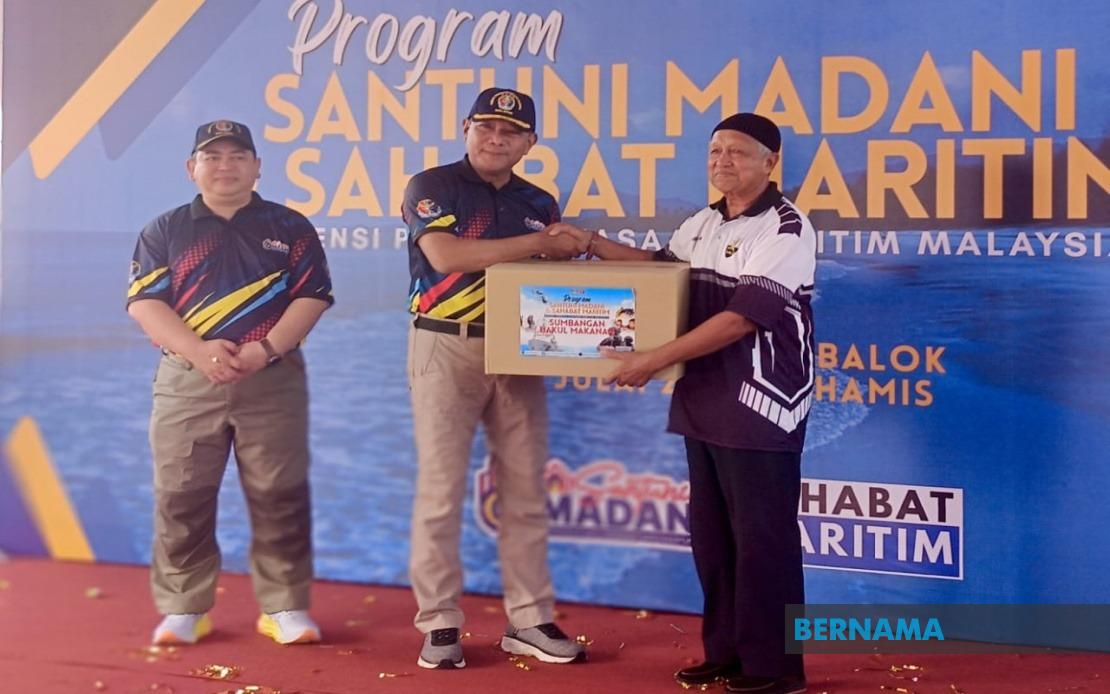
The Santuni MADANI and Sahabat Maritim programmes mentioned by Mohd Rosli represent a softer enforcement approach complementing seizure-focused operations. These community engagement initiatives, conducted at Pantai Rekreasi Balok, seek to build public awareness regarding maritime safety while cultivating intelligence partnerships with coastal communities who frequently observe smuggling activity. For Southeast Asian observers, this two-track approach—combining hard enforcement with community liaison—mirrors best practices from more successful maritime policing jurisdictions in the region, including elements of the Indonesian and Thai coastguard strategies.
The strategic context underlying these enforcement results cannot be separated from Malaysia's geographic position in the Strait of Malacca, one of the world's most economically vital shipping corridors. The volume and sophistication of maritime crime in Malaysian waters reflect this geopolitical reality—the region attracts criminal networks precisely because of its commercial importance and the profits available from smuggling controlled commodities, narcotics, and labour trafficking across international borders. MMEA seizures thus represent not merely domestic law enforcement successes but contribute to regional maritime security architecture affecting broader supply chains and trade patterns across Southeast Asia.
Looking forward, the sustainability of these enforcement results depends on resource allocation and operational consistency. The RM2.29 billion figure, while substantial in absolute terms, must be evaluated against the monetary value of goods estimated to pass through Malaysian waters annually—a figure likely in the hundreds of billions of ringgit. This comparison suggests that the MMEA's seizures, however impressive, capture only a small fraction of illicit maritime commerce. Malaysian policymakers should consider whether current resource levels support the operational tempo required to maintain meaningful deterrence against transnational maritime crime networks operating across poorly monitored ocean zones.
The MMEA's operational focus on search and rescue coordination alongside enforcement represents recognition that maritime governance extends beyond law enforcement. Malaysian waters experience frequent maritime accidents involving fishing vessels, merchant ships, and private craft, making the agency's SAR capabilities essential for protecting human life. The integration of SAR operations with enforcement activities reflects institutional maturity in understanding that comprehensive maritime governance requires both crime prevention and humanitarian response capacity.
For Malaysian observers concerned with broader governance issues, the MMEA's performance raises important questions about institutional effectiveness measurement. The agency quantifies success through seizure values and arrest counts, metrics that demonstrate capability but do not necessarily indicate whether maritime crime rates are declining or whether criminal networks are adapting to enforcement pressure by shifting operations to less-monitored regions. Comprehensive assessment of maritime enforcement effectiveness would require measuring trends in seizure rates, criminal conviction rates, and recidivism patterns—data not typically disclosed in agency performance briefings.
The continuation of intensified maritime operations remains dependent on political support and budget allocation during a period when Malaysian federal expenditure faces competing demands from various agencies and development priorities. The MMEA's stated commitment to further operational enhancement, while welcome from a law enforcement perspective, translates into real resource requirements for vessel operations, personnel training, and intelligence-gathering capabilities. Whether Malaysia's fiscal situation permits sustained expansion of maritime enforcement capacity represents a crucial policy question affecting the country's ability to maintain sovereign control over its extensive maritime territory and prevent its waters from becoming preferred corridors for transnational criminal networks.

