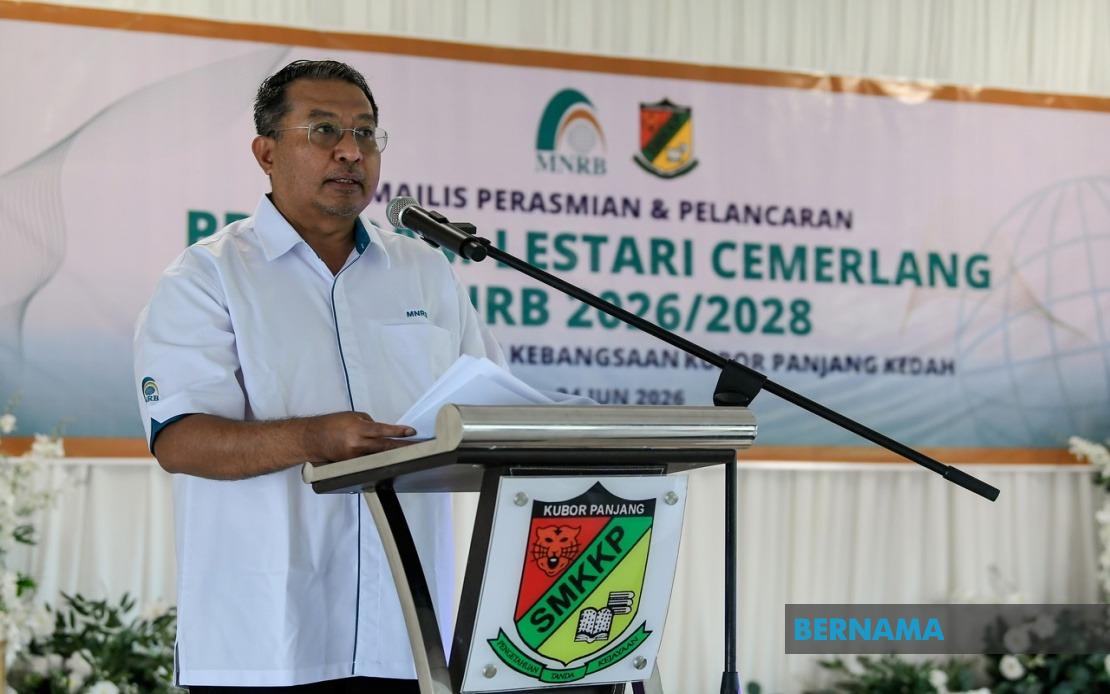
MNRB Holdings Berhad, an investment holding company, has committed nearly RM600,000 through its flagship Lestari Cemerlang Programme, bringing targeted educational support to six schools spread across the country. The latest beneficiary, Sekolah Menengah Kebangsaan Kubor Panjang in Pendang, Kedah, was officially launched into the initiative on June 24, marking an expansion of a programme that has been steadily building momentum since its inception more than a decade ago.
The Lestari Cemerlang Programme represents one of MNRB's core corporate social responsibility commitments, reflecting a strategic approach to education that extends beyond traditional charity. Datuk Rudy Rodzila Che Lamin, MNRB's interim president and group chief executive officer, underscored the company's belief that educational transformation requires a holistic strategy addressing both classroom learning and personal development. By concentrating efforts on schools in less urbanised regions, the initiative attempts to narrow the educational gap that often disadvantages students in rural communities who lack access to comparable resources and opportunities found in more developed areas.
The programme's design reveals an understanding that sustainable educational improvement demands multifaceted intervention. Rather than funnelling money into single-purpose initiatives, MNRB has structured support around several interconnected pillars. Additional tuition classes for Form Five students help address examination pressures during critical assessment periods, whilst motivational camps and student development programmes aim to build confidence and resilience beyond academic metrics. Physical infrastructure improvements, including upgraded learning facilities and sporting equipment, create an environment that reinforces the message that educational excellence is valued and supported.
A particularly innovative element of the initiative is the MNRB Smart e-Learning Room, equipped with interactive smart television and reliable internet connectivity. For schools in areas where digital resources remain limited, such facilities represent a significant leap forward in educational access. The emphasis on technology-enabled learning aligns with Malaysia's broader push towards digital transformation in education, ensuring that rural students do not fall behind their urban counterparts in acquiring essential digital literacy skills increasingly demanded by modern economies.
The geographical spread of participating schools illustrates the programme's deliberate expansion strategy. Following initial implementation in Perak, Pahang, Negeri Sembilan, Melaka and Selangor, the selection of SMK Kubor Panjang as the sixth school extends the initiative's reach into the northern corridor. This measured geographical expansion allows MNRB to build institutional knowledge and refine its approach based on experiences at each location, whilst maintaining quality oversight across the network of adopted schools.
Beyond immediate school-based interventions, MNRB has layered additional support through the Tabung Biasiswa MNRB scholarship scheme, demonstrating commitment to removing financial barriers for high-achieving students from disadvantaged backgrounds. Five top performers from SMK Kubor Panjang have been selected as scholarship recipients, opening pathways to diploma, bachelor's and master's level qualifications. This targeted approach recognises that academic potential is often constrained not by ability but by financial circumstances, and that investing in promising students yields returns that ripple through families and communities.
The scholarship programme's employment outcomes suggest genuine long-term impact. Of 14 students supported through scholarships from earlier participating schools, eight have subsequently joined MNRB Group upon graduation, creating a pipeline of talent whilst demonstrating to current students that educational investment translates into tangible career opportunities. This employment connection also provides a practical incentive for scholarship recipients to succeed, knowing that their studies lead to specific employment possibilities within a stable, reputable organisation.
Hazlina Hazani, MNRB Group chief people officer, emphasised that the Tabung Biasiswa MNRB specifically targets students pursuing higher education in fields aligned with MNRB's business operations—insurance, takaful and finance. This specialisation strategy serves multiple purposes: it ensures scholarship support reaches students likely to find employment within the company's sector, develops a pipeline of qualified professionals for MNRB's expansion, and creates measurable pathways that encourage current students to pursue relevant disciplines. The synergy between scholarship priorities and corporate needs represents pragmatic corporate citizenship that benefits both the company and participating students.
For Malaysian schools, particularly those in rural and semi-rural areas struggling with resource constraints, the Lestari Cemerlang Programme offers a model of sustained corporate engagement that goes beyond occasional donations. By committing significant financial resources, providing ongoing mentorship, upgrading infrastructure, and creating clear pathways to higher education and employment, MNRB demonstrates how private sector involvement can meaningfully address educational disparities. The programme's holistic approach—combining academic support, character development, facility upgrades and scholarship opportunities—reflects sophisticated understanding that educational transformation requires simultaneous attention to multiple factors rather than isolated interventions.
The initiative also carries implications for broader corporate social responsibility practices in Malaysia and Southeast Asia. As companies face increasing pressure to demonstrate meaningful social impact rather than performative charity, MNRB's approach of establishing adopted-school relationships spanning over a decade, measuring employment outcomes, and continuously expanding the initiative suggests a model other corporations might replicate. The programme's focus on rural areas, where government resources are often stretched thinnest, identifies a genuine gap where corporate investment can generate substantial returns in terms of improved educational access and outcomes.
Looking forward, the success of the Lestari Cemerlang Programme will likely depend on sustaining momentum whilst maintaining quality across an expanding network of schools. As the programme moves beyond six schools, scaling challenges will emerge—ensuring consistent implementation of initiatives, maintaining oversight quality, and securing sustainable funding become more complex. However, early results demonstrating employment placement rates and scholarship recipient success suggest MNRB possesses the institutional capacity and genuine commitment to navigate these challenges while remaining focused on its core mission of supporting educational excellence in underserved communities.