Indian Prime Minister Narendra Modi has moved to contain a mounting political crisis by pledging stringent penalties for those responsible for examination fraud, addressing the grievances of thousands of students who have taken to the streets in New Delhi. Speaking on Thursday through social media, Modi emphasised that the welfare and future of India's youth represent his government's paramount concern, announcing plans to establish accelerated judicial proceedings to hold accountable those involved in question paper leaks. This intervention marks his first substantive public response to the unfolding demonstrations, which have evolved into one of the most significant tests of his authority since securing a third consecutive term in office during 2024 elections.
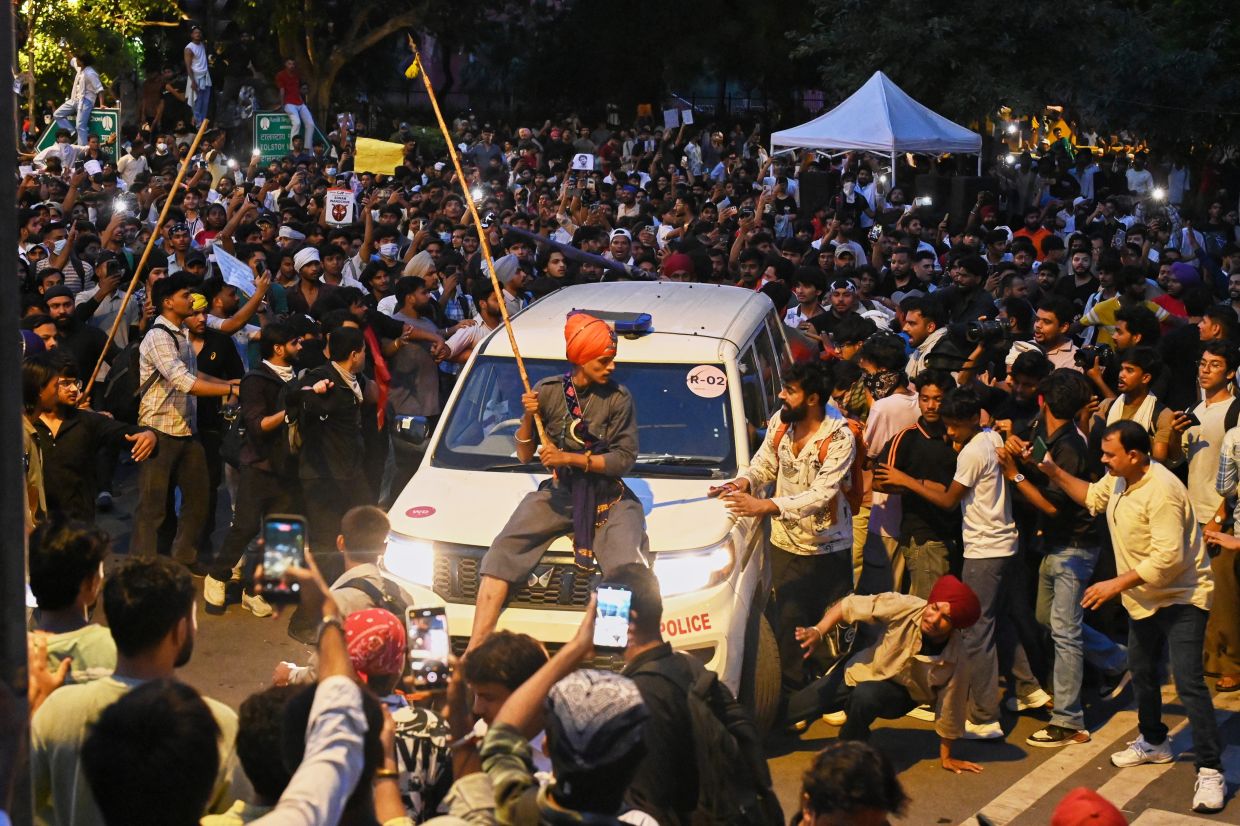
The escalating unrest erupted dramatically on Monday when police deployed tear gas and wielded batons against tens of thousands of demonstrators attempting to march toward parliament as the monsoon legislative session commenced. The crackdown resulted in the capital's largest street confrontation in approximately five years, with at least 178 people, comprising both civilians and security personnel, sustaining injuries in the violent exchanges. Protesters retaliated by throwing stones at police formations, signalling their determination to press forward despite the forceful government response. The incident has become a pivotal moment, transforming what initially appeared as a narrowly focused campaign into a broader uprising reflecting deeper social anxieties across Indian society.
At the movement's core lies the Cockroach Janta Party, a social media-driven coalition that commands millions of followers across digital platforms. The CJP originated in May as a satirical commentary on remarks attributed to Chief Justice Surya Kant, who reportedly characterised young people as "cockroaches" and "parasites" during judicial proceedings. From these humble origins, the movement has substantially expanded its platform to encompass widespread frustrations regarding joblessness, insufficient opportunities for young citizens, and what participants describe as an increasingly authoritarian approach to governance under Modi's administration. This evolution demonstrates how initially localised grievances can rapidly crystallise into comprehensive political challenges when underlying social discontent runs deep.
The examination fraud issue itself reflects systematic failures within India's educational infrastructure that have severely eroded public confidence. A leaked question paper for a prestigious medical entrance examination forced over two million candidates to resit the examination, causing immense disruption and expense to aspiring medical professionals and their families. Compounding these difficulties, controversies surrounding the online grading of tests administered to nearly two million secondary school students have intensified anger across multiple educational sectors. These recurring irregularities suggest deeper structural problems within testing agencies rather than isolated incidents, amplifying demands for comprehensive accountability and institutional reform.
Opposition political parties have strategically capitalised on the government's vulnerability by disrupting parliamentary business and demanding an official apology from Modi concerning Monday's police actions. Congress Party leader Rahul Gandhi has launched pointed attacks on social media, asserting that Modi himself bears primary responsibility for devastating India's educational system through inaction and implicit endorsement of those responsible for institutional dysfunction. This parliamentary dimension transforms the crisis from a street movement into a constitutional challenge, forcing Modi to navigate intense pressure from both grassroots demonstrators and organised political opponents simultaneously. The opposition's coordinated response signals broader dissatisfaction with government performance that extends beyond examination failures into questions of overall governance quality.
Wednesday evening witnessed renewed confrontations when crowds assembled outside Jantar Mantar, a historically significant protest site in central New Delhi, leading to late-night clashes with police personnel. According to CJP representatives, security forces employed heavy-handed tactics including shuttering internet connectivity and subjecting protesters to violent treatment. Conversely, Delhi Police characterised demonstrators as instigators, claiming protesters attacked officers with stones and plastic bottles resulting in serious injuries to law enforcement personnel. These competing narratives reflect the deep polarisation surrounding the movement and demonstrate how protest dynamics in India's capital have become intensely contested political terrain where each side's account contradicts the other.
The demonstrations have expanded geographically beyond New Delhi's confines, with significant rallies emerging in major metropolitan centres including Mumbai, Bengaluru, and Patna, suggesting the movement possesses mobilising capacity across India's diverse regions. Notably, the protests have attracted international attention and solidarity expressions, with students in neighbouring Bangladesh organising a "torch rally" on Thursday evening to demonstrate backing for their Indian counterparts. This cross-border dimension carries particular significance given Bangladesh's recent experience with youth-led protests in 2024 that culminated in the government of Sheikh Hasina's collapse and her subsequent departure from office. Such parallels have likely heightened New Delhi's concerns regarding the protest movement's revolutionary potential and staying power.
The timing of these demonstrations poses particular challenges for Modi's administration as it attempts to project an image of stable, effective governance domestically whilst maintaining India's standing internationally. The examination fraud scandal undermines the government's narrative of developmental progress and institutional competence, particularly damaging given the central importance of education to India's middle-class aspirations and social mobility pathways. Youth unemployment remains persistently high across India despite government claims of job creation, leaving young citizens sceptical of official development narratives. The confluence of these factors has created a political environment where Modi's traditional messaging about national progress and developmental success rings hollow to significant youth cohorts experiencing economic precarity.
Modi's pledge to establish fast-track courts represents an attempt to signal governmental responsiveness without necessarily addressing the deeper systemic issues that have generated such widespread anger. Whether such judicial mechanisms will satisfy demonstrators demanding comprehensive educational reform and ministerial resignations remains uncertain. The government faces a delicate balancing act between appearing tough on corruption whilst avoiding further violent confrontations that could intensify public sympathy for the protest movement. Each escalation risks pushing more young citizens toward opposition parties or radical movements, potentially reshaping India's political landscape in ways unfavourable to Modi's long-term electoral prospects, particularly among demographic cohorts whose support has been crucial to his electoral victories.

