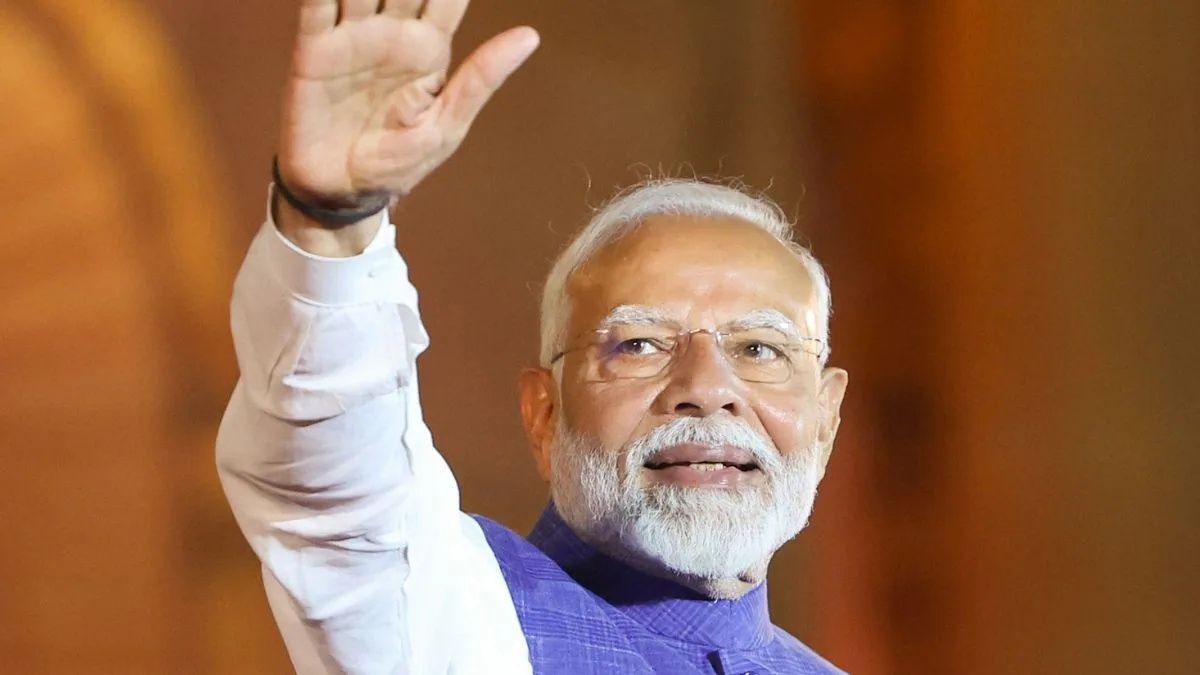
Prime Minister Narendra Modi will preside over the 12th International Day of Yoga (IDY) celebrations from Kolkata's iconic Red Road on Sunday, June 21, underscoring his government's commitment to the "Healthy Body, Healthy Mind" philosophy while simultaneously reinforcing political priorities in a strategically crucial state. The national event will begin at dawn with mass demonstrations of the Common Yoga Protocol, drawing thousands of citizens, senior dignitaries, and government officials to participate in synchronized yoga practice. The scale of the gathering is expected to set new records for participation in the annual observance, reflecting the government's push to embed wellness practices into mainstream consciousness across the country.
The decision to host India's primary IDY celebration in Kolkata carries significant political dimensions beyond the surface health agenda. The venue selection arrives on the heels of the Bharatiya Janata Party's decisive electoral victory in West Bengal Assembly elections, marking a watershed moment in the state's political landscape. This positioning of a major national event in the state sends an unmistakable signal that the Modi administration intends to deepen its engagement with West Bengal and consolidate its newly acquired political ground. Senior BJP leaders have already signalled that development initiatives and resource allocation will increasingly flow toward the state, effectively using high-profile national events as instruments of political consolidation.
Red Road itself holds symbolic significance within Kolkata's urban landscape. The historic thoroughfare represents far more than a ceremonial venue—it embodies the city's tradition of public gathering, military heritage, and ecological innovation. By selecting this particular location, event organisers have deliberately chosen a space resonating with civic participation and collective action, lending additional gravitas to the celebration while anchoring yoga within the broader framework of civic responsibility. The organisers anticipate unprecedented attendance levels at the Sunday event, suggesting confidence in mobilizing support within the state capital.
The 12th IDY celebrations operate under the thematic umbrella of "Yoga for Healthy Ageing," addressing a demographic reality that resonates across developed and developing economies alike. Union Minister of State for Ayush and Health Prataprao Jadhav has emphasized that the challenge confronting modern societies extends beyond mere life extension—the critical objective involves ensuring that increased longevity translates into vitality, autonomy, and meaningful engagement. Yoga, positioned as a time-tested holistic methodology, purportedly strengthens physical capacity while enhancing mental equilibrium and overall life quality. This theme carries particular resonance in Southeast Asia and South Asia, where aging populations increasingly strain healthcare systems and social security frameworks.
The administrative machinery supporting the celebrations has expanded dramatically in scope and scale. The Ministry of Ayush's Yoga Sangam Portal has registered over 600,000 organizations, indicating grassroots enthusiasm that extends far beyond government promotion. These participating institutions span schools, workplaces, community centers, and cultural organizations, collectively mobilizing participants to conduct simultaneous yoga sessions across their respective locations on Sunday morning. This distributed network of participation amplifies the celebration's reach while creating a sense of nationwide synchronicity around wellness practices. The registration milestone underscores how effectively the government has leveraged digital infrastructure and institutional networks to facilitate mass behavioral coordination.
The geographical scope of the International Day of Yoga extends well beyond India's borders. Approximately 2,500 organized events are scheduled across multiple nations, with Indian diplomatic missions in 211 countries actively coordinating celebrations. This global footprint reflects India's strategic interest in positioning yoga as a cornerstone of soft power, particularly within the context of competing cultural narratives. For Malaysian and Southeast Asian readers, the international dimension carries relevance as India's wellness diplomacy increasingly intersects with regional health policies and cultural exchanges. The sustained promotion of yoga through state apparatus demonstrates how countries leverage wellness movements toward broader geopolitical objectives.
Parallel to the main celebration, the Ministry of Culture will organize yoga programs at 100 iconic locations throughout India, deliberately interweaving the nation's cultural heritage with contemporary wellness narratives. This integration strategy serves multiple purposes: it validates yoga as an essential component of Indian civilization while simultaneously presenting wellness as accessible through culturally rooted practices. The selection of heritage sites as venues further positions yoga within nationalist discourse, strengthening associations between physical practice and cultural continuity. For audiences across Asia skeptical of Western-origin fitness movements, this framing offers an appealing alternative rooted in indigenous knowledge systems.
The lead-up to Sunday's main event witnessed Kolkata hosting various preparatory gatherings, including the "Daud Se Dhyan 2026" initiative conducted under the Swachhata Se Swagat Programme. This preparatory infrastructure reveals how the government strategically layers multiple programs around a central event, leveraging wellness messaging to advance complementary civic objectives including sanitation, environmental consciousness, and community responsibility. The integration of health promotion with cleanliness drives and ecological awareness demonstrates sophisticated policy coordination that extends wellness beyond individual practice into collective social behavior modification.
Mandatory participation requirements imposed by the West Bengal government underscore the event's political dimensions. Government employees throughout the state have received directives to participate in IDY celebrations at designated venues including Red Road, Milan Mela grounds, or their respective workplaces and residential areas. This administrative mandate converts voluntary wellness practice into state-orchestrated participation, blurring boundaries between health promotion and political mobilization. For observers tracking governmental approaches to public health across the region, such requirements illuminate how wellness initiatives become mechanisms for demonstrating administrative reach and capability.
The choice of theme "Yoga for Healthy Ageing" aligns with demographic trends confronting South and Southeast Asian nations. As populations age across the region due to declining fertility rates and improving life expectancy, healthcare systems face mounting pressures. Positioning yoga as a preventive wellness mechanism offers governments a cost-effective approach to managing chronic diseases and reducing healthcare expenditure. This rationale carries particular weight in resource-constrained contexts across Southeast Asia, where aging-related health challenges will intensify significantly within the coming decades. India's emphasis on yoga for healthy aging thus carries policy implications extending well beyond India's borders, potentially influencing regional approaches to preventive health investment.
The Ministry of Ayush's expanded programming reflects broader organizational ambitions within India's health establishment. By coordinating celebrations across 211 international missions, registering 600,000 organizations, and scheduling 2,500 events globally, the ministry has constructed an unprecedented apparatus for promoting yoga as a mainstream health intervention. This institutional build-out suggests long-term commitment to positioning yoga within international health frameworks, potentially challenging Western pharmaceutical-centric models of wellness management. For the pharmaceutical and health technology sectors operating across Asia, the sustained government promotion of traditional practices represents both competitive pressure and market opportunity.
The convergence of political momentum, health advocacy, cultural nationalism, and international diplomacy within the International Day of Yoga celebrations illustrates how contemporary governments leverage wellness movements toward multifaceted objectives. For Kolkata specifically, the event provides opportunity to showcase the state's recovery and development trajectory under new political leadership. For India more broadly, the celebrations reinforce positioning yoga as a distinctive civilizational contribution relevant to global health challenges. The ripple effects across Southeast Asia will likely involve increased interest in yoga-based wellness programs, potentially influencing health policy frameworks and cultural attitudes toward traditional practices. As Sunday's celebrations unfold, observers should remain attentive to how successfully the Modi government converts enthusiastic participation into sustained behavioral change and policy outcomes extending beyond the ceremonial event itself.
%22%2F%3E%3C%2Fpattern%3E%3C%2Fdefs%3E%3Crect%20width%3D%22100%25%22%20height%3D%22100%25%22%20fill%3D%22url(%23ph2xbtwg)%22%2F%3E%3Crect%20width%3D%22100%25%22%20height%3D%22100%25%22%20fill%3D%22url(%23ph2xbtwp)%22%2F%3E%3Ctext%20x%3D%2250%25%22%20y%3D%2250%25%22%20text-anchor%3D%22middle%22%20dominant-baseline%3D%22central%22%20fill%3D%22rgba(255%2C255%2C255%2C0.95)%22%20font-family%3D%22Georgia%2C%20'Times%20New%20Roman'%2C%20serif%22%20font-weight%3D%22700%22%20font-size%3D%22226%22%20letter-spacing%3D%22-0.02em%22%3EPenang%3C%2Ftext%3E%3C%2Fsvg%3E)
%22%2F%3E%3C%2Fpattern%3E%3C%2Fdefs%3E%3Crect%20width%3D%22100%25%22%20height%3D%22100%25%22%20fill%3D%22url(%23phyt7eg)%22%2F%3E%3Crect%20width%3D%22100%25%22%20height%3D%22100%25%22%20fill%3D%22url(%23phyt7ep)%22%2F%3E%3Ctext%20x%3D%2250%25%22%20y%3D%2250%25%22%20text-anchor%3D%22middle%22%20dominant-baseline%3D%22central%22%20fill%3D%22rgba(255%2C255%2C255%2C0.95)%22%20font-family%3D%22Georgia%2C%20'Times%20New%20Roman'%2C%20serif%22%20font-weight%3D%22700%22%20font-size%3D%22194%22%20letter-spacing%3D%22-0.02em%22%3EPakatan%3C%2Ftext%3E%3C%2Fsvg%3E)