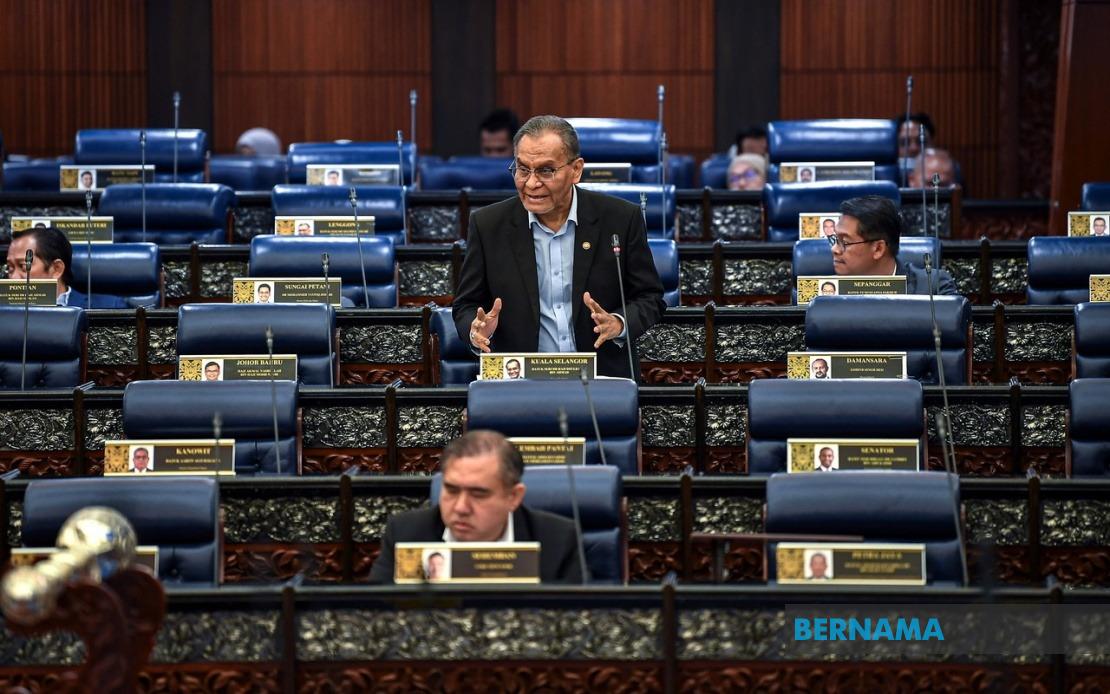
The Malaysian Health Ministry has placed renewed emphasis on stabilising private general practitioner clinics through a combination of outsourcing partnerships and regulatory adjustments aimed at improving their financial viability. Health Minister Datuk Seri Dr Dzulkefly Ahmad revealed the government's multi-pronged approach during parliamentary proceedings, signalling recognition that the country's private primary healthcare layer faces an existential challenge that, if left unaddressed, could destabilise the broader medical system.
The sector's deterioration has been marked and accelerating. Since 2013, approximately 2,034 private medical clinics have shuttered, creating genuine supply-side pressures within primary care. This contraction has coincided with declining intake of medical house officers into private practice, suggesting systemic structural problems extending beyond temporary market fluctuations. The pandemic accelerated closures among practitioners unable to sustain operations during lockdowns and reduced patient volumes, a phenomenon Dzulkefly acknowledged from personal experience managing health sector crises.
To address immediate economic viability, the government has lifted the minimum consultation fee ceiling for private practitioners to RM80, up substantially from the previous RM10 threshold. This regulatory intervention represents one of the most tangible policy responses to date, attempting to create pricing space that allows clinics to cover rising operational costs, staff wages, and rental expenses. The rationale reflects economic reality: the previous benchmark had become divorced from actual costs of delivering care and maintaining premises in urban and semi-urban Malaysia.
Dzulkefly's emphasis on outsourcing arrangements introduces a structural model worth examining. Rather than purely regulatory tweaks, outsourcing partnerships could involve government or corporate entities contracting private practitioners to deliver specific services—occupational health screening, chronic disease management, vaccination programmes, or corporate wellness services. Such arrangements would diversify revenue streams beyond walk-in consultations, providing more stable income and justifying retention of clinic staff and premises investment.
The health minister contextualised private GPs within a broader ecosystem comprising 2,916 MOH health clinics and 10,208 private GP clinics. This framing underscores that private practitioners constitute roughly 78 percent of Malaysia's primary care infrastructure by facility count. When such a significant portion faces viability pressure, the entire system's resilience weakens. Government clinics alone cannot absorb the demand should private providers vanish, yet MOH facilities already operate under resource constraints and staff shortages.
A critical dimension of the government's strategy involves public-private collaboration specifically targeting non-communicable diseases—hypertension, diabetes, obesity-related conditions—which consume disproportionate hospital resources. The 13th Malaysia Plan explicitly incorporates this collaborative framework, recognising that disease management spanning both sectors could decongest tertiary facilities and reduce preventable hospitalisations. This represents sophisticated health system thinking, acknowledging that primary care integration matters for macroeconomic health outcomes.
The comparison to United Kingdom and Taiwan models, raised during parliamentary questioning, carries significant implications. Both jurisdictions successfully integrated private practitioners into disease management pathways, compensating them through government contracts or referral mechanisms rather than relying solely on private patient fees. Taiwan's national health insurance system particularly demonstrates how regulated private practice can thrive while serving public health objectives. Malaysia faces structural barriers—including lower insurance penetration and different market dynamics—but the principle that institutional collaboration beats zero-sum competition remains valid.
Private clinic sustainability intersects directly with equity and access. While public healthcare remains constitutionally guaranteed and heavily subsidised, private clinics serve critical functions: absorbing demand that would overwhelm government facilities, providing employment to thousands of medical graduates, and delivering care in areas where government presence is sparse. Without viable private practice pathways, young doctors face limited career options within Malaysia, encouraging brain drain to Singapore, Australia, or the United States. The clinic closures already documented suggest this migration pressure is real.
However, the fee increase alone addresses only part of the problem. Private practice viability depends equally on patient volume, operational efficiency, and competitive positioning against larger healthcare corporations establishing franchise clinic networks. Solo practitioners face disadvantages in procurement, technology investment, and staff recruitment that regulation cannot entirely overcome. Outsourcing and collaboration models must therefore include concrete mechanisms—whether network membership, bulk purchasing arrangements, or managed service agreements—that provide tangible operational benefits, not merely aspirational rhetoric.
Implementation challenges loom large. Defining sustainable collaboration frameworks requires negotiation between private practitioner associations, government health authorities, and potentially insurers or corporate partners. Fee-setting mechanisms must balance affordability against viability. Accountability structures must ensure quality standards without creating regulatory burden that further erodes already-thin margins. These complications explain why many countries struggle with public-private healthcare integration despite conceptual appeal.
For Malaysian readers and policymakers, the immediate significance lies in understanding that primary care stability represents foundational health system infrastructure. Current clinic closures, though perhaps not immediately visible, reflect underlying sector stress that compounds over time. The government's stated commitment to intervention suggests recognition of this reality, though success depends on execution—whether outsourcing arrangements materialise with genuine benefit to practitioners, whether fee adjustments prove sufficient given inflation, and whether collaborative disease management frameworks actually function rather than remaining aspirational policy documents.
Regionally, Malaysia's experience resonates across Southeast Asia, where similar pressures affect private primary care in Thailand, Indonesia, and the Philippines. Solutions developed here could inform regional health system strengthening, particularly regarding sustainable integration models that neither collapse private practice nor fragment healthcare delivery. The stakes extend beyond individual clinic survival to encompass health system resilience at a moment when non-communicable disease burden demands precisely the kind of coordinated, distributed primary care network that private practitioners provide.