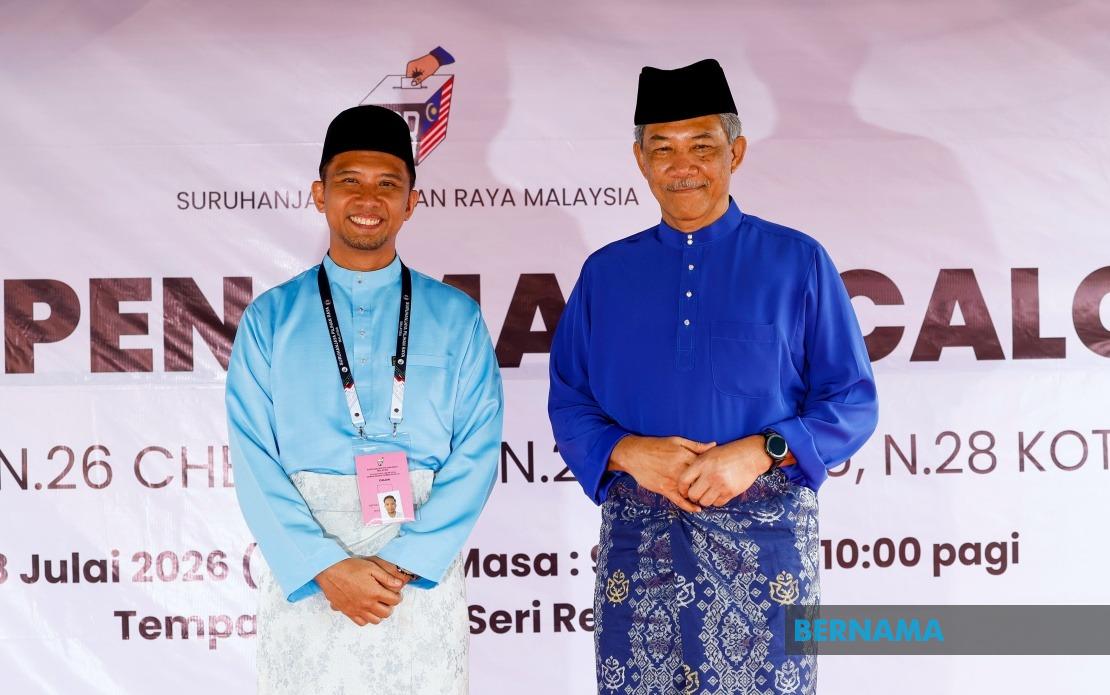
The Rantau state constituency in Negeri Sembilan is bracing for a two-candidate showdown following the conclusion of nomination proceedings on July 18, with Barisan Nasional's Mohamad Hasan, who doubles as the state coalition chairman and Malaysia's Foreign Minister, squaring off against Pakatan Harapan's Dr Azizul Hakim Mahdi. The returning officer, Mohd Zamri Mohd Esa, confirmed the straight fight configuration after the nomination process wound up at the Dewan Sri Rembau in the Rembau parliamentary constituency.
Modamad, who also serves as UMNO's deputy president, has maintained an iron grip on the Rantau seat since first capturing it two decades ago in 2004. His hold on the constituency has proven remarkably durable, winning again in the 2023 state election where he accumulated 16,957 votes, demolishing his PH challenger Rozmal Malakan, who could only muster 6,677 votes. The resulting majority of over 10,000 votes underscores the electoral strength he commands in this particular constituency, though the political landscape across Negeri Sembilan has become increasingly contested.
Speaking after the nomination event concluded, Mohamad, who simultaneously represents the Rembau parliamentary district, outlined his coalition's strategic direction for the campaign phase. He emphasised that Barisan Nasional intends to utilise its remaining campaign days to articulate its governing blueprint and build voter confidence in backing the coalition at the ballot box. He stressed the importance of methodical and properly coordinated campaign machinery, expressing his conviction that solid grassroots organising would translate into electoral victories.
Meanwhile, Dr Azizul Hakim, at 35 years old, is positioning himself as a generational alternative to the incumbent. The medical professional argues that his background as a healthcare practitioner, combined with a decade of clinical experience and ownership of three private clinics across Senawang, Puncak Alam, and Melaka, equips him with superior understanding of constituents' genuine concerns. His campaign platform centres on healthcare expansion and accessibility, reflecting his professional expertise rather than general political experience. He contends that his medical credentials and commitment to improving local health infrastructure represent a distinct choice for voters fatigued with conventional political messaging.
Beyond Rantau, the Negeri Sembilan state election landscape encompasses several other competitive races that will determine the overall composition of the state assembly. The Paroi seat presents a more fragmented contest involving three candidates: Ahmad Shahir Mohd Shah, who holds the position of press secretary to the Menteri Besar and represents Pakatan Harapan; Kamarol Ridzuan Mohd Zin campaigning under Perikatan Nasional's banner; and Mohd Nazree Mohd Yunus of Parti Pribumi Bersatu Malaysia. This three-way division potentially offers opportunities for any candidate to emerge victorious with a plurality rather than majority support.
The Chembong constituency will witness a cleaner two-person race between Barisan Nasional incumbent Datuk Zaifulbahri Idris and Pakatan Harapan challenger Danish Nazran Murad. Zaifulbahri's incumbent status typically provides structural advantages in terms of constituency service record and name recognition, though these benefits cannot guarantee electoral success in an increasingly volatile political environment.
In Kota, another three-cornered affair is unfolding where BN's Suhaimi Aini, the sitting representative, encounters competition from PH's Muhammad Allif Ibrahim and Bersatu's Akmal Noradzmi Abdul Rahim. The presence of three significant candidates in multiple constituencies highlights the fragmentation occurring within Malaysian state politics, where traditional two-coalition dominance faces challenges from emerging parties.
The 16th Negeri Sembilan state election represents a significant political moment for the peninsula's smallest state. The state assembly comprises 36 seats, and the Election Commission has orchestrated the electoral calendar with early voting scheduled for July 28 and general polling day set for August 1. This timing provides a relatively compressed campaign window compared to some previous contests, potentially advantaging candidates with stronger pre-existing organisational infrastructure and voter networks.
Electoral logistics reveal substantial participation potential, with the commission registering 889,490 eligible voters across Negeri Sembilan. This electorate comprises 867,151 ordinary voters, supplemented by 16,884 military personnel and their families, plus 5,455 police service members participating through early voting mechanisms. The inclusion of security force personnel through dedicated early voting represents a significant bloc that parties traditionally contest intensively, given their concentrated geographic and institutional positioning.
For Malaysian voters and political observers, the Negeri Sembilan contest carries significance beyond state-level implications. As a swing state with competitive constituencies, it offers early indicators regarding voter sentiment toward the current Selangor-based federal government and broader political alignments. The performance of Bersatu and Perikatan Nasional in this election will help illuminate whether these entities can sustain electoral momentum in peninsular constituencies or whether they remain primarily viable in East Malaysian contexts. The results will also demonstrate whether Barisan Nasional, following its federal return to government, can consolidate support at state level or whether anti-incumbency pressures persist.
The Rantau confrontation specifically encapsulates broader themes in Malaysian politics: the tension between established political heavyweights commanding substantial resources and constituencies, versus emerging professionals arguing that technical expertise and fresh perspectives should supersede traditional political credentials. Dr Azizul Hakim's healthcare-focused campaign pitch represents an increasingly common strategy whereby opposition candidates attempt repositioning contests around service delivery competencies rather than ideological or partisan considerations. Whether this approach gains electoral traction in a constituency where Mohamad Hasan has consistently prevailed will offer insights into changing voter priorities in Negeri Sembilan.

