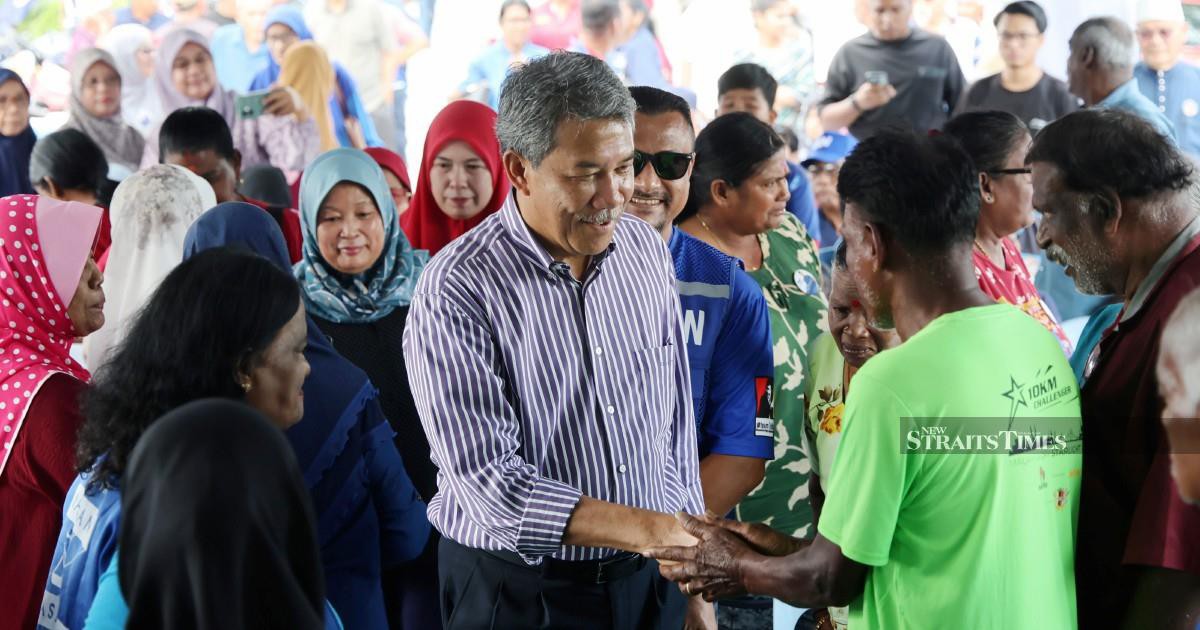
Datuk Seri Mohamad Hasan, Malaysia's Foreign Minister, has publicly expressed his readiness to vacate his ministerial seat at the behest of Prime Minister Datuk Seri Anwar Ibrahim. Speaking in Rembau, the senior politician indicated that his continued tenure in the foreign ministry remains contingent on the prime minister's confidence in his leadership. This statement underscores the hierarchical structure within Malaysia's executive apparatus, where cabinet-level portfolios remain at the discretion of the sitting premier.
The declaration carries significance within the Malaysian political landscape, where ministerial reshuffles and personnel changes frequently reflect broader coalition dynamics and party positioning. By articulating his willingness to step aside, Mohamad Hasan has signalled a degree of political flexibility and deference to executive authority. Such public pronouncements often serve multiple constituencies simultaneously—reassuring the prime minister of the minister's loyalty whilst simultaneously demonstrating to other political actors his alignment with government priorities.
Ministerial positions within Malaysia's cabinet system occupy a precarious equilibrium between appointed security and political vulnerability. While cabinet-level appointments technically remain throughout an administration's tenure, prime ministers retain considerable authority to reorganise their teams. This reality shapes how senior politicians navigate their relationships with the head of government, particularly during periods when coalitional stability may be questioned or party politics within the ruling alliance remain contested.
For the foreign ministry specifically, such transitions carry particular weight. Malaysia's diplomatic corps and international relations framework require continuity and strategic direction, yet the ministry's leadership ultimately serves at prime ministerial pleasure. Mohamad Hasan's explicit statement suggests he comprehends these institutional realities and has positioned himself as someone amenable to organisational changes. This posture may reflect confidence in his political standing or, conversely, a pragmatic acknowledgement of vulnerabilities within the current political configuration.
The timing and context of such declarations warrant consideration. Malaysian political cycles frequently generate speculation regarding ministerial appointments, particularly around party assemblies, coalition meetings, or periods marked by governance challenges. When senior officials publicly affirm their subordination to prime ministerial authority in this manner, it often occurs against a backdrop of internal discussion or external questioning regarding their tenure. The Rembau context—Mohamad Hasan's parliamentary constituency—suggests these remarks addressed both his constituents and broader party stalwarts.
Within Umno, the party that Mohamad Hasan represents, such statements carry intra-party significance as well. The Foreign Minister occupies a consequential position within Malaysia's governance apparatus, and his portfolio carries both international diplomatic responsibilities and considerable domestic political weight. Party colleagues and rival factions monitor such declarations closely, interpreting them as signals regarding factional alignments and personal political calculations.
The mechanics of Malaysian cabinet governance derive from Westminster traditions adapted to the Malaysian constitutional framework. While the Prime Minister commands cabinet appointments, the effective administration of government requires ministerial competence and retention of experienced personnel. Mohamad Hasan's expressed willingness to defer entirely to prime ministerial judgment acknowledges this tension—he simultaneously affirms democratic accountability to the elected premier whilst implicitly signalling his capability and value in the foreign ministry portfolio.
From a diplomatic perspective, Malaysia's international standing depends substantially on consistent foreign ministry leadership. The country maintains extensive bilateral relationships throughout ASEAN, the broader Indo-Pacific region, and globally. Ministerial continuity supports the cultivation and maintenance of these relationships. Yet political realities within Malaysian coalition politics periodically necessitate reshuffle decisions that reflect governance necessities alongside political considerations extending beyond diplomatic portfolios alone.
The statement also carries implications for how Malaysia's political stakeholders evaluate ministerial performance and accountability. By framing his continuation in office explicitly as dependent on prime ministerial satisfaction, Mohamad Hasan has established a clear metric for his tenure—the prime minister's confidence rather than established performance benchmarks or predetermined tenure lengths. This framework aligns with Malaysian political conventions whilst simultaneously individualising the question of his tenure to his personal relationship with Anwar Ibrahim.
For Malaysian readers and regional observers, this declaration reflects the personalised nature of executive authority within Malaysian governance. While institutional frameworks exist—including ministerial portfolios, administrative hierarchies, and coalition partnerships—the ultimate security of high office remains contingent on individual relationships between senior political actors. Mohamad Hasan's articulation of this reality provides insight into how Malaysia's political machinery functions at its uppermost levels, where formal institutions intersect with personality politics and coalition management.

