Malaysia's Foreign Minister Datuk Seri Mohamad Hasan will head the country's delegation to an extraordinary meeting of the Organisation of Islamic Cooperation's Council of Foreign Ministers in Jeddah, where member states are expected to align their stances on the Palestinian question and recent regional developments. The one-day session represents a crucial opportunity for the 57-member bloc to chart a unified diplomatic course amid escalating tensions in the Middle East, with discussions centring on coordinating collective responses to the situation facing Palestinian territories.
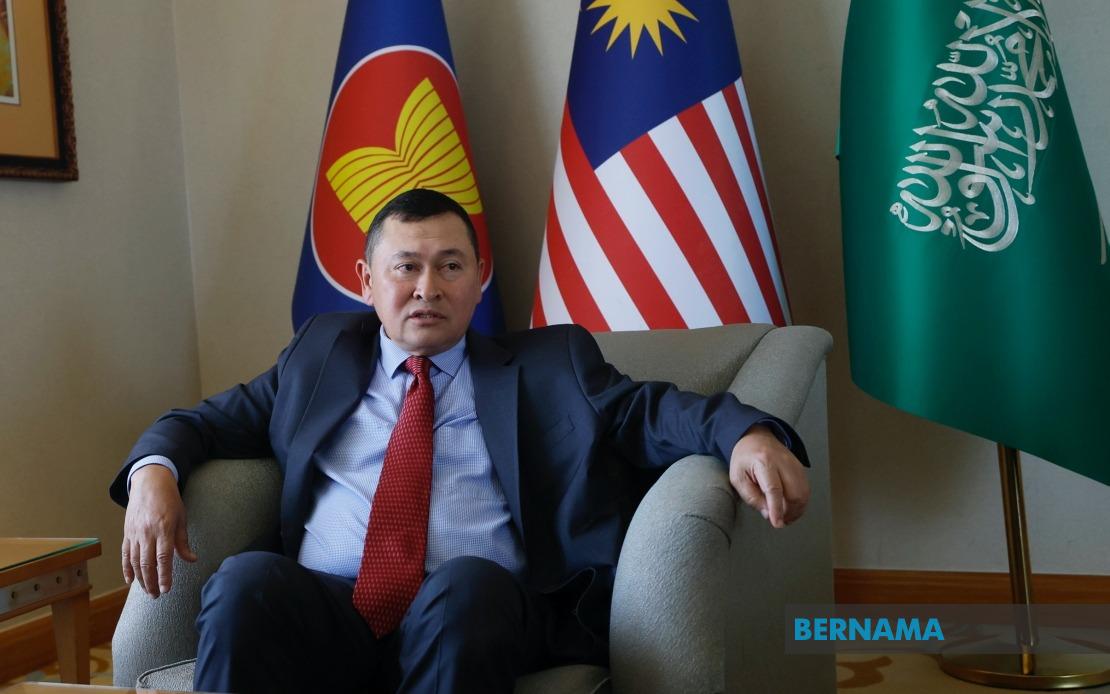
According to Malaysian Ambassador to Saudi Arabia Datuk Syed Bakri Syed Abdul Rahman, who is also Malaysia's Permanent Representative to the OIC, the gathering will build upon earlier deliberations undertaken by member states seeking to forge common ground on Palestinian issues. This continuity of discussion signals the OIC's sustained engagement with a question that remains central to Islamic solidarity and international relations within the broader Muslim world. The sequential nature of these meetings underscores the complexity of achieving consensus among nations with varying strategic interests and diplomatic relationships.
During the proceedings, Mohamad is scheduled to present Malaysia's National Statement, which will emphasise the nation's consistent and principled backing for what it characterises as the legitimate Palestinian struggle for self-determination. The statement will specifically reiterate Malaysia's advocacy for an independent and sovereign Palestinian state established within the territorial boundaries that existed prior to 1967, a position grounded in international law and long-standing Malaysian foreign policy doctrine. This framing reflects Malaysia's interpretation of relevant United Nations resolutions and its commitment to the principle that occupied territories should be returned to Palestinian control.
The Malaysian delegation's contribution will address Israel's military campaigns across Palestinian territories, examining both the immediate security implications and the broader humanitarian consequences unfolding on the ground. Particular emphasis will be placed on the situation in Gaza, where Malaysia intends to draw international attention to the civilian toll and access challenges facing humanitarian organisations attempting to deliver essential supplies and medical assistance. The deteriorating conditions in Gaza have become a focal point for Islamic nations' diplomatic efforts, with countries like Malaysia viewing the humanitarian dimension as inseparable from political discussions regarding Palestinian rights.
Beyond Gaza, Malaysia's intervention will also encompass developments in the West Bank, where Palestinian communities face ongoing pressures from military operations and settlement expansion. The issue of illegal Israeli settlements remains a contentious element of international diplomacy, with Malaysia and other OIC members viewing their continued construction as violations of international law and fundamental obstacles to achieving a viable two-state solution. By raising this matter at the OIC forum, Malaysia seeks to mobilise collective pressure for halting settlement activities that many nations regard as incompatible with genuine peace negotiations.
Syed Bakri emphasised that Malaysia views OIC member states as bearing particular responsibility for mobilising substantive and measurable international responses to these developments. Rather than confining discussions to rhetorical condemnation, Malaysia is advocating for concrete steps that translate solidarity into tangible policy measures affecting the region's diplomatic and economic dynamics. This reflects a Malaysian perspective that wealthy Gulf states and major Islamic economies possess leverage that should be deployed more strategically in support of Palestinian objectives, though such advocacy must navigate the complex bilateral relationships these nations maintain with various international actors.
Humanitarian assistance constitutes another pillar of Malaysia's engagement with Palestinian issues, extending beyond diplomatic forums to practical support for affected populations. Malaysia has consistently maintained channels for delivering aid to Palestinians impacted by conflict, viewing such assistance as both a moral imperative and an expression of Islamic solidarity. Syed Bakri reiterated Malaysia's determination to ensure that aid flows continue reaching Palestinians in need, acknowledging the logistical and political challenges that frequently impede the delivery of humanitarian supplies across conflict zones.
The OIC extraordinary meeting is anticipated to serve as a coordinating mechanism where member states can synchronise their diplomatic messaging and explore collaborative approaches to Palestinian issues. By convening at this elevated level, the organisation signals the gravity with which it treats recent developments and the necessity of presenting a unified voice in international forums. For Malaysia, participation at this level provides an opportunity to shape OIC consensus while simultaneously demonstrating domestic commitment to Palestinian solidarity, an issue that resonates deeply across Malaysian society.
Beyond the Palestinian agenda, delegates are expected to deliberate on institutional matters affecting the OIC's governance and effectiveness, including procedures for electing the organisation's next secretary-general. These administrative matters, while less visible than substantive policy discussions, carry significant implications for the OIC's capacity to execute its advocacy mandate and coordinate member state activities in subsequent years. The calibre of leadership selected will influence how effectively the organisation champions causes like Palestine within international institutions and forums.
The meeting will culminate in adopting a resolution on Palestine and Al-Quds Al-Sharif that formalises the collective position of OIC members regarding Israeli actions against Palestinian populations. Such resolutions, while often criticised by observers skeptical of their practical impact, serve as binding statements of principle that guide member states' voting patterns in United Nations proceedings and establish benchmarks for consistency in Islamic countries' foreign policy approaches. The resolution is expected to condemn what member states characterise as Israeli aggression and encourage coordinated action among OIC nations to support Palestinian rights and sovereignty.
Parallel to formal deliberations, Mohamad will engage in bilateral meetings with counterparts from several nations, discussions designed to deepen Malaysia's bilateral relationships while exploring expanded cooperation across commercial, trade, and investment domains. These sideline conversations frequently prove as consequential as formal sessions, permitting leaders to build personal relationships and address bilateral concerns outside structured agendas. For Malaysia, such engagements represent opportunities to strengthen ties with fellow Muslim-majority nations and potentially enhance economic partnerships, demonstrating that OIC participation serves multifaceted Malaysian national interests extending beyond symbolic solidarity with Palestinian causes.

