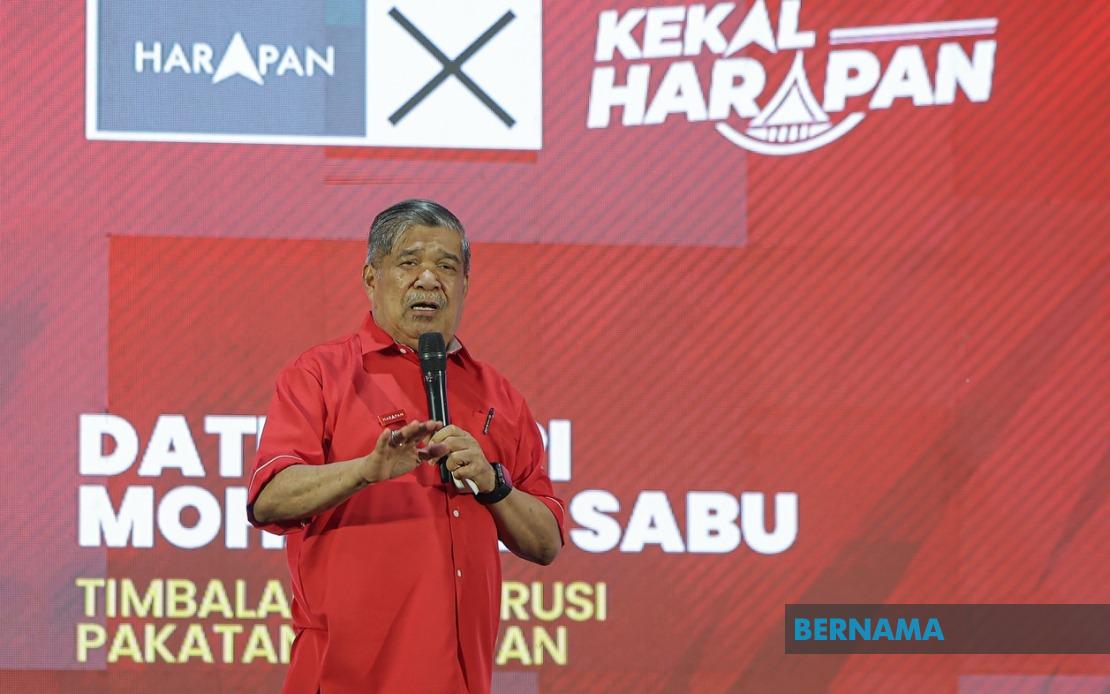
Amanah president Datuk Seri Mohamad Sabu has delivered a pointed rebuke to Malaysian political parties engaged in what he characterises as 'marriage-divorce' politics, urging the voters of Negeri Sembilan to reject this pattern of opportunistic coalition-building and abandonment. Speaking in Seremban on July 22, Mohamad Sabu framed the issue not merely as a technical matter of political strategy but as a fundamental threat to the country's democratic stability and the integrity of its political institutions. His intervention comes as Malaysian politics continues to grapple with the legacy of rapid coalition shifts that have reshaped the political landscape over the past decade, leaving voters increasingly cynical about party commitments and electoral promises.
At the core of Mohamad Sabu's critique lies a concern that the revolving-door approach to political alliances—where parties abandon established partnerships to forge new ones based solely on the pursuit of electoral advantage—has become normalised in ways that corrode public trust in the political system. The practice he describes reflects a broader pattern in Malaysian politics wherein parties measure their relationships not by shared ideology or policy vision but by the arithmetic of parliamentary numbers and cabinet positions. This transactional approach to politics, he argues, represents a significant departure from the principle that political partnerships should be grounded in substantive agreements about governance and representation rather than calculated calculations about temporary electoral advantage.
To illustrate his point, Mohamad Sabu invoked a vivid metaphor that catalogues the matrimonial trajectory of a particular political actor—or actors—within Malaysian politics. The allegory references multiple cycles of alignment and rupture: first with Barisan Nasional, then with Pakatan Rakyat, followed by a reunion with UMNO-BN that lasted barely more than a year before dissolution. The sequence continued with an embrace of Bersatu that itself proved ephemeral, and now culminates in attempts to secure fresh partnerships. Through this rhetorical device, the Amanah leader sought to expose what he characterises as the unprincipled nature of such manoeuvring, inviting voters to recognise the pattern as symptomatic of a deeper disregard for political commitment and democratic accountability.
The broader implications of this trend extend well beyond the machinations of individual parties. When voters observe political leaders and parties abandoning established coalitions on a regular basis, the cumulative effect erodes confidence in the democratic process itself. Political stability, which economists and development experts across Southeast Asia have long identified as essential to attracting investment and ensuring policy continuity, becomes difficult to achieve when the ground beneath coalition governments shifts unpredictably. Malaysia's own experience with multiple changes of government at the federal level in recent years demonstrates how rapid coalition restructuring can create periods of institutional uncertainty that consume political energy and delay implementation of substantive policy agendas.
For Negeri Sembilan specifically, Mohamad Sabu's intervention carries particular weight given the state's historical position as a bellwether in Malaysian electoral politics. The state's voters have often demonstrated a willingness to shift their political preferences, and the outcome of contests there can signal broader trends in peninsular politics. By appealing directly to Negeri Sembilan's electorate, the Amanah leader sought to mobilise voters around the principle of rejecting precisely the kind of political unpredictability that might tempt them to constantly reassess their voting preferences. He framed the choice not as one between particular parties but between two contrasting visions of politics: one rooted in principle and continuity, the other driven by opportunism and expediency.
The language of 'marriage-divorce' politics, while colourful, also reflects broader concerns about the institutionalisation of political instability in Malaysia. Political scientists studying democratic backsliding and institutional decay have noted that when parties cease to function as stable organisational units with coherent ideological moorings, the result can be increasing personalisation of politics and reliance on extra-institutional power brokers. The pattern Mohamad Sabu identified—where parties consistently subordinate long-term institutional interests to short-term electoral calculations—represents precisely this kind of institutional decay. Over time, such patterns can weaken the capacity of political parties themselves to serve as vehicles for aggregating voter preferences and articulating policy alternatives.
Moreover, the phenomenon carries implications for how Malaysia positions itself within the Southeast Asian region. Neighbouring democracies in Indonesia, Thailand, and the Philippines have each grappled with similar challenges of political stability and institutional coherence. Malaysian voters watching regional developments have increasingly come to value predictable, stable governance as essential to their own security and economic welfare. By advocating against 'marriage-divorce' politics, Mohamad Sabu invoked these regional anxieties, suggesting that Malaysian voters should demand higher standards of political commitment and consistency from their leaders.
The Amanah president's intervention also implicitly acknowledged the challenge facing opposition and non-traditional coalitions in Malaysian politics. For Pakatan Rakyat or any alternative coalition seeking to challenge established power structures, sustained unity and credible commitment to governance principles become paramount. Voters will only take the risk of voting for change if they believe the alternative coalition possesses sufficient internal discipline and shared vision to govern effectively. The repeated pattern of coalition dissolution that Mohamad Sabu highlighted threatens to delegitimise any alternative arrangement, as voters rationally discount promises from parties whose past behaviour demonstrates inconsistency and opportunism.
Moving forward, the challenge for Malaysian political parties lies in rebuilding trust through demonstrated consistency. This requires not simply rhetorical commitment to principles of partnership but sustained investment in developing genuine policy platforms and maintaining institutional stability over multiple electoral cycles. For voters in Negeri Sembilan and elsewhere, Mohamad Sabu's exhortation offers a framework for evaluating political choices: assess not merely what parties promise but whether their track record demonstrates the kind of institutional reliability and principled commitment that democratic governance demands. Only through such vigilance can the electorate hope to arrest the slide toward purely transactional politics and reclaim the possibility of meaningful democratic choice.

