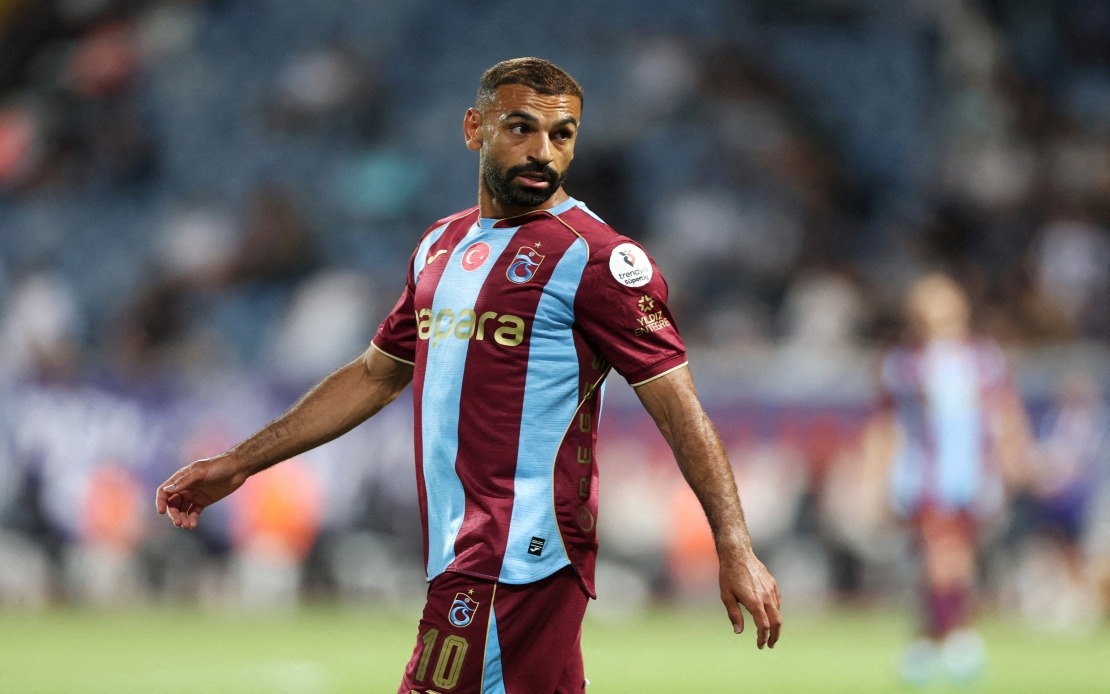
Mohamed Salah's arrival at Turkish football club Trabzonspor has triggered a commercial surge in Cairo's ancient Khan el-Khalili bazaar, where sports retailers are now prominently stocking the Egyptian forward's claret-and-blue jersey alongside his national team kit. Within a fortnight of his transfer to the Turkish Super Lig, Salah's No. 10 shirt has become a visible presence across multiple shop windows in one of the Middle East's most iconic shopping districts, underscoring the immediate and widespread appeal of the move among Egyptian football enthusiasts and casual supporters alike.
The jersey has captured public attention across the retail landscape at Khan el-Khalili, with vendors reporting brisk interest from customers keen to acquire merchandise bearing the footballer's name and number. Shop owners throughout the bazaar have responded to demand by displaying the Trabzonspor shirt prominently, recognising that Salah's global profile and domestic celebrity status translate directly into commercial opportunity. Traders are pricing the jersey between 400 and 500 Egyptian pounds, equivalent to approximately $8 to $10, making it accessible to a broad cross-section of Cairo's purchasing public.
Beyond mere commercial activity, Salah's transfer has catalysed broader emotional and cultural responses across Egypt. Videos and footage documenting the enthusiastic reception he received upon arriving in Türkiye have circulated widely among Egyptian and Arab football communities, generating expressions of national pride and collective happiness at his progression to a respected European league. This outpouring reflects not simply support for one athlete's career advancement, but also a deeper sense of achievement and connection that extends beyond the sport itself.
Retailers operating within Khan el-Khalili, a destination that has hosted dignitaries including Egyptian President Abdel Fattah el-Sisi and French President Emmanuel Macron, view Salah's transfer as emblematic of broader cultural and diplomatic currents. Shopkeeper Salah Abdulmecid articulated this perspective, noting that the bazaar's significance as a tourist landmark makes it an appropriate venue for celebrating Salah's move. Abdulmecid emphasised that enthusiasm for Salah's relocation reflects deeper affinities, stating that Turkish traditions align with Egyptian values and that both societies share commitments to religious observance and cultural identity.
Individual supporters encountered throughout the bazaar have demonstrated tangible enthusiasm for the transfer, with some trying on and purchasing the new jersey immediately. One shopper donning the Trabzonspor colours expressed unambiguous delight at Salah's move to Trabzon, articulating hopes for his success and offering traditional blessings for his career progression in Türkiye. Such personal testimonies reveal how Salah's transfer resonates at an intimate, grassroots level among ordinary Egyptians.
Said Sadik, an Egyptian sociologist, has positioned Salah's transfer within a broader framework of international relations and cultural diplomacy. Sadik argues that Salah functions as a "soft power" asset, facilitating connections between Egypt and Türkiye at the societal level. This analytical perspective recognises that prominent athletes can transcend sport, becoming vehicles through which nations develop mutual understanding and strengthen interpersonal bonds. Sadik pointed out that Salah's name was explicitly mentioned during a high-level diplomatic engagement between Turkish Foreign Minister Hakan Fidan and Egyptian counterpart Badr Abdelatty during Fidan's August 14 visit to Cairo, demonstrating that even government-level officials acknowledge Salah's significance as a bridge between the two countries.
The sociologist further highlighted that Salah's celebrity extends far beyond dedicated football audiences. In Egypt, even individuals who do not regularly follow matches or engage with sporting entertainment have adopted Salah as a figure worthy of attention, with many actively seeking news and updates about his career. This unusually broad appeal explains why his transfer has immediately manifested in commercial activity, merchandise sales, and public discourse across multiple societal segments and demographics.
Sadik observed that the tumultuous reception Salah experienced upon arrival in Türkiye carries significant implications beyond entertainment value. The warmth and enthusiasm exhibited by Turkish fans and communities signals strengthening bonds between the Turkish and Egyptian peoples, suggesting that growing diplomatic and economic cooperation between governments is being mirrored and reinforced at the citizen level. When foreign populations embrace an athlete from another nation with such evident sincerity, it often indicates underlying currents of mutual respect and shared interests.
For Malaysian and Southeast Asian observers, Salah's transfer and its aftermath offer instructive lessons about athlete diplomacy and soft power in contemporary international relations. The phenomenon demonstrates how individual sports figures can become instruments of national interest and cultural representation, particularly when they achieve superstardom across multiple continents and cultures. Salah's journey from Liverpool to Trabzonspor also reflects the increasingly multipolar nature of global football, with aspiring clubs from non-traditional European powerhouses competing for marquee talent by offering lucrative contracts and the opportunity to build legacies at emerging sporting institutions.
The commercialisation of Salah's image at Khan el-Khalili exemplifies how sporting celebrity instantly generates economic activity through merchandise, tourism interest, and related consumer spending. For developing economies seeking to capitalise on sporting prowess, the Salah case illustrates the potential for athletes to drive tangible commercial benefits, from retail sales to international tourism flows. The bazaar's ability to instantly stock and promote Salah merchandise demonstrates rapid market responsiveness to shifts in global sporting narratives.
Moreover, Salah's transfer arrives at a moment of apparent rapprochement between Egypt and Türkiye, two regional powers whose relationship has historically oscillated between cooperation and tension. By becoming a symbol of Egypt's goodwill toward Türkiye, Salah occupies a unique position as a figure capable of embodying improved international relations without being directly involved in diplomatic or political processes. His commercial presence in Cairo's most historic shopping district thus becomes a visible representation of changing regional dynamics.
The jersey sales at Khan el-Khalili ultimately reflect a convergence of sporting achievement, national pride, economic calculation, and diplomatic signalling. Salah's transfer and its immediate commercial manifestation demonstrate that contemporary athletics function simultaneously as entertainment, cultural expression, national representation, and economic driver. For Southeast Asian nations aspiring to develop their own sporting heroes, the Salah phenomenon provides a compelling case study in how individual excellence can be leveraged for broader national and economic interests.

