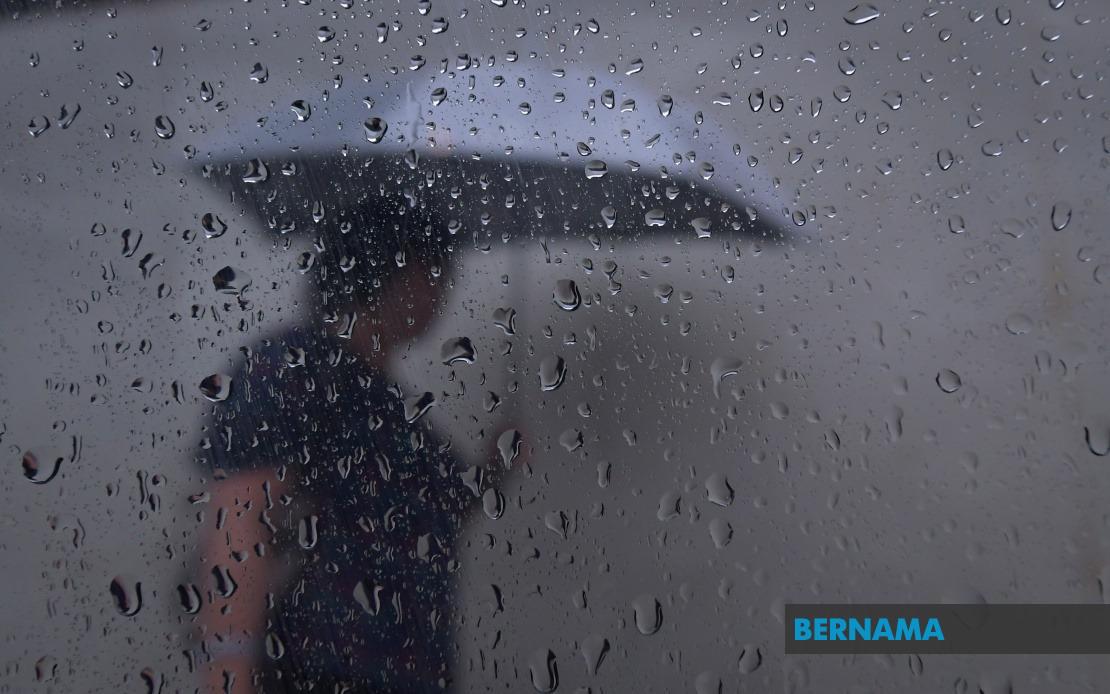
Voters in Johor preparing to participate in early polling for the state's 16th election should brace for unsettled weather, according to forecasts issued by the Johor Meteorological Department. The anticipated meteorological conditions will vary significantly across the state, creating a patchwork of weather patterns that could influence turnout and logistics on the designated early voting day. The forecast underscores the practical challenges election administrators face when coordinating large-scale voting exercises across geographically dispersed population centres, particularly when environmental factors introduce unpredictability into the process.
The Johor Meteorological Department, led by director Azlai Ta'at, has identified morning showers as the primary weather concern for four districts: Batu Pahat, Muar, Pontian, and Tangkak. These localised precipitation events will dominate conditions in the early hours, potentially affecting accessibility to polling stations and voter convenience. The spatial distribution of expected rainfall across only a portion of the state suggests a differential impact on the election process, with residents in these four districts facing greater inconvenience than their counterparts elsewhere in Johor.
In contrast, residents in Johor Bahru, Segamat, Kluang, Kota Tinggi, Mersing, and Kulai can anticipate predominantly fine and sunny conditions during the morning hours. This geographical variation provides a window of opportunity for voters in these districts to exercise their franchise without weather-related impediments, potentially facilitating smoother operations at early voting centres in these areas. However, this temporary reprieve will not extend throughout the day across any part of the state.
The meteorological outlook deteriorates significantly from midday onwards, with Azlai warning that thunderstorms will develop across all districts by afternoon. This statewide shift towards severe weather represents a critical consideration for electoral administrators, as afternoon precipitation patterns could disrupt operations at some early voting stations and discourage voters from venturing to polling centres during later hours. The forecast essentially segments the voting day into a more favourable morning period and a substantially more challenging afternoon window.
Responding to these atmospheric conditions, Azlai has encouraged voters to adjust their participation strategy accordingly. His recommendation that citizens cast their ballots early in the day reflects pragmatic election management—by concentrating voting traffic during the morning period when weather conditions are comparatively more benign, authorities can minimise disruption and ensure operational efficiency. This guidance implicitly acknowledges that meteorological factors, while not legally determinative, can meaningfully influence voting patterns and system capacity throughout a polling day.
The early voting arrangement encompasses approximately 24,751 individuals drawn from the security and defence sectors. This contingent comprises two distinct but similarly sized populations: military personnel affiliated with the Malaysian Armed Forces and their spouses, totalling 12,041 voters, alongside police and paramilitary operatives from the Royal Malaysia Police and General Operations Force along with their family members, accounting for 12,710 additional voters. This early voting mechanism accommodates the operational requirements of these public service communities, whose work obligations frequently conflict with standard polling day schedules.
Election authorities have established 64 dedicated early voting stations distributed across Johor to process this advance voting cohort. These centres will commence operations at 8 am, providing a compressed voting window compared to standard election days. Closure times have been deliberately staggered across different locations, with facilities shutting down between noon and 6 pm depending on local voter registration figures and site-specific capacity requirements. This flexible scheduling allows administrators to match closure times to demonstrated demand patterns at individual centres.
The broader electoral exercise involves substantially larger numbers. Across Johor's 56 state seats, a total of 2,727,926 eligible voters remain registered to participate in the election. These citizens will cast ballots at 1,140 polling centres distributed throughout the state, creating a massive logistical undertaking that extends across multiple legislative districts. The sheer scale of voter participation—encompassing over 2.7 million individuals—underscores why even seemingly localised weather disruptions warrant official attention and public guidance.
The candidate field reflecting the competitive intensity of this election comprises 172 individuals vying for the 56 available state assembly seats. This ratio of candidates to positions indicates a substantially contested election, with approximately three candidates per seat on average. Such competition suggests vigorous political mobilisation across Johor, with multiple parties and independent candidates fielding comprehensive or near-comprehensive slate candidacies across most or all available seats. The electoral contest will determine the composition of the Johor state legislative assembly, making it a consequential exercise for state-level governance and policy direction.
For Malaysian observers, the Johor state election carries implications extending beyond the state's boundaries. Johor represents a significant electoral bellwether, with outcomes frequently reflecting broader national political trends and voter sentiment. The state's electoral dynamics have historically influenced national coalition calculations and parliamentary mathematics, making the Johor result a closely watched metric of public opinion regarding incumbent and opposition political forces. Weather-related complications to voting, while administratively manageable, introduce variables that could marginally influence turnout patterns across different demographic segments.

