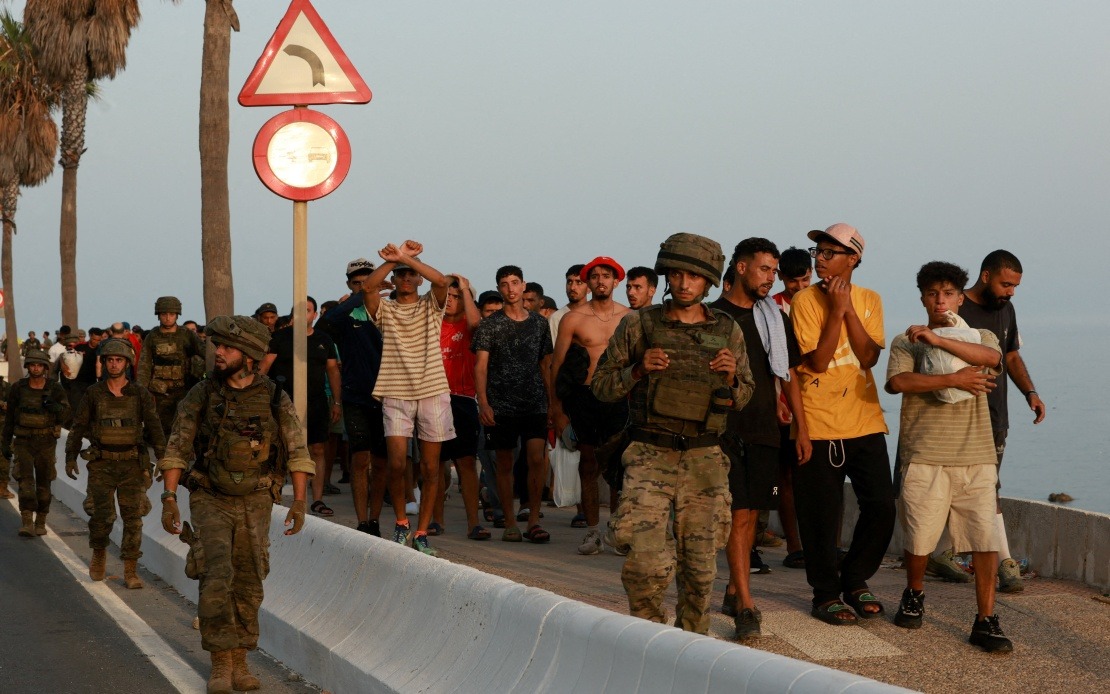
Moroccan authorities have pinned blame for the unprecedented surge of migrants crossing into the Spanish exclave of Ceuta on coordinated waves of social media misinformation and organised human trafficking operations, according to statements from the country's Interior Ministry. The scale of the movement has proven extraordinary, with migrants arriving in the small territory of roughly 85,000 residents at a rate that overwhelmed local capacity within a matter of days, highlighting the vulnerability of border regions to mass displacement events.
At the heart of the crisis, according to Moroccan officials, lies a toxic combination of false narratives circulating online and the deliberate exploitation of a Spanish court ruling by smuggling networks. The particular court decision, which migrants apparently understood to mean they could enter European territory without immediate deportation, became ammunition for traffickers seeking to recruit vulnerable people desperate for passage to Europe. This misinterpretation spread rapidly through informal social networks and messaging platforms, creating the impression that a sudden legal window had opened for safe migration.
The competing casualty figures reveal the gravity of the situation and the chaos that accompanied the crossing. While Moroccan authorities initially reported 11 deaths, Spanish authorities documented a dramatically higher toll of at least 72 fatalities attempting to reach Ceuta across the water. This discrepancy underscores the difficulty in accounting for all those involved in such chaotic mass movements, where accurate death counts often emerge only after extended investigations and coordination between neighbouring countries.
Official estimates of the scale vary significantly depending on the source. Spanish authorities suggested between 50,000 and 60,000 migrants had successfully entered Ceuta by Friday of the incident, representing a population influx equivalent to nearly 70 per cent of the enclave's existing inhabitants. Morocco's official count placed the figure somewhat lower at approximately 40,000, though both figures represent an extraordinary surge in a compressed timeframe. Additionally, around 1,135 migrants attempted to reach the neighbouring Spanish enclave of Melilla, though Moroccan authorities indicated that all who arrived there were promptly returned.
The broader context of irregular migration between Morocco and Spain remains one of Europe's most persistent policy challenges. Ceuta and Melilla, Spain's two North African exclaves, sit on the physical frontline of Mediterranean migration pressures. The territories' unique status as Spanish sovereign soil surrounded by Moroccan territory creates complex enforcement dynamics and jurisdictional ambiguities that both governments must navigate. For Malaysia and other Southeast Asian nations grappling with irregular migration flows, the Ceuta case offers instructive lessons about how misinformation and trafficking networks exploit gaps in public understanding of immigration law.
Moroccan authorities stated they were actively coordinating with Spanish counterparts to verify additional reported deaths and to establish the identities and nationalities of those involved. This collaborative approach reflects the reality that managing irregular migration effectively requires sustained diplomatic engagement and information-sharing between nations on either side of migration routes. The process of identifying victims and notifying families becomes both a humanitarian and administrative priority when fatalities occur at scale.
The role of human trafficking networks in orchestrating these movements deserves particular attention, as it reveals how organised criminal enterprises capitalise on desperation and misinformation. Rather than random individual attempts to cross borders, structured trafficking operations actively recruit migrants, charge substantial fees, arrange transport, and coordinate timing to overwhelm enforcement capacity. By flooding routes simultaneously, traffickers increase the probability that some migrants will evade detection, thereby justifying their fees to future clients and sustaining business models predicated on mass movement.
Social media's role in amplifying false claims about immigration policy presents a challenge that extends far beyond Morocco and Spain. The speed with which misinformation spreads through encrypted messaging applications, Facebook groups, and informal networks far outpaces the capacity of governments to disseminate accurate information. In the absence of reliable official channels communicating clearly about legal pathways, enforcement outcomes, and actual border conditions, migrants themselves become vulnerable to false certainties peddled by traffickers and opportunists.
For Malaysia's position in regional migration governance, the Ceuta precedent illustrates how quickly border crises can escalate when misinformation and trafficking converge. Southeast Asia faces comparable pressures from Rohingya displacement, irregular maritime movement, and trafficking networks exploiting uncertain legal status. Understanding how Morocco's authorities attribute causation to specific factors—misinformation, trafficking, and legal misinterpretation—provides a framework for analysing similar dynamics in Southeast Asian contexts where governments must coordinate responses across multiple jurisdictions and populations.
The incident also reveals the limitations of enforcement-only approaches to migration management. Moroccan authorities' ability to attribute causation to information dynamics and trafficking networks suggests that addressing irregular migration requires simultaneous attention to public communication, criminal networks, and legal clarity. When migrants operate based on false assumptions about what awaits them at borders, they become susceptible to exploitation by those profiting from uncertainty. Governments hoping to reduce irregular movement must invest in reliable information channels that compete effectively with trafficking networks' narratives.

