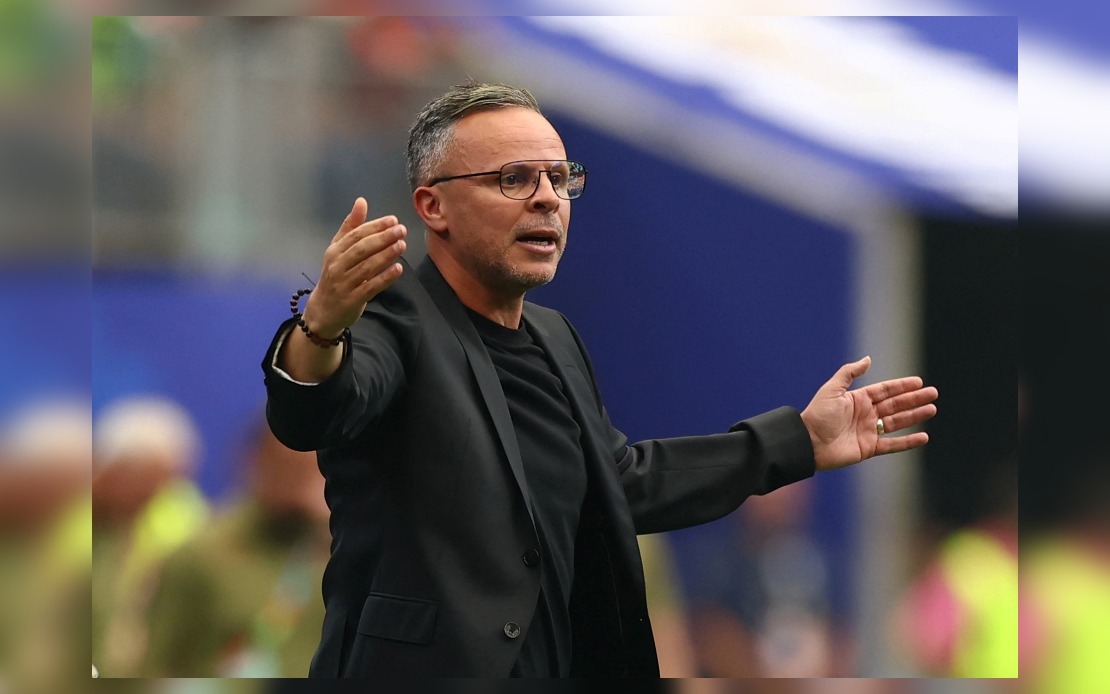
Morocco has transcended its status as a surprise package at the World Cup and must now be regarded as a formidable competitor capable of challenging the tournament's elite, according to head coach Mohamed Ouahbi following his team's emphatic 3-0 demolition of Canada in the Round of 16 on Saturday. The outcome propels the North African side into the quarterfinals and sets up a high-stakes meeting with France, while simultaneously reshaping the narrative surrounding Morocco's place in global football.
Outahbi's assessment reflects a fundamental shift in how the international football community perceives Morocco. The dismissal of Canada exposed the difference between teams that have quietly improved their tournament credentials and those still establishing themselves on the world stage. When Ouahbi remarked that observers now speak of Morocco as "a major footballing nation," he was acknowledging a transformation that extends beyond this tournament cycle. The Atlas Lions have earned respect through sustained performance and tactical sophistication, moving past the point where their advancement generates surprise headlines.
The match itself unfolded in two distinct phases that illustrated Morocco's growing maturity. Canada approached the encounter with aggressive intent during the opening forty-five minutes, maintaining relentless pressure and capitalising on turnovers to launch swift counterattacks. The North American side's intensity and directness forced Morocco into uncharacteristic errors and kept the scoreline level, suggesting that a genuine contest might emerge. Yet this script reversed entirely in the second half when Morocco's adjustments began yielding tangible advantage. Azzedine Ounahi struck twice with clinical finishing before Soufiane Rahimi added an insurance goal in the closing stages, creating a commanding result that masked a far tighter contest.
Outahbi attributed the turnaround to calculated tactical modifications implemented at the interval. The alterations fundamentally restructured how Morocco operated defensively and in possession. By shifting their shape and pressing triggers, the coaching staff neutralised Canada's primary strengths while creating space to exploit vulnerabilities. The coach explained that directing passes into areas behind Canada's defensive line forced the opponents to retreat toward their own goal, where Morocco could sustain pressure more effectively. This wasn't random adjustment but rather purposeful strategy born from attentive analysis and the flexibility to execute different approaches within the same match.
Respect for Canada's capabilities remained evident in Ouahbi's pre-match expectations and post-game reflections. Rather than downplaying the opposition, the Morocco coach acknowledged anticipating his most difficult examination thus far—and was proven correct in that assessment. He noted that Round of 16 encounters rarely produce lopsided scorelines, suggesting that the 3-0 margin was somewhat unexpected even for those inside Morocco's technical staff. This nuanced perspective distinguishes a coaching mind that recognises context and opponent quality rather than one that succumbs to inflated confidence following victory.
The progression represents continuity for Morocco at elite tournament level. The team's quarterfinal appearance follows their historic 2022 World Cup campaign when they became the first African nation to reach a World Cup semifinal. That breakthrough established Morocco as a legitimate force deserving investment and preparation at the highest levels. The current tournament presents an opportunity to build upon that foundation rather than treat it as a one-off achievement. Ouahbi's emphasis that "this is only the beginning" suggests the coaching staff views Morocco's ambitions as part of a longer trajectory rather than a fleeting moment.
The impending quarterfinal encounter with France introduces a qualitatively different challenge. The European champions eliminated Paraguay 1-0 on Saturday in Boston, advancing through their own Round of 16 tie. France represents the type of opponent that will test whether Morocco's tactical flexibility and technical quality can penetrate deeply into tournament knockout stages. The matchup carries particular significance because it removes geographic anonymity—these are not distant rivals but neighbours separated by the Mediterranean Sea. The contest will provide definitive evidence regarding Morocco's readiness to challenge established powers.
Outahbi's stated objective to "reach the final" and make the Moroccan people proud projects ambition appropriate to a team that has already exceeded many expectations. The phrasing strategically avoids framing the France match as revenge or settlement of accounts, instead positioning it within the broader context of maximising tournament achievement. This diplomatic language reflects the professionalism associated with sustained competitive success. The coach recognises that Morocco's standing depends upon continuing to demonstrate why they merit classification as a major footballing nation, rather than engaging in historical point-scoring.
For Southeast Asian observers, Morocco's trajectory offers instructive lessons about sustained development and incremental progress at world football's highest level. The region's aspirations for deeper World Cup runs could benefit from the patient institution-building and tactical sophistication that characterises Morocco's approach. The Atlas Lions did not suddenly emerge as quarterfinal contenders but rather built systematically toward this level over preceding years. Morocco's combination of technical ability, organised defending, and coach-led tactical fluidity creates a template worthy of consideration by federations and professional programmes throughout Southeast Asia seeking to elevate their international standing.
The broader implications extend across African football and the global tournament landscape. Morocco's advancement reinforces that the World Cup is becoming more competitive and less predictable, with nations willing to invest in systematic development capable of surprising traditional powerhouses. The team's journey from Round of 16 to quarterfinals demonstrates that technical quality and tactical intelligence matter as much as raw athleticism or historical pedigree. As Morocco prepares to confront France, the football world will observe whether North African football has genuinely arrived as a permanent feature of elite competition or whether the Atlas Lions' run remains a tournament-specific achievement.

