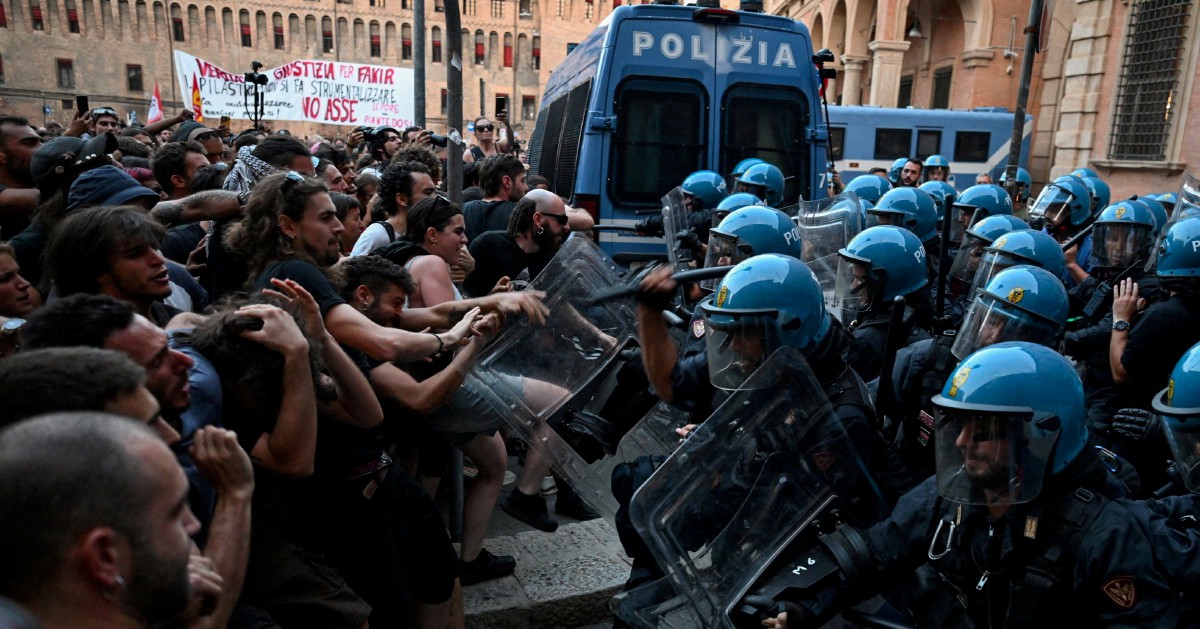
A Moroccan man's death during an arrest operation in Italy has ignited a diplomatic row and street demonstrations, with Morocco officially requesting full clarification of the circumstances while Italian Prime Minister Giorgia Meloni pledged that authorities would pursue the investigation to its conclusion. The incident underscores the fragile relationship between law enforcement conduct and international relations, particularly between European nations and North African countries with significant diaspora communities in the continent.
The death has become a flashpoint for broader concerns about police procedures and accountability in Italy, a country that has faced international scrutiny over its handling of immigrant communities and minority groups. When such fatalities occur during state-sanctioned detention, they typically trigger multiple investigations and legal proceedings, involving both local authorities and sometimes international bodies, depending on the circumstances and political pressure applied by the deceased's home nation.
Morocco's formal request for comprehensive clarification signals the seriousness with which the government in Rabat is treating the matter. Diplomatic channels between the two Mediterranean nations are now actively engaged, with Moroccan officials likely examining whether Italian law enforcement followed proper protocols and whether any culpability exists in how the arrest was conducted. Such demands are standard practice in cases where foreign nationals die under state custody, as governments have both a domestic obligation to their citizens and an international responsibility to ensure due process.
Prime Minister Meloni's public statement promising truth and full investigation reflects the political sensitivity of the case within Italy itself. Her commitment to transparency addresses both international pressure and domestic concerns that may have already begun circulating among Italian civil rights groups and opposition politicians. In European democracies, deaths during arrest operations inevitably raise questions about training standards, use-of-force protocols, and whether officers involved acted within lawful parameters.
The protests that have erupted represent a convergence of concerns: immigrant communities in Italy feel their members are disproportionately affected by aggressive policing, while Moroccan citizens and diaspora members view the incident as emblematic of systemic issues facing their countrymen abroad. Social media and community networks have rapidly amplified the case, creating public momentum that ensures the investigation will unfold under intense scrutiny.
For Malaysia and other Southeast Asian nations with significant populations working or residing in Italy and Europe, this incident carries a cautionary message. The treatment of migrant workers and immigrants in destination countries reflects broader questions about labour rights, access to justice, and safety. Malaysian overseas workers, though generally better protected through formal employment channels than some groups, remain vulnerable to arbitrary treatment in foreign jurisdictions where they lack local advocacy networks.
The investigation itself will likely examine multiple factors: whether the arrest was lawful, whether appropriate medical personnel were available during detention, what the precise cause of death was, and whether police training and protocols were followed. Italian authorities will also need to determine whether the individual's health conditions, if any, contributed to the outcome and whether officers were adequately briefed to handle potentially vulnerable detainees.
Historically, such investigations in Italy have sometimes taken months or years to conclude, creating extended periods of uncertainty for families and communities. The Moroccan government's active engagement now may accelerate proceedings or ensure that international standards for investigation are met. This approach also protects Morocco's interests in bilateral relations with Italy, avoiding the scenario where perceived foot-dragging could damage diplomatic ties.
The broader European context matters here as well. Across the continent, scrutiny of police conduct toward migrants has intensified following high-profile cases and civil rights campaigns. Italy, as a primary entry point for North African migrants and asylum seekers, operates under particular pressure to demonstrate that its police forces maintain professional standards and respect fundamental rights.
For regional observers, the case illustrates how incidents occurring far from home can quickly become matters of national concern and diplomatic consequence. The involvement of international media coverage and civil society organizations means that deaths during arrest operations can no longer be treated as purely domestic matters, even in countries with strong institutional frameworks.
The investigation's conclusions will set precedent for how Italy responds to similar incidents in future, potentially influencing training protocols, recruitment standards, and accountability measures within law enforcement. For Moroccan citizens and workers across Europe, the outcome may influence perceptions of safety and fairness in the systems they must navigate in their host countries.
Both governments now face pressure to demonstrate that they take such incidents seriously and that their respective legal systems can deliver justice and accountability. Morocco's insistence on full clarification suggests it will monitor developments closely, and any perception that Italy is not conducting a thorough investigation could escalate diplomatic tensions. Conversely, transparent processes and meaningful findings could help rebuild confidence in law enforcement and bilateral relations.

