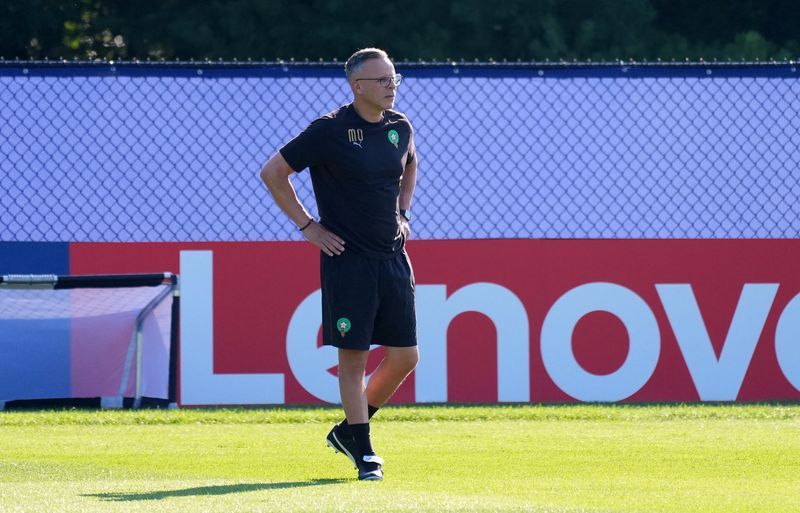
Morocco's coach Mohamed Ouahbi has made it clear his team will not indulge in self-congratulation as they prepare for Thursday's quarter-final against France, declaring that the only meaningful measure of success is claiming the World Cup trophy itself. Speaking at a press conference in Foxborough, Massachusetts, Ouahbi rejected the notion that his squad should be satisfied with their journey so far, emphasising instead that the tournament's ultimate prize remains their singular focus.
The North Africans are set for a rematch of the 2022 World Cup semi-final in Qatar, where France ended Morocco's breakthrough campaign. However, the circumstances surrounding this encounter are markedly different. Two years ago, Morocco arrived as surprise contenders, their unexpected progress through the tournament catching the world's attention. Now they return as established contenders with genuine championship aspirations, having consolidated their status as one of football's rising powerhouses.
Ouahbi's comments reflect a fundamental shift in Morocco's mentality and expectations. Rather than viewing their advancement through successive rounds as achievement enough, the team has adopted the mindset of genuine title challengers. The coach's insistence that "the bonus is to win the World Cup" demonstrates how the Atlas Lions have transcended the narrative of plucky underdogs punching above their weight. This represents a significant psychological advantage, as teams with nothing to lose can sometimes outperform those burdened by expectations—yet Morocco now carries both.
France remain strong favourites for the tie, having demonstrated their pedigree as world champions from 2018 and runners-up four years later. Their path to the quarter-finals, while comfortable, showed signs of the clinical efficiency expected from a squad of their calibre. A 1-0 victory over Paraguay in the round of 16, secured through a Kylian Mbappé penalty, underlined their ability to grind out results even when not at their most creative.
The French attacking complement represents perhaps the most fearsome collection of offensive talent assembled at this tournament. Beyond Mbappé, whose seven goals place him second only to Lionel Messi's eight in the scoring charts, France can call upon the dynamism of Ousmane Dembélé, the versatility of Michael Olise, and the emerging threat of Bradley Barcola. This quartet provides depth and variation that challenges any defensive structure, and their ability to create and convert chances will undoubtedly test Morocco's backline.
Morocco's path to this stage has been more straightforward but equally impressive. Topping their group with ease, they subsequently dismantled the Netherlands in the round of 16 before eliminating Canada, the tournament's co-hosts. These results have removed any remaining doubts about their status as serious contenders, not merely participants benefiting from a favourable draw. Their progression reflects genuine quality and resilience rather than fortunate circumstances.
Ouahbi's tactical emphasis on avoiding complacency suggests he recognises the danger inherent in acknowledging previous achievements. Psychologically, teams that celebrate intermediate successes can suffer a momentum shift, their focus diluted by the satisfaction of having already exceeded expectations. The coach appears determined to maintain the intensity and hunger that has propelled Morocco this far, resisting what he characterises as the seductive but ultimately counterproductive notion that merely reaching the quarter-finals constitutes success.
The coach acknowledged that France enter as clear favourites, yet refused to concede psychological advantage based on that status. His determination to challenge the established favourite reflects confidence born of Morocco's recent performances and their growing experience at elite level. The assertion that the match will be decided by execution rather than theoretical assets suggests Ouahbi believes his team can neutralise France's advantages through superior application and commitment.
Morocco's emergence as a sustained force in international football carries significant implications for African representation at football's highest level. Their refusal to settle for participation or early success sets a template for continental ambitions. For Southeast Asian football administrators watching from afar, Morocco's model of sustained development and competitive integration offers lessons in how sustained investment and strategic planning can elevate a confederation's standing.
The quarter-final will ultimately determine whether Ouahbi's confidence is justified or merely bluster, but his unwillingness to accept premature praise establishes a clear expectation: Morocco came to this tournament to win it, not merely to participate. That mentality, more than any individual talent or tactical innovation, may prove decisive when these two heavyweights collide.

