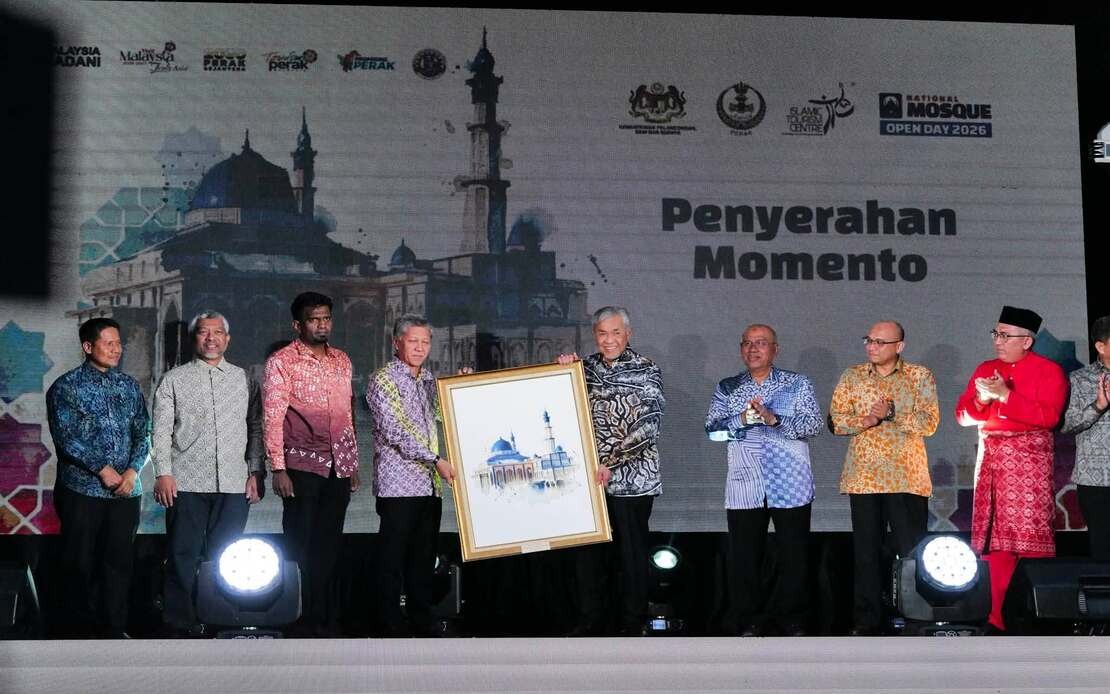
Deputy Prime Minister Datuk Seri Dr Ahmad Zahid Hamidi has articulated a vision for Malaysia's mosques that extends beyond their traditional religious function, positioning them as vital attractions within the country's emerging cultural tourism landscape. Speaking during the inauguration of the National Mosque Open Day 2026 in Bagan Datuk, Ahmad Zahid presented a strategic framework for integrating mosque institutions into tourism operations without compromising their sacred purpose as centres of worship and Islamic education.
The initiative reflects a broader government strategy to leverage Malaysia's rich Islamic heritage as a competitive advantage in regional tourism markets. By transforming mosques into destinations that showcase the nation's architectural heritage, spiritual traditions, and values of hospitality, policymakers aim to create distinctive experiences that differentiate Malaysian tourism offerings from neighbouring countries. This approach recognises that international visitors increasingly seek authentic cultural encounters that go beyond conventional sightseeing, and mosques represent authentic repositories of Malaysian Islamic civilisation.
Ahmad Zahid emphasised that when tourists visit Malaysia's mosques, they should depart with more than photographic memories of ornate interiors and striking designs. Instead, they should carry impressions of genuine Malaysian hospitality and firsthand exposure to Islamic principles of compassion and benevolence. This experiential dimension transforms mosques from passive architectural attractions into active cultural ambassadors, enabling visitors to understand Islam not through abstract concepts but through direct human interaction and observed community practices.
The concept of National Mosque Open Day serves as a practical mechanism for achieving this integration. By organising structured programmes that welcome visitors from diverse religious, age, and cultural backgrounds, mosques create controlled environments where interfaith dialogue flourishes naturally. These initiatives foster mutual respect and understanding, allowing non-Muslims to demystify misconceptions about Islamic institutions while enabling Muslim communities to demonstrate the inclusive, welcoming nature of their faith tradition.
Ahmad Zahid advocated for nationwide expansion of similar programmes, positioning them as catalysts for building broader social cohesion. When outsiders gain direct exposure to mosque communities through guided visits and educational activities, perception gaps narrow and stereotypes dissolve. This bottom-up approach to interfaith understanding proves particularly valuable in multicultural Malaysia, where religious harmony depends on continuous dialogue and shared experiences rather than passive coexistence.
Masjid Tuminah Hamidi, a waqf facility built in 2023 in memory of Ahmad Zahid's parents, has achieved designation as Malaysia's 98th Tourism Mosque, a classification awarded by the Islamic Tourism Centre under the Ministry of Tourism, Arts and Culture. The recognition acknowledges the mosque's distinctive architectural merit and its educational gallery focused on Islamic knowledge dissemination. This designation elevates the facility from a local worship space to a nationally registered cultural asset, creating pathways for systematic tourism integration and visitor management.
According to Mohammad Faisal Abu Suaib Khan, Director-General of the Islamic Tourism Centre, Malaysia's existing inventory of 6,851 mosques represents substantial untapped tourism potential. The current designation of 98 Tourism Mosques suggests that the majority of Malaysia's mosque stock has not yet undergone formal tourism certification. This gap presents significant development opportunities, as many mosques possess unique architectural styles, historical significance, or educational programmes that could attract culturally-conscious tourists seeking authentic Islamic experiences.
The Islamic Tourism Centre is collaborating with the Department of Islamic Development Malaysia and state Islamic religious departments to establish standardised guidelines and coordinate mosque participation in tourism frameworks. This institutional coordination ensures that tourism integration occurs through structured processes rather than ad-hoc initiatives, maintaining consistency in visitor experiences and operational standards across the network. Formal guidelines protect mosques from commercialisation pressures while establishing clear boundaries regarding visitor access, behaviour expectations, and respect for prayer times.
The centre has also developed supporting infrastructure through programmes such as Muslim-Friendly Tourism and Hospitality Assurance and Recognition and Muslim-Friendly Tourist Guides certification. These initiatives extend beyond mosques alone, cultivating a comprehensive ecosystem that ensures international visitors encounter consistent hospitality standards and authentic Muslim-friendly experiences throughout their Malaysian journey. The conceptual framework of "Muslim-Friendly, not Muslim-Only" signals inclusivity without compromising Islamic values, appealing to both Muslim and non-Muslim travellers seeking culturally respectful tourism experiences.
For Malaysia's tourism industry, this strategic direction carries significant implications. As Southeast Asian countries compete intensively for international visitor expenditure, differentiation through cultural and religious tourism becomes increasingly valuable. Malaysia's ability to position itself as a destination offering exceptional Islamic heritage experiences, combined with multicultural sophistication and religious tolerance, creates competitive advantages that appeal to diverse global markets including Muslim-majority countries seeking halal-certified tourism products and Western visitors interested in civilisational diversity.
The three-day National Mosque Open Day 2026 demonstrated the practical viability of this concept, featuring programmes that integrated spiritual elements with cultural, recreational, and family-oriented activities. This mixed programming approach ensures that visits serve multiple purposes for diverse visitor demographics, maximising appeal whilst maintaining the sacred character of mosque spaces. The combination of structured visits, educational sessions, and community engagement reflects thoughtful design that balances accessibility with reverence.
The expansion of Tourism Mosque designations also carries implications for local communities and mosque management committees. Institutions receiving this status gain opportunities for infrastructure development, funding access, and broader community engagement through tourism activities. However, they simultaneously assume responsibilities for visitor management, cultural interpretation, and maintaining operational standards that satisfy both worshippers and tourists. This dual accountability requires careful planning and community consultation to ensure that tourism integration enhances rather than disrupts the mosque's primary religious function.
Ahmad Zahid's articulation of this vision reflects a nuanced understanding that Islam in Malaysia functions simultaneously as a personal faith tradition, a community practice, and a cultural heritage asset. Rather than viewing these dimensions as conflicting, his policy approach seeks to activate them synergistically, allowing mosques to fulfil their spiritual missions whilst contributing meaningfully to national tourism and interfaith understanding objectives. As Malaysia pursues this integrated strategy, the success of initiatives like the National Mosque Open Day will likely influence broader government approaches to cultural tourism development across Islamic heritage sites throughout the region.

