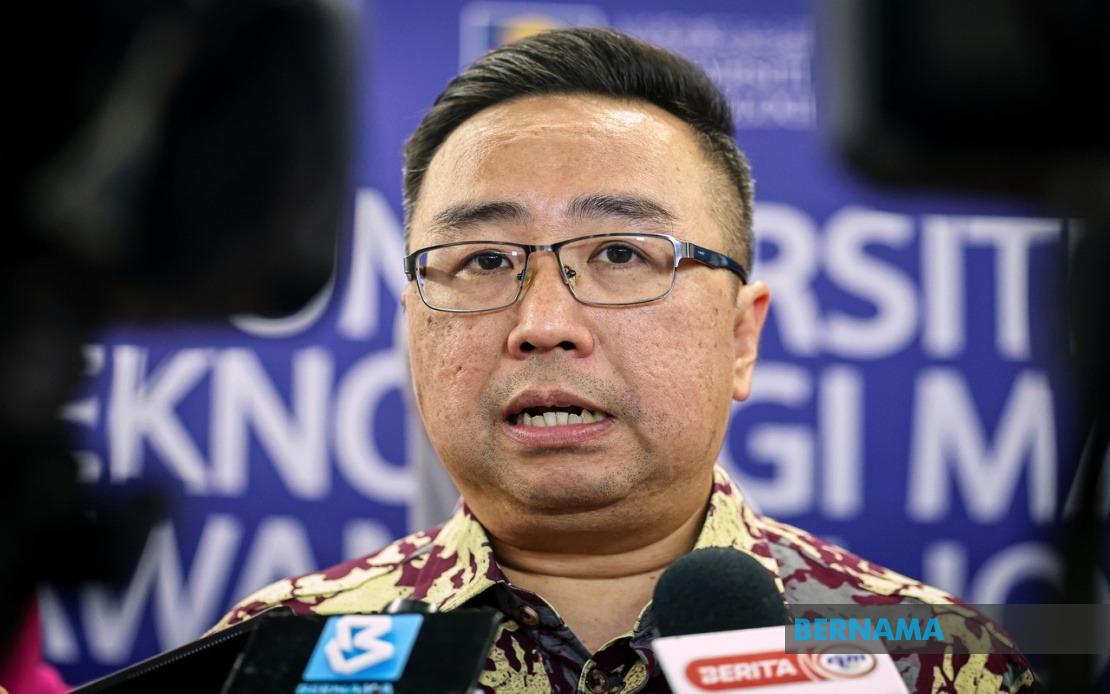
Malaysia is ramping up efforts to strengthen its science and technology workforce as it gears up to host a major regional summit on innovation next year. The Ministry of Science, Technology and Innovation has signalled that developing skilled talent will be central to the country's strategy heading into 2027, when Malaysia is scheduled to convene the 23rd ASEAN Ministerial Meeting on Science, Technology and Innovation (AMMSTI-23) in June. The decision to hold the meeting in Malaysia came during the 22nd such gathering held in Vientiane, Laos, on June 26, positioning the country as a regional hub for scientific cooperation over the coming months.
Datuk Chang Lih Kang, who leads MOSTI, underscored that investing in human capital forms the bedrock of Malaysia's ability to draw in cutting-edge manufacturing and research investments. The minister stressed that without a robust pipeline of skilled professionals, the country risks losing competitiveness in attracting multinational technology firms and advanced industries seeking to establish operations in Southeast Asia. This strategic orientation reflects a broader recognition that technological advancement cannot occur in isolation from the people who drive innovation across laboratories, factories and corporate research divisions.
Beyond talent cultivation, MOSTI is directing resources toward several interconnected technological domains that will shape global competitiveness over the next decade. The ministry's roadmap encompasses the transition away from fossil fuels toward cleaner energy sources, artificial intelligence applications across industries, the digitisation of business processes and public services, the development of advanced material science, explorations into nanotechnology, hydrogen fuel development, and biotechnology breakthroughs. This multifaceted approach acknowledges that no single technology operates in isolation; rather, progress in one field accelerates innovation across others.
A particularly significant emphasis within MOSTI's vision concerns the modernisation of Technical and Vocational Education and Training (TVET) programmes across Malaysia. Although vocational education falls outside the ministry's formal administrative purview, MOSTI leadership recognises that strengthening TVET is essential to building the mid-skilled workforce that industries require. The current curriculum structures in many TVET institutions remain anchored to traditional technical disciplines, yet emerging manufacturing and service sectors demand workforce capabilities that blend mechanical skills with digital literacy. This structural misalignment creates a gap between what vocational graduates can do and what employers actually need.
To bridge this competency gap, MOSTI is championing the integration of technologies like robotics, artificial intelligence programming and coding into vocational curricula. Rather than treating these as specialised add-ons, the ministry advocates for embedding computational thinking and automation literacy throughout TVET training. A mechanic today, for instance, needs to understand the computerised systems controlling modern engines; a technician in manufacturing must grapple with programmable logic controllers and data analytics. This curriculum evolution requires buy-in from multiple government agencies, reflecting the cross-cutting nature of workforce development.
The collaborative approach extends across twelve ministries involved in TVET governance and implementation, including the Ministries of Education, Higher Education, Rural and Regional Development, and Human Resources. Such coordination is necessary because vocational training sits at the intersection of multiple policy domains. The Rural and Regional Development Ministry cares about economic opportunities in less-developed areas; the Human Resources Ministry tracks labour market demand; the Education Ministry manages transition pathways from secondary schools. Without coordinated strategy, these agencies risk duplicating efforts or working at cross-purposes, ultimately confusing students and employers about which pathways lead to employment.
Central to MOSTI's broader engagement strategy is the TechTalks initiative, a series of campus-based conversations that bring emerging research and innovation trends to university students. By touring institutions across the country and presenting the latest developments in Malaysia's science, technology and innovation ecosystem, MOSTI aims to expand students' awareness of career possibilities and research frontiers. These engagements serve a crucial function: they help university graduates understand not just their immediate job prospects but the strategic direction of national development and the roles that skilled professionals will play in achieving it.
The logic underlying this approach recognises a fundamental challenge in knowledge economies. University students making degree choices and career plans often operate with incomplete information about labour market trajectories and emerging opportunities. A student choosing between computer science, biotechnology and engineering may not fully appreciate which fields will experience fastest growth or which combinations of skills will become most valuable. By exposing undergraduates to conversations about robotics, renewable energy, artificial intelligence applications and biotechnology trends, MOSTI seeks to align individual educational choices with national innovation priorities and genuine industry demand.
For Malaysia and Southeast Asia more broadly, this strategic positioning carries broader significance. The region is gradually climbing the global value chain from assembly-based manufacturing toward design and innovation. Countries like Singapore and South Korea demonstrate that developing sophisticated research capabilities and innovation ecosystems requires sustained attention to human capital. MOSTI's focus on talent development and emerging technologies suggests Malaysia is taking this trajectory seriously, investing not just in research facilities and laboratories but in the people who will staff them.
The hosting of AMMSTI-23 in June 2027 will provide a platform for Malaysia to showcase these developments to regional peers. The gathering will enable Malaysian officials and researchers to highlight progress in emerging technology domains while learning from innovation strategies across other Southeast Asian nations. The summit also creates accountability—hosting such a meeting signals that Malaysia is implementing ambitious plans and expects to demonstrate meaningful progress across the priority areas identified by Datuk Chang and MOSTI.
Looking ahead, the success of Malaysia's talent development strategy will hinge on translating stated priorities into tangible outcomes. Building modern TVET curricula requires retraining existing vocational instructors who may lack expertise in cutting-edge technologies. Expanding university-level research in artificial intelligence and advanced materials demands competitive salaries to attract and retain talented researchers who might otherwise emigrate. The TechTalks initiative requires sustained funding and institutional support beyond initial enthusiasm. These implementation challenges are substantial, yet the ministry's public commitment to talent development signals recognition of their importance to Malaysia's innovation future.

