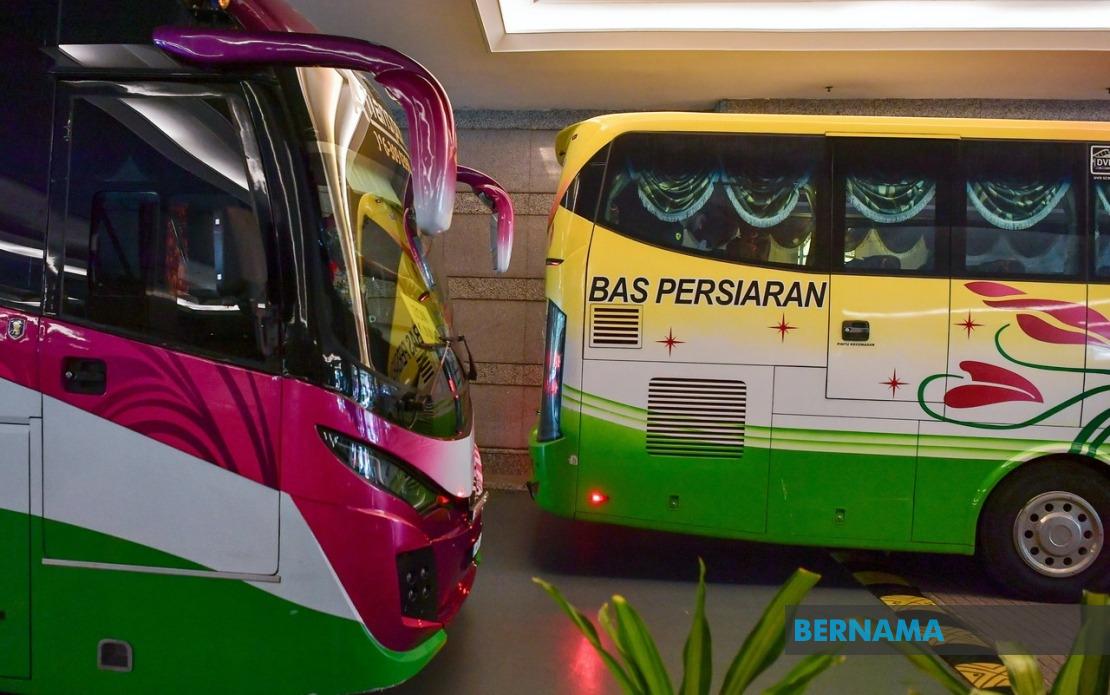
The Ministry of Tourism, Arts and Culture (MOTAC) has escalated calls for tour bus operators and tourism sector associations to urgently furnish detailed diesel usage records and supporting documentation. The move comes as the government seeks to evaluate and design an appropriate financial relief package addressing the mounting operational pressures created by diesel price volatility, particularly following instability in Middle Eastern energy markets.
According to a statement issued in Kuala Lumpur, MOTAC emphasises that comprehensive and accurate data forms the bedrock of any meaningful assistance scheme. Without concrete figures detailing fuel consumption patterns and comparative cost analyses spanning the period before and after regional energy disruptions, the ministry cannot reliably calculate the true extent of financial burden shouldered by transport operators. This data-driven approach reflects the government's determination to avoid ad hoc measures that might either undersupply genuine need or create market distortions through misallocated support.
The Ministry of Finance has signalled in-principle willingness to consider proposals favouring tour bus operators, yet this positive stance remains contingent upon receiving substantive evidence. Officials recognise that blanket or poorly calibrated assistance risks undermining programme credibility and generating grievances among operators who feel their circumstances remain unaddressed. Conversely, a robust evidence base enables policymakers to defend decisions as equitable and proportionate, grounded in the sector's actual operational realities rather than speculation or political pressure.
MOTAC has previously received a memorandum from nine tourism associations documenting concerns about diesel price impacts on the sector's viability. Following this submission, the ministry organised direct engagement sessions with industry representatives to gather qualitative insights alongside the quantitative metrics now being formally requested. These consultations underscored widespread anxiety about compressed profit margins, reduced service competitiveness, and potential job losses should costs spiral further without compensatory measures. The government's insistence on securing detailed diesel records reflects a desire to translate such concerns into measurable parameters suitable for policy formulation.
The urgency of this appeal carries implications beyond the immediate tourism sector. Tour bus operations represent a significant employment pool across Malaysia's regions, linking hotels, heritage sites, and leisure destinations into a coordinated value chain. Operators struggling with fuel costs may defer maintenance, reduce service frequency, or curtail routes to less profitable destinations, cascading negative effects throughout hospitality and attractions sectors. By obtaining precise consumption data, MOTAC aims to intervene strategically before such tightening of services compromises the broader tourist experience and associated economic multipliers.
Industry participants have until now submitted only partial information, a pattern MOTAC attributes to operational pressures, administrative capacity constraints, or uncertainty about the submission process itself. The ministry's renewed public appeal is intended both to clarify expectations and to signal that cooperation directly influences policy design. Operators who provide robust documentation during this window strengthen their position in subsequent deliberations, whereas continued non-compliance risks marginalisation from targeted relief initiatives.
The government's emphasis on fairness and effectiveness in assistance design reflects acknowledgment that poorly designed interventions can distort market behaviour or impose unintended fiscal costs. A comprehensive assessment, MOTAC stresses, must account for the country's overall fiscal position and long-term economic sustainability. This framing suggests that any relief package will be calibrated to provide meaningful but bounded support, avoiding open-ended commitments that might prove unsustainable or invite similar claims from other transport or logistics segments facing fuel-related pressures.
MOTAC has committed to implementing follow-up measures in phases following thorough evaluation. This staged rollout approach allows for initial pilot schemes targeting the most severely affected operator categories, with subsequent adjustments informed by early outcomes and additional data submissions. Such flexibility contrasts with rigid, uniform approaches that often fail to address sector heterogeneity, recognising that established tour operators, small coaches, and niche service providers face markedly different cost structures and margin pressures.
The deadline pressure now intensified by MOTAC's statement reflects growing recognition that prolonged uncertainty damages business confidence and planning capacity. Tour operators need visibility on government support timelines to inform decisions about capital investment, pricing strategies, and workforce retention. Clarity also benefits the Ministry of Finance, which requires realistic estimates of budgetary commitments to incorporate relief measures into forward fiscal planning without jeopardising other policy commitments.
ForRegional context, Malaysia's tourism sector competes with other Southeast Asian destinations, making operational cost competitiveness material to market share. Nations offering more robust support to transport operators may attract international tour operators seeking reliable, affordable ground logistics. Conversely, a Malaysian programme perceived as sluggish or inadequate could prompt operators to redirect business to regional competitors. This competitive dimension adds weight to MOTAC's push for rapid data gathering and expedited policy decisions.
Industry associations serve as aggregators and advocates, capable of pooling member data and presenting unified positions. Their cooperation is therefore essential to generating sector-wide evidence bases, yet their capacity to extract and standardise information from often small, family-operated businesses requires clear guidance and realistic timelines. MOTAC's reiterated appeal signals that government commitment to support hinges fundamentally on industry actors fulfilling their informational obligations, establishing a reciprocal accountability framework.

