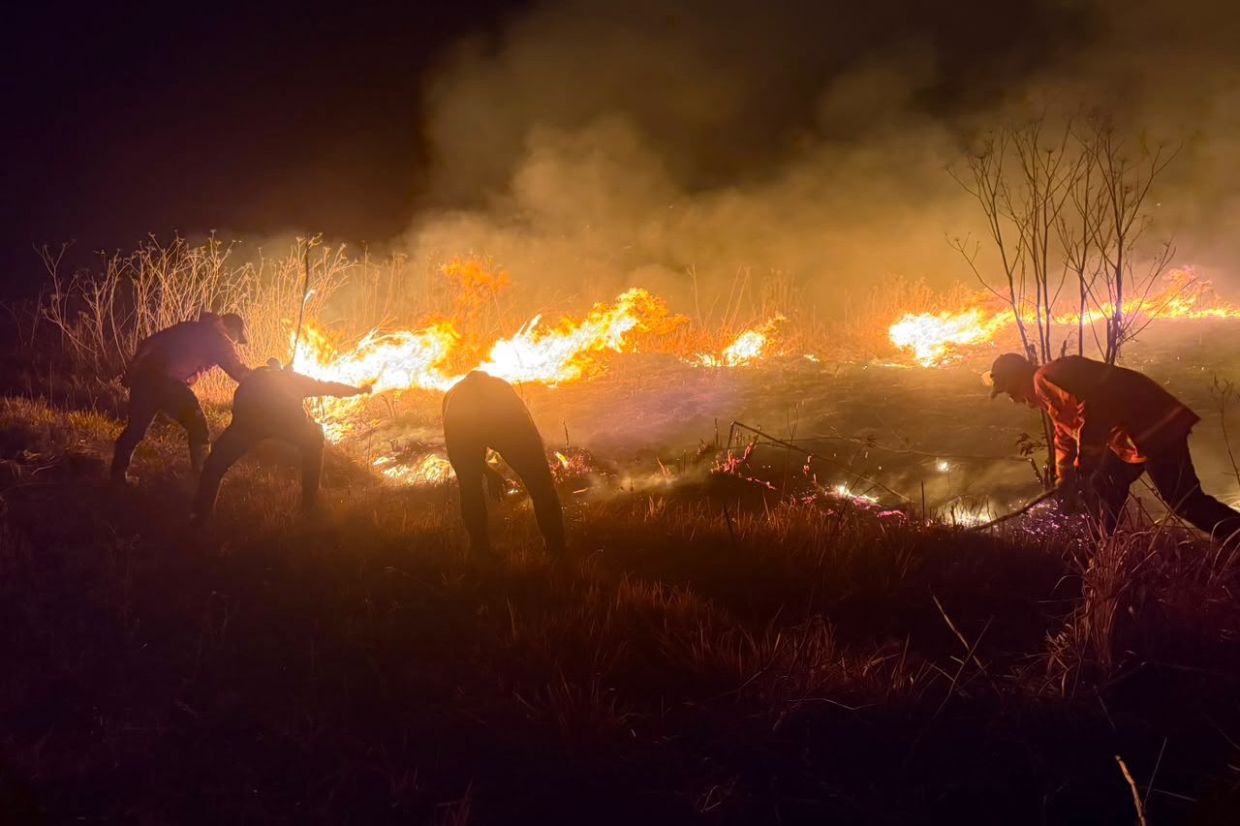
Indonesia is battling an escalating wildfire crisis at Mount Bromo in East Java, where the blaze has consumed approximately 520 hectares of the iconic volcano's landscape following a dramatic expansion triggered by severe wind conditions over the weekend. The rapid growth of the fire represents a significant deterioration in what park officials characterised as an already precarious situation, with meteorological conditions proving far more conducive to flame spread than initially anticipated when the fire first ignited.
Bromo Tengger Semeru National Park Authority director Rudijanta Tjahja Nugraha provided detailed information about the fire's trajectory, explaining that the situation worsened considerably after the blaze reignited on Saturday evening with renewed intensity. The flames have consumed not merely the mountain's volcanic slopes but have aggressively advanced into the extensive savanna ecosystem that characterises much of the park's vegetation. The combination of strong winds sweeping across the terrain and the advanced desiccation of grasses and other plant matter created ideal conditions for rapid fire propagation, transforming what might otherwise have been a manageable incident into a spreading conflagration.
The meteorological conditions have proven decisive in determining the fire's behaviour and velocity. Since Saturday afternoon, increasingly powerful winds have been driving the flames downslope, propelling the fire from higher elevations toward lower-lying areas and facilitating its lateral expansion across dry grassland. Nugraha specifically attributed this acceleration to what he characterised as fairly strong winds, indicating that wind speeds have remained elevated throughout the critical period when containment efforts are most challenging. The intersection of mechanical wind energy and extremely dry vegetation creates a scenario where fire management becomes exponentially more difficult for responding personnel.
Environmental factors have substantially amplified the fire's destructive capacity. The park's grasses and other vegetation have reached advanced stages of desiccation, a consequence of prolonged dry conditions that render plant matter highly flammable and capable of sustaining rapid combustion. This widespread dryness means that the fire encounters minimal resistance as it advances, with vegetation serving as abundant fuel rather than any impediment to flame spread. The ecological conditions prevalent across the park have essentially created a tinderbox environment where fire behaviour becomes unpredictable and difficult to control through conventional firefighting methods.
In response to the escalating situation, national park authorities implemented comprehensive closure measures designed to simultaneously facilitate firefighting operations and protect public safety. All tourist entrances to Mount Bromo were sealed from 10 p.m. on Saturday, with the closure remaining in effect indefinitely pending the fire's containment and assessment of conditions. This represents a significant economic and operational consequence for the park, which depends substantially on tourism revenue and maintains considerable visitation, particularly from domestic and regional visitors drawn by the mountain's natural appeal and accessibility.
The closure protocol included provisions for affected visitors, acknowledging the hardship imposed by the emergency measures. Tourists whose bookings were disrupted received two options: they could reschedule their visits for subsequent dates, or they could claim full refunds for their cancelled reservations. This approach attempted to balance the necessity of emergency response with minimal damage to visitor relationships and the park's long-term tourism prospects. However, the indefinite nature of the closure indicates that park management anticipates a sustained operational disruption rather than a quick resolution.
Investigation into the fire's origins has become a focal point for government authorities, with preliminary findings already pointing toward human activity as the probable cause. The national park authority suggested on Friday that deliberate or negligent human action sparked the initial ignition, a determination that has prompted intervention from Indonesia's Forestry Ministry. This assessment carries significant implications for accountability and prevention of future incidents, particularly if the fire resulted from deliberate burning practices related to land or forest management.
Forestry Minister Raja Juli Antoni addressed the investigation and legal accountability framework during public statements about the incident. He emphasised that individuals responsible for forest and land burning would face appropriate legal penalties under Indonesian law, signalling that authorities intend to pursue criminal or administrative sanctions if human culpability is established. This declarative approach reflects government determination to deter deliberate burning practices that threaten protected forest areas and biodiversity. The emphasis on punishment suggests that authorities suspect the fire may have originated from farming-related burning, logging operations, or similar land-use practices that occasionally occur despite regulations.
The Mount Bromo wildfire carries particular significance for Indonesia's conservation efforts and regional environmental stability. Bromo Tengger Semeru National Park encompasses unique ecosystems that support distinctive flora and fauna adapted to volcanic terrain, and large-scale fire damage threatens biodiversity and ecosystem integrity. The park also holds cultural significance for Indonesian communities and attracts substantial international tourism, making its preservation economically and socially important. The incident has additionally highlighted vulnerabilities in fire prevention and rapid response capabilities within Indonesia's protected area management infrastructure.
From a Southeast Asian perspective, the Mount Bromo situation reflects broader regional challenges with wildfire management during dry seasons. Indonesia has historically experienced severe transboundary haze crises originating from uncontrolled burning in forest and peatland areas, creating air quality emergencies across the region. Although the Mount Bromo fire appears to be a localised national park incident rather than part of a landscape-scale burning phenomenon, it underscores persistent challenges in enforcing anti-burning regulations and preventing human-caused ignitions in protected areas. The rapid spread achieved in just one day demonstrates how quickly conditions can deteriorate once fires initiate in fire-prone ecosystems, particularly when meteorological factors become unfavourable for suppression efforts.

