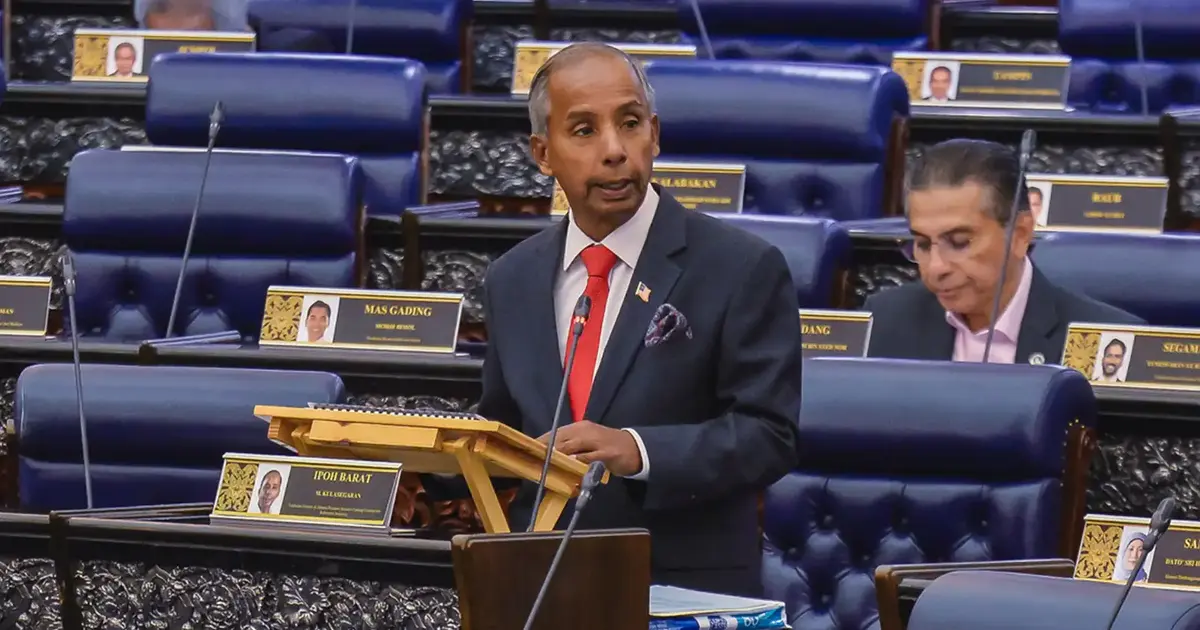
The possibility of Malaysian legislators accessing closed-circuit television recordings from the Taiping prison disturbance has emerged as a developing issue in parliament's oversight of law enforcement operations, with senior officials indicating that formal Cabinet authorization represents a necessary prerequisite before any such disclosure occurs. Deputy Law and Institutional Reform Minister Kula has signalled openness to the proposal while emphasizing the procedural and legal complexities that must first be resolved through the country's high-level decision-making apparatus.
The prison incident, which has drawn significant parliamentary and media attention, prompted legislators to seek comprehensive documentation of events through security footage. The demand reflects the legislature's broader role in scrutinizing public institutions and ensuring accountability within Malaysia's correctional system. However, the pathway to fulfilling this request involves navigating multiple bureaucratic and judicial considerations that extend beyond simple administrative approval.
Kula's statement underscores a fundamental tension between legislative transparency demands and the needs of ongoing judicial proceedings. The minister cited active court cases connected to the disturbance as a primary concern, indicating that providing unrestricted access to evidence material could potentially compromise legal proceedings or prejudice outcomes. This protective approach reflects standard practice in many democracies where courts enjoy primacy in managing evidence during litigation.
The reference to Cabinet approval signals that the decision transcends routine administrative channels and touches upon matters of broader governmental policy and potential national sensitivity. Such escalation suggests the incident carries implications beyond prison management, possibly involving broader questions about institutional governance, security protocols, or public order considerations that warrant senior ministerial deliberation. The cabinet process also allows multiple portfolio holders to assess risks and implications from their respective jurisdictions before authorization proceeds.
For Malaysian parliamentarians, footage access would represent a significant enhancement to legislative scrutiny capabilities. Lawmakers could independently verify official accounts of events, assess security procedures, and evaluate institutional responses without relying solely on government briefings or written reports. This direct observational capacity strengthens parliament's ability to hold executive agencies accountable and identify systemic weaknesses requiring reform.
The Taiping prison incident reflects broader challenges within Malaysia's correctional infrastructure, where resource constraints, overcrowding, and rehabilitation program limitations frequently generate institutional tensions. Understanding precisely what occurred during the disturbance through authentic visual evidence enables more informed legislative discussion about systemic reforms and resource allocation. Rather than debating contested accounts, parliamentarians working from objective footage could focus constructively on preventative measures and facility improvements.
From a regional perspective, Malaysia's handling of this footage access question carries implications for how Southeast Asian democracies balance security and transparency. The region exhibits varied approaches to institutional accountability, with some nations prioritizing executive discretion while others emphasize legislative oversight. Malaysia's potential opening of security footage to parliament could establish precedent within the regional context, influencing how other Southeast Asian jurisdictions handle similar requests and setting standards for institutional transparency.
The court case linkage that Kula identified introduces genuine legal complexity. Unauthorized disclosure of evidence material could theoretically provide inadmissible evidence trails, prejudice jury reasoning in adversarial proceedings, or expose prosecution strategies prematurely. Malaysian legal traditions, developed from Commonwealth frameworks, prioritize protection of trial integrity, making Kula's caution procedurally sound rather than obstructive. The Cabinet must weigh legitimate oversight interests against equally legitimate judicial protection concerns.
Timelines for Cabinet consideration remain uncertain, though the minister's conditional rather than dismissive response suggests earnest engagement with the parliamentary request. Rather than categorical refusal, Kula indicated a pathway exists contingent upon proper procedures and legal clearances. This measured approach acknowledges both the legitimacy of legislative scrutiny and the genuine constraints that active legal proceedings impose on evidence disclosure.
The prison incident also contextualizes broader discussions about correctional reform within Malaysian political discourse. As the country grapples with rehabilitation philosophy, facilities modernization, and staff training enhancements, detailed understanding of what precipitated the disturbance becomes instructive. Whether security lapses, inter-prisoner conflicts, or facility inadequacies triggered events, legislative analysis rooted in actual footage rather than summarized reports enables more precise policy responses.
For corrections officials and the Prison Department, parliamentary footage viewing carries both risks and potential benefits. Scrutiny could identify areas requiring urgent attention and justify budget allocations for improvements. Conversely, critical examination might highlight accountability gaps or procedural failures. Professional prison management systems generally support external oversight as a mechanism strengthening institutional standards and workforce professionalism.
The eventual decision will likely reflect how Malaysia's government institutions balance competing imperatives: the parliament's constitutional role in representing public accountability interests, the judiciary's requirement for protected evidence handling, and the executive's responsibility for operational security and institutional integrity. Kula's statement suggests that balance is being actively negotiated rather than categorically predetermined, offering parliament reasonable hope that access could materialize once procedural requirements are satisfied.

