Any formal investigation stemming from the Royal Commission of Inquiry into Tabung Haji must be conducted transparently and independently to safeguard the interests of pilgrimage fund depositors and the broader Malaysian public, parliamentarians stressed during a special sitting of the Dewan Rakyat on August 11. The call reflects growing concern that the contentious nature of the RCI's findings—made public on July 29—has created a murky environment of accusations and counter-accusations among various stakeholders, leaving ordinary depositors uncertain about who bears responsibility for the institution's earlier troubles.
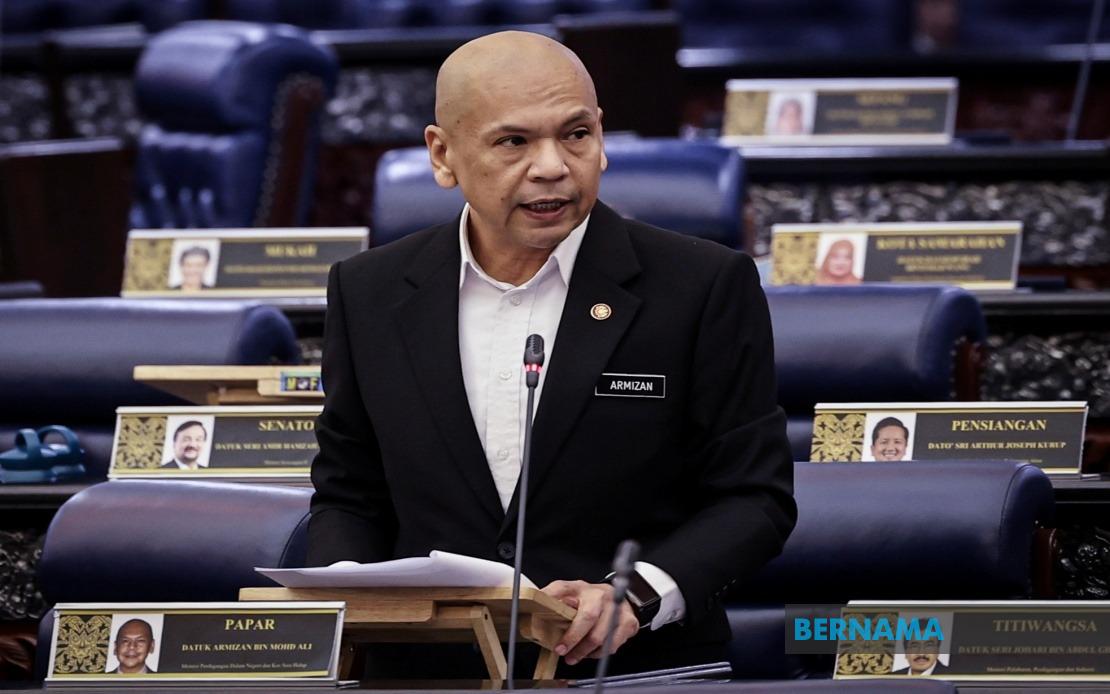
Minister of Domestic Trade and Cost of Living Datuk Armizan Mohd Ali articulated the frustration felt by many lawmakers, noting that the current climate of dispute has descended into a cycle of mutual blame in which terms like slander and defamation are being weaponized. When multiple parties accuse each other of misconduct without clarity on the facts, public confidence erodes further and the original victims—those who lost money or had their pilgrimage plans disrupted—become collateral damage in a political and corporate blame game. Armizan, representing the Papar constituency, emphasized that investigations must be conducted professionally and grounded in factual assessment and legal principle rather than partisan rhetoric.
The minister's remarks underscored a deeper problem affecting how Malaysians perceive institutional accountability. The proliferation of conflicting narratives—with different figures claiming victimhood while leveling accusations at others—has left depositors and the general public in a state of confusion about what actually occurred during the 2014 to 2020 period covered by the RCI. This information vacuum creates space for speculation, conspiracy theories, and loss of faith in regulatory institutions. Armizan welcomed the prospect of rigorous investigative action by relevant enforcement agencies, signaling that Parliament expects more than the RCI report itself; formal criminal or civil proceedings may be necessary to determine culpability.
Beyond investigation into past conduct, Armizan stressed that every improvement recommendation contained in the RCI report must be rigorously examined and implemented to complete Tabung Haji's recovery trajectory. This two-pronged approach—accountability for the past combined with structural reform for the future—offers a path to genuine institutional healing. Tabung Haji has since returned to financial health, and the minister acknowledged the institution's recent recovery initiatives, but depositors need assurance that the governance failures that permitted earlier mismanagement have been permanently addressed.
The governance question took on additional complexity when Minister of Women, Family and Community Development Datuk Seri Nancy Shukri addressed the organizational division of Tabung Haji's oversight responsibilities. She affirmed that haj affairs management should remain with the Minister in the Prime Minister's Department (Religious Affairs), while financial and investment matters belong under the Finance Ministry's purview. This specialization of duties reflects a rational allocation of responsibility based on expertise and operational scope, reducing the duplication and turf wars that can plague large institutions.
More contentious was the issue of political appointments to the institution's board of directors—a matter that dominated earlier criticism in the RCI report. Shukri reframed the debate by arguing that the relevant question is not whether a board member carries a political label, but whether that individual possesses the necessary integrity, qualifications, experience, and professional capability to execute their duties effectively. By her logic, a politically connected person who meets merit-based standards deserves recognition, not automatic disqualification. This stance reflects a pragmatic acknowledgment that in Malaysia's political system, many competent professionals have political affiliations, and blanket exclusion could limit the talent pool.
Yet Shukri herself acknowledged the risk that political credentials could become a substitute for genuine fit-and-proper standards. To address this vulnerability, she advocated for establishing transparent, specific criteria for board appointments, clearly defined selection methodologies, and explicit expertise requirements. When these guardrails are in place and consistently enforced, political background becomes merely one piece of a candidate's profile rather than the decisive factor. This framework appeals to reformers seeking to de-politicize governance without naively pretending that political considerations have disappeared from Malaysian institutional life.
The RCI report, presented to Parliament during the special sitting, documents significant governance and operational weaknesses spanning the 2014 to 2020 period—years when Tabung Haji faced criticism for investment losses, mismanagement allegations, and operational missteps that undermined depositor confidence. The inquiry produced 25 specific recommendations for systemic improvement. By July 30, Tabung Haji had already implemented 75 percent of these recommendations, suggesting that once public scrutiny intensified and new leadership took charge, the institution proved capable of rapid corrective action.
This gap between past dysfunction and present reform raises important questions about institutional culture and incentives. Why were governance failures allowed to persist during 2014-2020? What changed to enable rapid implementation of improvements once the RCI report was commissioned? These questions matter for Malaysian depositors and for citizens relying on other government-linked institutions. If Tabung Haji could reform itself once exposed to public scrutiny, it suggests that transparency and accountability mechanisms are essential to prevent institutional decay across the public sector.
The parliamentary debate also illuminated the challenge of public trust in institutions that have suffered reputational damage. Even as Tabung Haji returns to financial health and implements governance reforms, depositors who lost money or experienced disrupted pilgrimage plans need more than statistical recovery—they need reassurance that individuals responsible for earlier failures face appropriate consequences. Without clear accountability, reform can appear cosmetic, and the institution's recovery may remain fragile as public confidence continues to rebuild.
For Malaysian and Southeast Asian observers, the Tabung Haji case offers broader lessons about institutional resilience and reform. Large public institutions managing citizen savings or services require robust governance frameworks, transparent appointment processes, and credible accountability mechanisms. When these elements are weak, even well-intentioned organizations can accumulate significant problems before corrective action begins. The Dewan Rakyat's insistence on transparent, professional investigation reflects recognition that institutional legitimacy depends not only on financial recovery but on demonstrable commitment to justice and systemic change.
Moving forward, the effectiveness of the proposed investigations will largely determine whether Tabung Haji emerges from this episode with renewed public confidence or lingering doubt. Malaysian depositors are watching closely to see whether the rhetoric of transparency and accountability translates into concrete action. The test will be whether enforcement agencies pursue leads identified in the RCI report rigorously and impartially, regardless of the political status of those involved. Only then can the institution truly move beyond the cycle of accusation and counter-accusation that has confused and frustrated the public.

