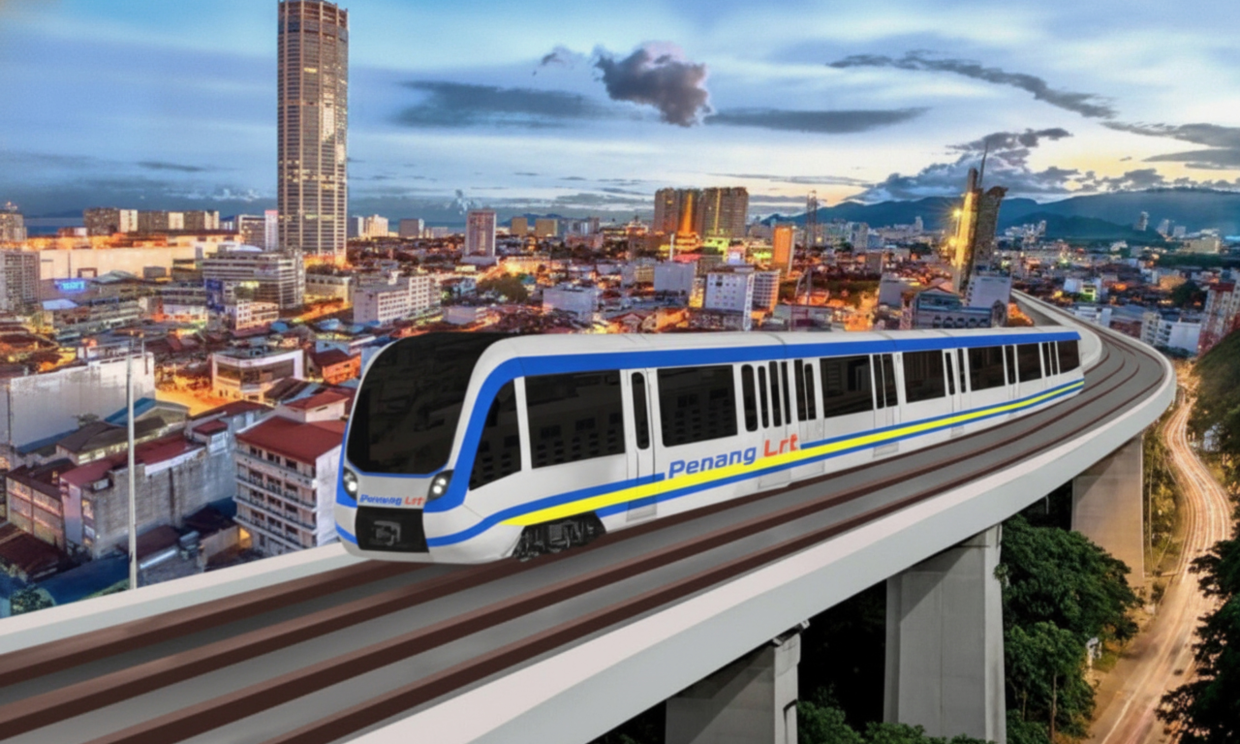
Malaysian Resources Corp Bhd (MRCB) has secured a substantial RM3.028 billion contract to deliver the complete railway systems package for the Penang Light Rail Transit Mutiara Line, marking a significant milestone for the infrastructure-focused conglomerate. The company announced the award through a regulatory filing with Bursa Malaysia, confirming that it will undertake the project through a 90:10 unincorporated joint venture with an unnamed partner. This contract represents one of the larger individual components within the broader Penang LRT development, a key component of the federal government's push to improve public transportation connectivity in the northern region.
The scope of work assigned to MRCB encompasses a comprehensive 68.8-month engagement spanning the entire lifecycle of the railway systems infrastructure. This includes not only the physical design and procurement of trains themselves, but the intricate engineering required for signalling systems that manage train movement and safety, the electrical power supply infrastructure necessary to keep the network operational, telecommunications networks that support system operations and passenger services, and the electronic ticketing systems that passengers interact with daily. The breadth of this assignment demonstrates that MRCB will serve as the prime integrator responsible for ensuring all these disparate technical systems function seamlessly as a unified network.
The Penang LRT Mutiara Line project forms part of the state's long-term strategy to reduce traffic congestion and provide commuters with a reliable alternative to private vehicles. For Penang, which has experienced rapid urbanisation and increasing vehicle volumes on its congested road network, the new light rail system promises to reshape mobility patterns across the George Town metropolitan area and surrounding districts. The project aligns with broader Malaysian policy objectives to promote sustainable urban transport and reduce the nation's carbon footprint in urban centres, particularly as the country works toward climate commitments and urban planning goals.
MRCB's involvement in this project builds upon its established track record executing comparable large-scale infrastructure developments across Malaysia. The company has previously undertaken major rail and transit projects, positioning it with the technical expertise and project management capability necessary to navigate the complexity of delivering integrated railway systems. The joint venture structure, while leaving the partner unnamed in initial announcements, likely reflects industry practice of pairing a major local contractor with specialised expertise in particular technical domains such as signalling or rolling stock integration.
The company has positioned the contract as a positive contributor to future earnings, indicating management confidence in the project's profitability and timeline feasibility. In its regulatory communication, MRCB acknowledged that the endeavour carries exposure to standard construction industry risks, particularly the volatility in raw materials and equipment pricing that has characterised global supply chains since 2021. Steel, electronics components, and specialised railway equipment remain subject to market fluctuations that can affect project costs if not carefully managed through procurement strategies and contractual protections.
However, MRCB expressed confidence in its ability to manage these risks through established operational procedures and controls developed across its portfolio of completed projects. The company plans to leverage its experience in cost management, supply chain coordination, and quality assurance to maintain project schedules and financial performance. Given the critical nature of rail infrastructure to urban development goals, contract terms likely include safeguards protecting both MRCB and the project owner from excessive cost overruns, with mechanisms to manage price inflation for key materials.
The market responded positively to the contract announcement, with MRCB shares appreciating one sen to close at 32 sen by the midday trading break, representing a gain of 3.23%. The unnamed joint venture partner, identified as Theta Edge in market filings, experienced even more pronounced investor enthusiasm, with its shares surging 14 sen or 25.45% to 69 sen. These gains suggest investor perception that the contract represents a meaningful earnings opportunity for both entities, validating management statements about the project's contribution to future financial performance.
The Penang LRT contract comes as Malaysia continues expanding its urban rail network in key metropolitan areas. Beyond Penang, similar light rail developments are underway or planned in Kuala Lumpur, Selangor, and other high-density regions. This wave of rail infrastructure investment creates sustained demand for specialist contractors like MRCB, with multiple projects potentially offering pipeline visibility for the next five to ten years. The Penang contract may therefore signal the beginning of an extended engagement cycle for MRCB in the rail systems integration business.
For Penang specifically, securing a contractor of MRCB's scale and experience provides assurance that the technical complexity inherent in modern light rail systems will be properly managed. The Mutiara Line represents substantial public investment in the state's transportation future, with expectations that the system will transform commute patterns and support economic development along its corridor. The railway systems component—trains, signalling, power, and ticketing—forms the operational backbone that determines whether the project delivers on its promise to commuters and stakeholders.
The contract also reflects confidence from Penang authorities and the federal government that MRCB possesses the capacity to execute major integrated infrastructure programmes on schedule and within budget parameters. As Malaysia positions itself as a regional leader in urban mobility solutions, projects like the Penang LRT Mutiara Line serve as showcase developments demonstrating the country's capability to deliver world-class public transport infrastructure. MRCB's selection underscores the maturation of Malaysia's local engineering and construction industry, capable of managing technically sophisticated projects independently rather than relying exclusively on foreign contractors.

