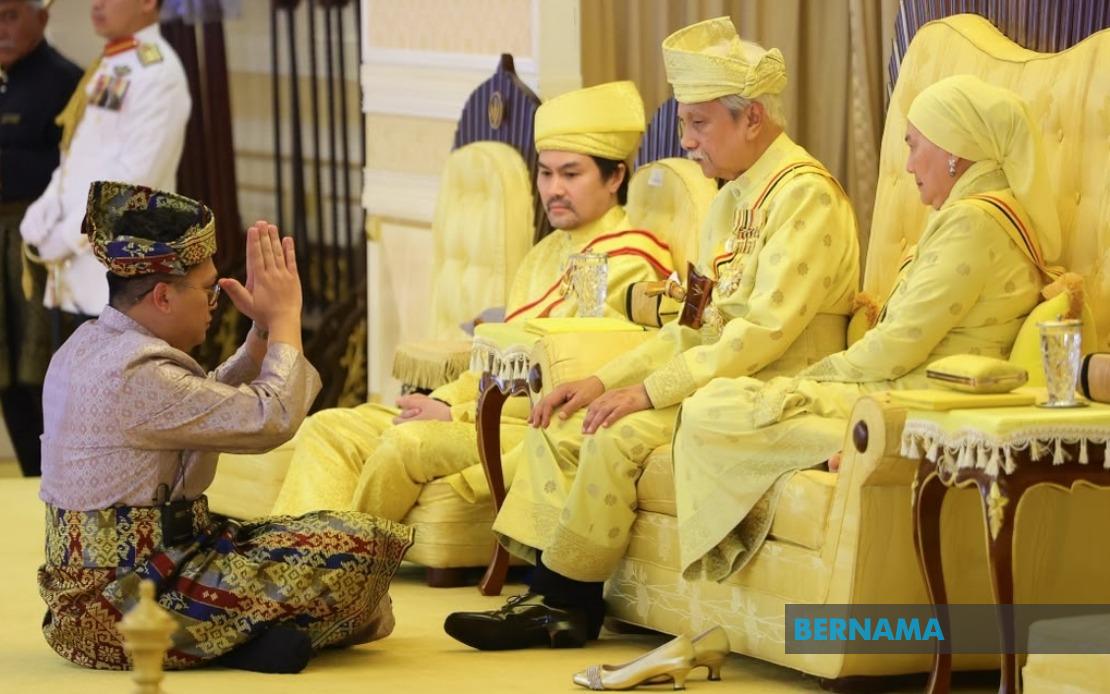
Tuanku Muhriz Tuanku Munawir, the Yang Dipertuan Besar of Negeri Sembilan, has formally installed Muhammad Faris Johari as the 11th Undang of Luak Sungei Ujong during a traditional ceremony held at Istana Besar Seri Menanti this morning. The appointment marks a significant moment in the state's constitutional and customary governance structures, bringing a new generation of leadership into the ranks of Negeri Sembilan's traditional chieftaincy.
The installation ceremony followed long-established protocols governing the appointment of district leaders in Negeri Sembilan, one of Malaysia's few remaining states that retain a distinctive customary administrative framework. The proceedings began with the Orang Empat Istana, the group of senior palace officials, formally seeking the ruler's permission to proceed with the installation before the newly appointed Undang made his pledge of allegiance to the throne. This ritualistic sequence underscores the constitutional relationship between the state's royal institution and its traditional leadership hierarchy, a relationship that has been central to Negeri Sembilan's governance since the colonial period.
Upon conferring the title Datuk Klana Petra upon Muhammad Faris, Tuanku Muhriz formally proclaimed him to hold the position and privileges inherent to the office of Undang. The awarding of the Datuk title represents not merely a ceremonial honour but signals the ruler's acknowledgment of the appointee's readiness to exercise the customary and administrative responsibilities attached to the district leadership role.
In his address during the ceremony, Tuanku Muhriz emphasised the importance of honouring the commitments undertaken during the installation. The ruler stressed that pledges made by traditional leaders must be executed with integrity, sincerity, and an unwavering sense of accountability to both the throne and the communities they serve. Such reminders reflect broader concerns about the quality of governance at the district level and the need to maintain public trust in customary institutions during periods of social and political change.
The Yang Dipertuan Besar also directed remarks specifically at the Orang Kaya, the collective term for the state's chieftains, reminding them of their paramount duty to remain steadfastly loyal to the institution of the Yang Dipertuan Besar and to foster relations with the Palace that are characterised by respect and propriety. This injunction represents an attempt to reinforce hierarchical bonds within the traditional leadership structure at a time when patronage networks and political alignments can sometimes strain customary relationships.
The ceremony drew attendance from key members of the royal household and government leadership. Tunku Ampuan Besar Tuanku Aishah Rohani Tengku Besar Mahmud, Tunku Besar Seri Menanti Tunku Ali Redhauddin Tuanku Muhriz, and Tunku Panglima Besar Tunku Zain Al-'Abidin were present to witness the installation. Menteri Besar Datuk Seri Aminuddin Harun and senior heads of state government departments also attended, demonstrating the significance attached to the appointment and the alignment between the state government and the royal-customary establishment.
Tuanku Muhriz articulated a vision of governance that relies upon relationships constructed on foundations of reciprocal respect, trust, and consensus. According to the ruler, such bonds are indispensable for preserving the constitutional monarchy, maintaining the continuity of customary traditions, and ensuring sustained development and stability across Negeri Sembilan. This philosophy reflects a particular understanding of how royalty, traditional leadership, and modern governance can coexist harmoniously, a balance that Southeast Asian monarchies increasingly seek to demonstrate to their populations.
The ruler also called upon the broader population to collaborate constructively with the customary leadership structure in fulfilling governmental responsibilities while remaining committed to the preservation of Adat Perpatih, the customary law and practices unique to Negeri Sembilan. Adat Perpatih, which incorporates matrilineal and consensual principles distinct from other Malaysian states' customs, has been transmitted through generations and remains an important marker of Negeri Sembilan's distinctive identity within the federation.
Muhammad Faris, now aged 28, brings substantial professional credentials to the office. Born on 30 October 1997, he holds a bachelor's degree in accountancy from Universiti Teknologi MARA and obtained professional certification through the Association of Chartered Certified Accountants programme in 2022. This combination of formal education and professional qualification is increasingly common among newly appointed traditional leaders in Malaysia, reflecting the expectation that custodians of customary institutions must also possess technical competence relevant to contemporary administration. He is married to Sharifah Amirah Syed Ismail Ash-Shahab.
The appointment of Muhammad Faris occurs within a broader context of generational renewal among Negeri Sembilan's traditional chieftaincy, as younger, professionally qualified individuals assume roles that were historically occupied by their predecessors. This transition raises questions about how customary institutions will evolve to meet contemporary governance challenges while preserving their distinctive cultural and constitutional functions.
Later the same day, a further royal audience was scheduled to formalise the installation of the 22nd Undang of Luak Rembau, indicating that Tuanku Muhriz has undertaken a comprehensive programme of installing district leaders. Such simultaneous appointments suggest either a planned cycle of customary succession or the completion of vacancies within the traditional leadership framework, underscoring the continued vitality of Negeri Sembilan's distinctive dual governance system combining constitutional monarchy with customary district administration.

