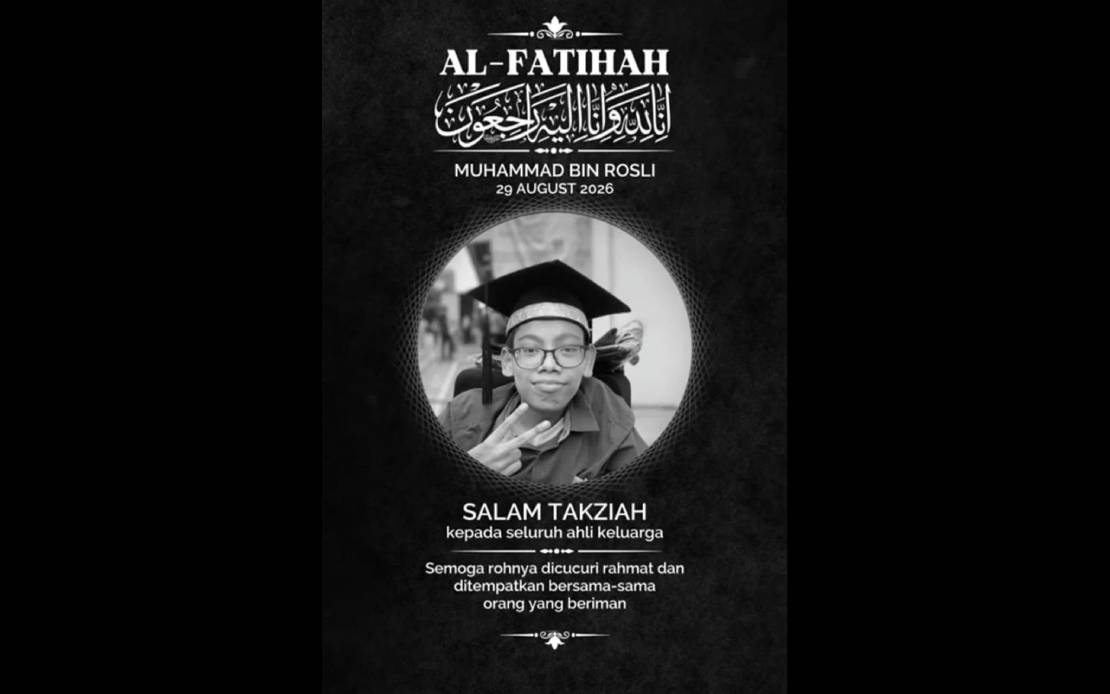
Muhammad Rosli, the Malaysian whose successful surgical separation from his conjoined twin captured international medical attention more than two decades ago, died Thursday morning at Chancellor Tuanku Muhriz Hospital in Cheras. He was 40. His twin brother Ahmad broke the news via Facebook, expressing gratitude for prayers and support throughout Muhammad's illness and requesting du'a for his departed sibling.
The death marks the end of a remarkable chapter in Malaysian medical history. In September 2002, Muhammad and his brother Ahmad underwent a complex 22-hour and 45-minute surgical procedure at the King Fahd National Guard Hospital in Riyadh to achieve complete separation. The operation represented a watershed moment for both Malaysian medicine and the young men themselves, who had lived their entire lives physically joined at critical points, their destinies literally intertwined until expert surgeons successfully divided them.
The pathway to that 2002 breakthrough began a year earlier when both brothers underwent liver-splitting surgery at the University Malaya Medical Centre in 2001. This preparatory procedure represented a crucial preliminary step, allowing surgeons to establish whether complete separation was medically feasible. The decision to proceed with full separation reflected confidence in the surgical team's capabilities and hope from the family that the twins might each live independent lives. The successful outcome of that initial surgery paved the way for the more ambitious final separation attempt in Saudi Arabia.
In recent months, Muhammad's health declined following a bladder cancer diagnosis. From July 2025, he had been receiving treatment at the King Fahd National Guard Hospital in Riyadh, the same institution where he had undergone his life-defining separation surgery two decades earlier. The coincidence underscored the hospital's significance in his medical journey, though the return was under far grimmer circumstances. During his cancer treatment course, Muhammad endured five major surgical interventions and completed five chemotherapy sessions, treatments that would exhaust the physical reserves of even the healthiest patient.
Initially, medical teams reported encouraging progress. Muhammad appeared to respond positively to the aggressive treatment regimen, and physicians declared him cancer-free following the completion of chemotherapy. This announcement would have offered genuine hope to his family and the wider Malaysian public, who had followed his journey with deep emotional investment. Continuing follow-up appointments were scheduled to monitor for any recurrence, standard protocol in cancer management but typically undertaken with measured optimism after successful initial treatment.
However, the intervening weeks brought deterioration that friends and relatives did not anticipate. By Wednesday, Ahmad revealed that Muhammad's physical condition had sharply worsened. Medical tests indicated severely elevated blood acid levels, a dangerous metabolic imbalance suggesting that underlying systems were failing. The high acidity pushed Muhammad toward a semi-conscious state, making communication impossible and signalling that his body was shutting down despite earlier medical victories. This sudden reversal highlighted the unpredictable nature of advanced cancer, which can suddenly overwhelm even patients who initially respond well to treatment.
Muhammad passed away at 10:45 am Thursday at the hospital in Cheras. His remains were transported to Subang Jaya in the Klang Valley, where he was laid to rest at the USJ 22 Muslim Cemetery at approximately 6:00 pm the same day. The swift funeral arrangements reflected Islamic practice and the family's dignified approach to their grief.
The death resonates beyond family circles because Muhammad and Ahmad's lives embodied broader themes that matter to Malaysians—medical achievement, human resilience, and the bonds between siblings. When the twins were first separated in 2002, it represented a triumph not only for Saudi surgeons but for the complex international medical networks that sometimes enable miraculous outcomes. Malaysian surgeons had played crucial roles in the preparatory phases, and the nation took genuine pride in the achievement. Parents who had endured the stress of raising conjoined children finally saw them emerge as separate individuals with distinct futures.
That Muhammad lived 23 years after separation—reaching adulthood and middle age—testified to the quality of surgical work performed on him and the resilience of his body. Many medical commentators at the time had feared that separation might compromise one or both twins' long-term health prospects. Instead, Muhammad not only survived but developed his own life trajectory independent of his brother, even though the twins remained close. This longevity itself constituted a medical success story.
The cancer that ultimately claimed him represented a different category of challenge—one that medical science has only partially conquered despite tremendous advances. His family's decision to pursue aggressive treatment in Riyadh demonstrates the continued reliance on overseas medical facilities for complex conditions, a reality that reflects both the limitations of domestic healthcare infrastructure and the existence of pockets of excellence in international institutions. The King Fahd National Guard Hospital, having overseen his remarkable transformation as a young man, could not ultimately defeat the cellular rebellion occurring within his body.
Muhammad's death will prompt renewed reflection on the conjoined twins case among Malaysian medical students and physicians who studied it as a landmark achievement. Yet it also serves as a sober reminder that even miraculous medical interventions carry no guarantees about length or quality of life thereafter. The separation gave the twins something profoundly precious—independence and the chance to live as individuals—but it could not shield them from universal human vulnerabilities. Ahmad now carries forward the memory of their shared childhood and their extraordinary journey together, along with the loss of the brother from whom he was surgically and finally separated more than two decades ago.

