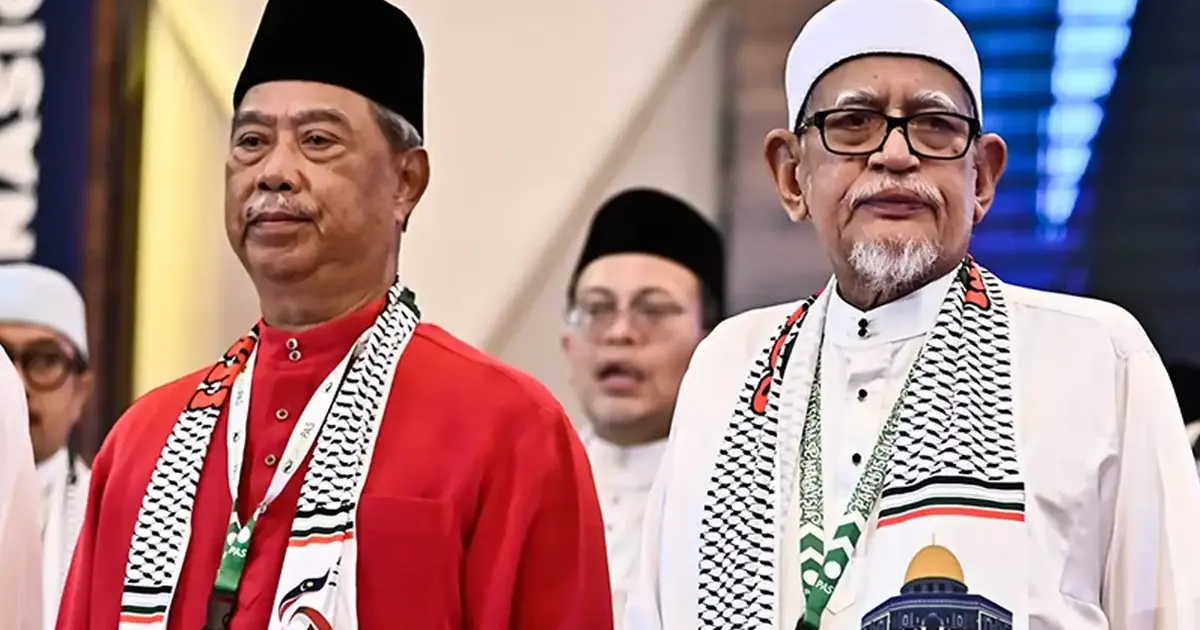
Bersatu president Muhyiddin Yassin has launched a scathing attack on PAS, accusing the Islamic party of pursuing unilateral alliance negotiations with Barisan Nasional in a manner that undermines the broader interests of Perikatan Nasional. The rebuke signals deepening tensions within Malaysia's opposition coalition at a critical juncture for the country's political direction.
Muhyiddin's criticism reflects growing frustration within Perikatan Nasional over what he characterises as independent decision-making by PAS that lacks consultation with coalition partners. The Bersatu leader contends that such autonomous moves violate the collective understanding that underpins the opposition alliance and threaten its cohesion heading into crucial political negotiations.
The dispute highlights a persistent structural weakness in Perikatan Nasional that has plagued the coalition since its formation. Unlike more hierarchically organised political structures, the alliance brings together parties with distinct ideological orientations and regional strongholds, making consensus-building inherently difficult. When one major component pursues separate tracks without coordination, it creates friction and raises questions about the coalition's strategic unity.
PAS, as the largest Islamist party in Malaysia and increasingly influential in several key states, occupies a pivotal position that makes its political choices particularly consequential. The party's ability to negotiate simultaneously with multiple coalitions—whether with Perikatan Nasional partners or Barisan Nasional—reflects its enhanced bargaining power but also creates complicated dynamics that test inter-coalition loyalty and trust.
For Malaysian observers, this internal squabbling exposes the fragility of opposition politics in the country. While Perikatan Nasional has positioned itself as an alternative to the long-ruling Barisan Nasional, internal disagreements over basic governance and strategic alignment suggest that opposition unity remains conditional and transactional rather than principled. The coalition's ability to present a coherent alternative vision depends critically on its ability to manage such disagreements privately rather than air them publicly.
The timing of Muhyiddin's complaint carries additional significance for regional political observers. In the context of recent state elections and ongoing federal politics, any weakening of Perikatan Nasional could reshape the political landscape in ways that benefit establishment parties or create space for other political formations to gain influence. Malaysia's complex federal system means that state-level negotiations often carry implications for national political positioning.
Bersatu itself has faced numerous challenges since its formation, including questions about its identity and purpose within the broader opposition movement. Muhyiddin's vocal criticism of PAS may reflect Bersatu's attempt to position itself as a responsible coalition partner concerned with collective interests, even as tensions surface over strategic direction. This public stance could strengthen his hand in future intra-coalition negotiations over resource allocation and political priorities.
The PAS-BN engagement that triggered this dispute deserves careful examination for what it reveals about Malaysian political pragmatism. Despite ideological differences and recent electoral competition, PAS and Barisan Nasional have demonstrated capacity for tactical cooperation, suggesting that Malaysia's political parties operate within a framework where coalitions remain flexible and relationships fluid. This flexibility contrasts sharply with the rigidity Muhyiddin expects within Perikatan Nasional.
From a governance perspective, these coalition dynamics matter because they affect political stability and the government's capacity to function effectively. When opposition coalitions fracture over procedure and consultation, it raises questions about how such parties would manage governmental responsibility if they ever attained power. Voters considering their electoral preferences must wonder whether Perikatan Nasional partners can govern cohesively or whether internal conflicts would paralyse decision-making.
Regional observers in Southeast Asia are watching Malaysian political developments closely, as the country's experience navigating multi-ethnic, multi-party politics offers lessons for other democracies in the region facing similar coalition challenges. The tensions now emerging within Perikatan Nasional illustrate the difficulties inherent in maintaining opposition unity across ideological and ethnic lines without strong institutional mechanisms or charismatic central leadership.
Looking ahead, Muhyiddin's public rebuke of PAS signals that Perikatan Nasional may face further stress as component parties pursue their respective interests. The coalition's ability to emerge from these tensions strengthened rather than fractured will depend on whether parties prioritise coalition discipline or whether they continue allowing individual political ambitions to override collective objectives. Without resolution, these disputes could ultimately reshape Malaysia's political competition in unpredictable ways.

