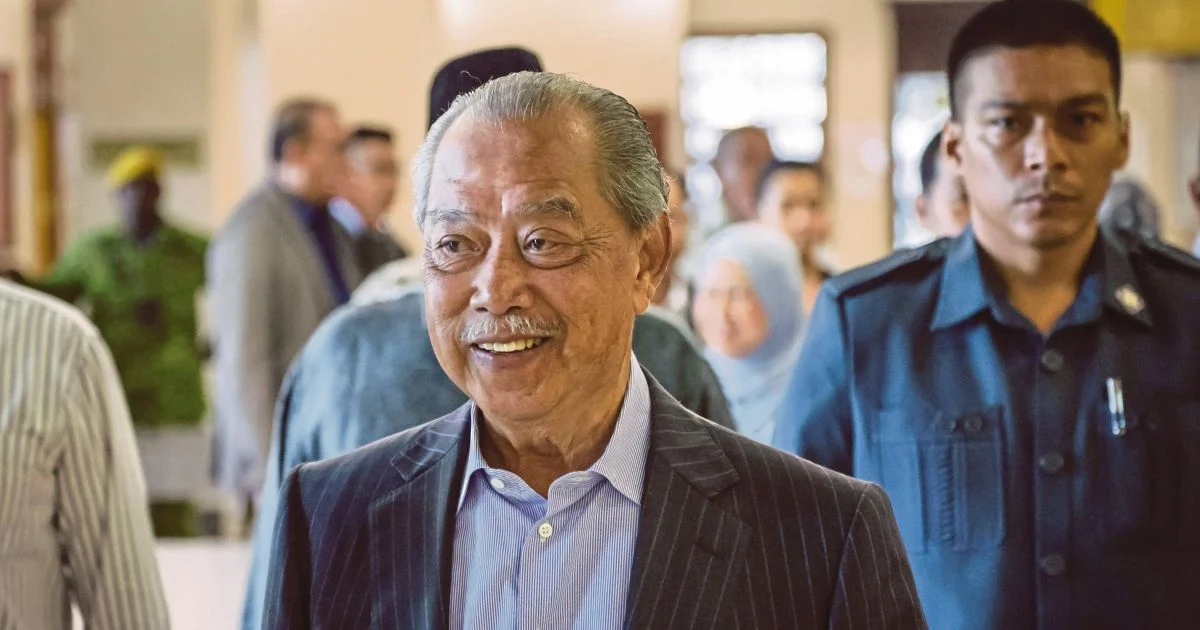
Tan Sri Muhyiddin Yassin, the president of Bersatu and a principal architect of Perikatan Nasional's political strategy, has publicly expressed optimism that the opposition coalition retains genuine opportunities to secure control of the Johor state assembly, even as it contests a limited slate of 33 seats out of 56 available positions in the forthcoming election.
Spoken during a visit to Pagoh, Muhyiddin's assertion marks a calculated confidence in PN's electoral viability and reflects the coalition's assessment of political dynamics within Malaysia's southern economic heartland. The statement carries particular weight given that Johor has long been considered an electoral stronghold, making any opposition inroads a significant political development with ramifications across the broader Malaysian political landscape.
The decision to contest 33 seats rather than all 56 represents a strategic calculation by PN's leadership. This partial candidacy typically reflects either resource constraints, targeted seat competition to avoid three-cornered contests that fragment the anti-establishment vote, or agreements within the broader opposition framework. Such restraint contrasts with traditional approaches where major coalitions attempt comprehensive coverage, suggesting PN's current organisational priorities centre on maximising returns from selected battlegrounds rather than pursuing blanket representation.
Johor's electoral significance extends well beyond the state level. As Malaysia's southern industrial and commercial hub, harbouring strategic economic importance and demographic diversity, political outcomes here influence national narratives around coalition performance and governmental legitimacy. The state has traditionally been viewed as a political laboratory where shifts in voter sentiment become apparent before spreading to other regions.
Muhyiddin's confidence, despite the limited seat contest, likely stems from calculations regarding vote consolidation and strategic positioning. PN's narrower focus allows concentration of campaign resources, party mobilisation machinery, and grassroots organisational effort in winnable constituencies where the coalition possesses competitive advantages. This targeted approach, if executed effectively, can sometimes yield proportionally stronger returns than dispersed campaigns across all available seats.
The opposition coalition's prospects also depend significantly on how effectively it can mobilise voter dissatisfaction with incumbent administrations and present itself as a credible alternative capable of governance. Public sentiment regarding economic management, service delivery, and administrative accountability becomes paramount in determining whether PN's message gains traction among Johor's diverse electorate, spanning urban professionals, rural constituencies, and industrial workers.
Internal coalition dynamics within PN similarly influence electoral outcomes. The coalition's cohesion regarding candidacy allocation, campaign messaging, and resource sharing between partner parties—including Bersatu, PAS, and other constituent organisations—shapes both campaign effectiveness and voter perception of viability. Any visible fractures or contested decisions regarding nomination strategy can undermine public confidence in the coalition's organisational capacity.
Historically, Johor elections have demonstrated how state-level contests serve as barometers for national political health. Previous electoral cycles have shown significant volatility, with voters rewarding or punishing sitting governments based on perceived performance and administration effectiveness. PN's current positioning must therefore be understood within this broader context of voter expectations and evaluations of what opposition alternatives might deliver.
The 33-seat strategy also reflects lessons PN has absorbed from previous electoral campaigns and the competitive environment it faces. Rather than engaging in resource-draining contests across all constituencies, the coalition appears to have adopted a more selective approach designed to concentrate strength where victory appears achievable. This disciplined strategy, if properly communicated to supporters and voters, demonstrates political maturity and strategic sophistication.
Muhyiddin's public statements regarding PN's viability serve important functions beyond simple optimism. Such messaging reassures coalition members, particularly grassroots party workers and candidates in contested seats, that leadership maintains confidence in ultimate success. Simultaneously, these declarations aim to shape media narratives and public perception regarding the seriousness and competitiveness of PN's challenge to incumbent governance structures.
The economic dimensions of Johor politics cannot be overlooked. As a state driving significant commercial activity and employment, voter concerns centre substantially on business conditions, employment opportunities, and infrastructure development. PN's campaign platform must address these materialist concerns while simultaneously positioning itself as a trustworthy custodian of economic management.
Looking forward, the actual mechanics of how PN translates its 33-seat contest into governmental control would likely require coalition arrangements, post-election negotiations, or independent candidate alignment. Malaysian political experience demonstrates that state-level governments frequently result from complex post-election arrangements rather than single-party majorities. PN's confidence may indeed reflect sophisticated calculations regarding which configurations of seat victories would enable coalition formation through negotiated arrangements.
The Johor election ultimately represents a significant moment for testing PN's political standing and organisational capacity at state level, particularly following its role in federal governance transitions. Muhyiddin's public confidence, whether warranted or aspirational, signals that the coalition approaches this contest with serious intent and internal conviction regarding its competitive positioning within Johor's complex electoral terrain.

