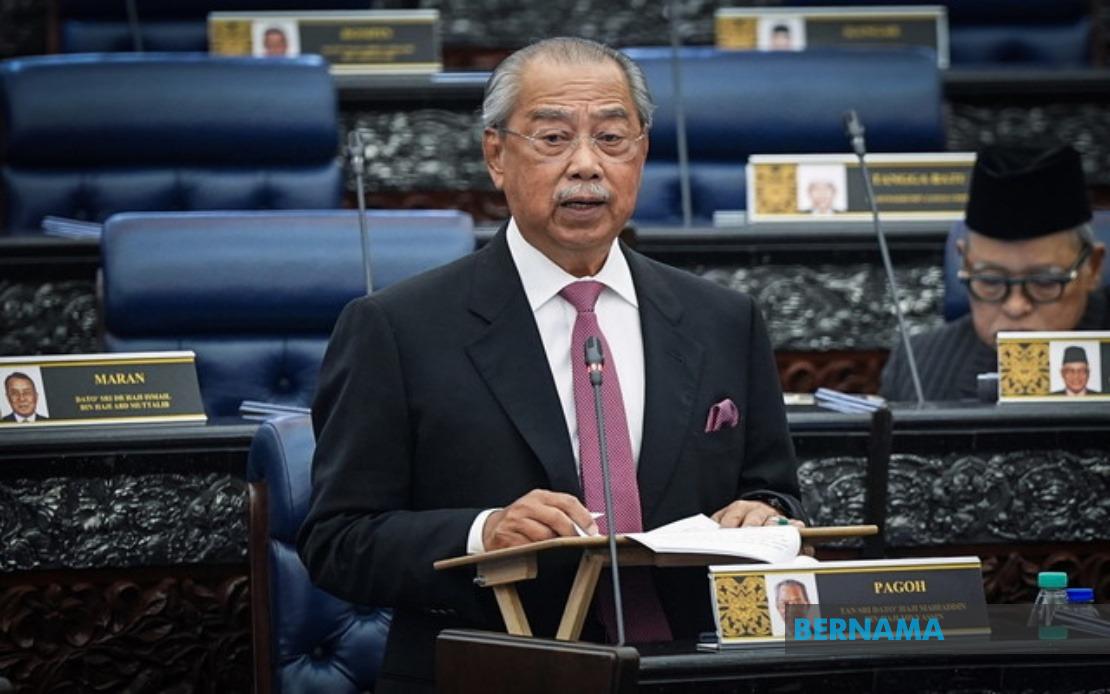
Tan Sri Muhyiddin Yassin, the Pagoh MP and former prime minister, has made an emphatic plea for the government to initiate a comprehensive and transparent forensic audit of Lembaga Tabung Haji's financial management, with completion targeted within twelve months. The call comes in response to the damaging findings contained in the Royal Commission of Inquiry report into the institution, which exposed serious lapses in governance and accountability over a critical period in the institution's history.
During parliamentary debate on the TH RCI report at the Special Dewan Rakyat Sitting, Muhyiddin, who also leads Bersatu, emphasised that such an independent investigation would be instrumental in mapping the trajectory of fund movements, uncovering instances of dishonesty, misuse of authority, and potentially careless management. The former premier stressed that accountability must extend to all individuals who bear responsibility for financial damage inflicted upon Tabung Haji, regardless of whether such harm resulted from deliberate wrongdoing, abuse of official position, or breaches of fiduciary duty. His remarks underscore growing parliamentary concern over the scale of institutional failure revealed in the inquiry.
The RCI report documented particularly troubling financial outcomes for the pilgrimage fund. Between 2014 and 2020, Tabung Haji experienced cumulative losses estimated between RM10 billion and RM12.6 billion, a staggering figure that represents both the quantum of financial deterioration and the seriousness with which lawmakers now view the situation. Muhyiddin's position reflects a hardening consensus that these findings warrant not merely procedural response but decisive, substantive intervention. He cautioned against treating the RCI conclusions lightly, demanding that government actions match the gravity of the discoveries made.
Parliamentary attention to the Tabung Haji matter has broadened considerably beyond the former premier's intervention. Syed Saddiq Syed Abdul Rahman, the MUDA representative for Muar, proposed establishing a Multi-Agency Task Force dedicated to investigating fourteen specific investments that the RCI identified as particularly problematic. His recommendation reflects recognition that a siloed approach to investigation—where individual agencies work in isolation—would likely prove inadequate for unravelling the complex networks of decision-making and financial transactions underlying these failed ventures.
Syed Saddiq's proposal envisages coordinated participation from multiple enforcement bodies, explicitly naming the Malaysian Anti-Corruption Commission, the Royal Malaysia Police, and the Inland Revenue Board as essential contributors to any investigation framework. By integrating these agencies, such a task force would theoretically overcome jurisdictional limitations and information compartmentalisation that often hampers investigations into institutional failures spanning multiple operational domains. The Muar MP further advocated that forensic audits specifically target each of the fourteen problematic investments, creating a detailed evidentiary foundation for subsequent accountability measures.
Significantly, Syed Saddiq's proposal extends scrutiny beyond Tabung Haji itself. He suggested that investigations and audits should encompass related entities—Felda, FGV, and Eagle High—implying that similar governance vulnerabilities may pervade other government-linked institutions and statutory bodies. This broader perspective reflects emerging recognition that problems at Tabung Haji may reflect systemic institutional weaknesses rather than isolated failures, a conclusion with implications for how Malaysian oversight structures might require fundamental recalibration.
BN-Simpang Renggam MP Datuk Seri Hasni Mohammad advanced complementary recommendations that emphasise transparency and ongoing parliamentary involvement. Hasni urged enforcement agencies to furnish regular progress reports on investigations stemming from RCI findings, within explicitly defined timeframes. This insistence on regular public accounting for investigative progress directly addresses concerns that previous institutional inquiries have sometimes faded from public scrutiny once initial findings were released, allowing momentum for reform to dissipate over time.
Hashni further proposed that the special parliamentary sitting should inaugurate a sustained, cross-party oversight mechanism designed to monitor implementation of the RCI's twenty-five recommendations on an ongoing basis. Rather than permitting recommendations to languish in bureaucratic processes, such continuous institutional oversight would ensure that RCI findings translate into measurable reforms. The proposal reflects frustration that Malaysian parliamentary practice has sometimes allowed significant institutional inquiries to conclude without establishing permanent accountability structures to ensure recommendations are executed.
The RCI report itself became public on July 29 following government approval, concluding an investigation into Tabung Haji's operations during the 2014 to 2020 period. The inquiry documented numerous governance deficiencies requiring institutional overhaul. As of July 30, the institution had already implemented approximately seventy-five percent of the RCI's twenty-five recommendations, suggesting that some corrective action commenced even before the full report reached public domain. However, the parliamentary debate reveals that lawmakers consider the pace and substance of implementation inadequate absent more robust external oversight and investigative pressure.
The Tabung Haji episode holds particular resonance for Malaysian society because the institution manages savings dedicated to pilgrimage by predominantly Muslim Malaysians, giving the financial losses acute religious and social dimensions. Millions of ordinary citizens entrusted their Hajj savings to an institution that failed to protect their capital, rendering the governance failures not merely technical institutional matters but breaches of fiduciary trust affecting families throughout the nation. This context helps explain the intensity of parliamentary pressure for forensic accountability and comprehensive investigation.
For Southeast Asian observers, the Tabung Haji situation illuminates broader challenges confronting statutory bodies and government-linked institutions across the region. Governance lapses, inadequate oversight, and concentration of decision-making authority within institutional management structures represent recurring vulnerabilities in organisations managing public or quasi-public funds. The Malaysian response—combining independent forensic investigation, multi-agency task forces, and parliamentary oversight mechanisms—offers a template that other regional governments might consider when confronting similar institutional failures.
The convergence of parliamentary opinion across party lines regarding Tabung Haji's investigation requirements suggests Malaysia may be moving toward establishing more rigorous institutional accountability frameworks. Whether this momentum translates into durable systemic reform or represents temporary political pressure that ultimately dissipates will become evident as implementation of the proposed forensic audit and task force mechanisms proceeds. The coming months will test whether rhetoric about transparency and accountability can overcome the inertia that often permits institutional failure to persist beneath the surface of public consciousness.

