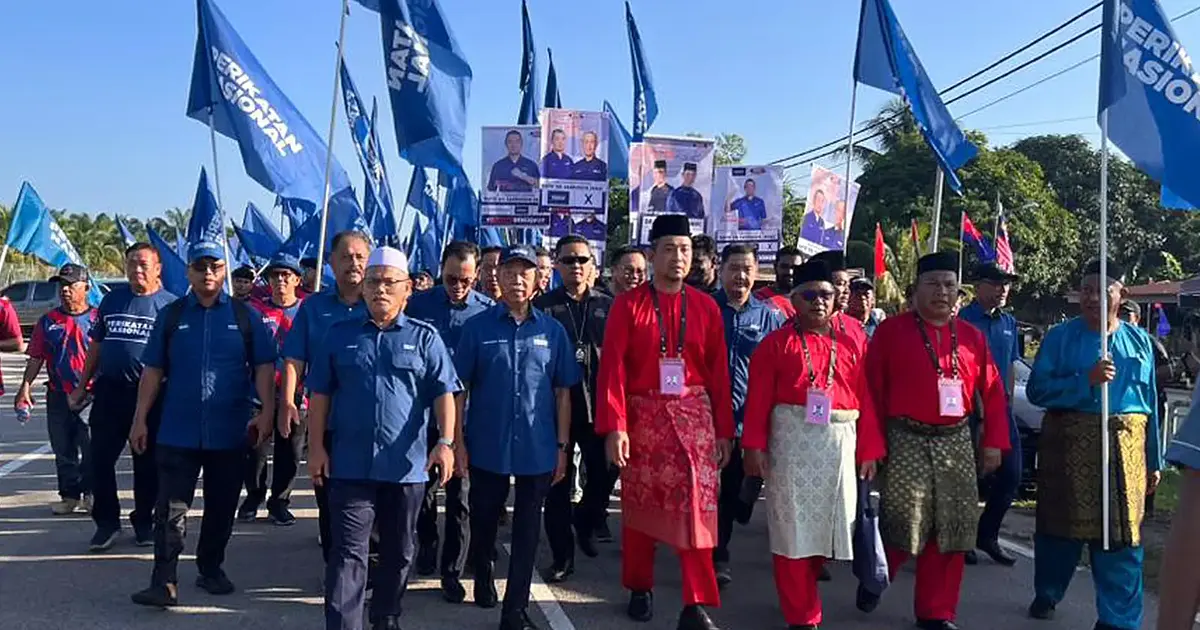
Perikatan Nasional chairman Muhyiddin Yassin threw his weight behind Bersatu's push to retain Bukit Kepong, joining a substantial crowd of grassroots supporters in a show of coalition unity as the by-election campaign gathers pace. The incumbent candidate, Dr Sahruddin Jamal, is mounting his campaign for a third consecutive term as assemblyman, building on his previous electoral victories in the constituency.
Muhyiddin's personal participation underscores the importance Perikatan Nasional assigns to this contest, particularly given the coalition's shifting dynamics across multiple state and federal battlegrounds. The gathering brought together hundreds of party workers and supporters, many of whom travelled to accompany Sahruddin as he continues his bid to consolidate support among local voters. Such visible demonstrations of leadership presence remain potent symbols in Malaysian electoral contests, signalling organisational strength and voter momentum ahead of polling day.
Dr Sahruddin's track record as a two-term assemblyman provides Bersatu with a proven candidate who has demonstrated capacity to represent the constituency. His previous victories establish baseline support that the coalition hopes to mobilise and expand in this by-election. The Bukit Kepong seat represents a meaningful test of Perikatan Nasional's standing in the state, particularly as the coalition navigates a complex political landscape characterised by shifting alliances and voter preferences across the peninsula.
The by-election itself reflects broader electoral dynamics in Malaysia, where constituency contests increasingly serve as bellwethers for national political sentiment. Competition for such seats intensifies as major coalitions seek to demonstrate resilience and appeal to voters dissatisfied with incumbent governments. For Perikatan Nasional, retaining existing seats remains strategically critical as the coalition positions itself for potential state-level opportunities and maintains relevance in national politics.
Muhyiddin's campaign involvement signals that Bersatu, Perikatan Nasional's anchor component party, retains significant organising capacity at the grassroots level, an essential asset in Malaysian electoral contests where local networks and community ties heavily influence voting patterns. The turnout of supporters at the campaign event demonstrates the mobilisation capability that remains crucial for electoral success, particularly in constituencies where margins of victory can prove narrow.
Bersatu's selection of Sahruddin reflects a preference for continuity and experience in defending the seat rather than introducing an entirely new face to voters. This strategy carries both advantages and risks: experienced candidates leverage incumbency benefits and established constituent networks, yet they may also carry baggage from previous terms that opposition parties can exploit. The coalition's calculation appears to favour Sahruddin's proven track record over untested alternatives.
The Bukit Kepong by-election also provides Perikatan Nasional an opportunity to reinforce its standing among assemblyman-level support bases across Malaysia. State assemblymen constitute crucial nodes in the party machinery, and their retention or loss in by-elections carries implications beyond individual constituencies, affecting morale within party structures and influencing perceptions of organisational vitality heading toward larger electoral contests.
Beyond the immediate contest, Muhyiddin's campaign presence reflects calculated leadership positioning within the coalition. As Perikatan Nasional chairman, his decision to commit personal time and resources to support Sahruddin's campaign communicates priorities about which seats the coalition considers defensible and worth significant investment. Such choices inevitably shape internal coalition dynamics and party member perceptions regarding strategic direction.
The by-election emerges within a broader context of electoral uncertainty affecting Malaysian politics. Voter behaviour has grown increasingly volatile, with traditional support bases fragmenting and swinging constituencies becoming more common. For Perikatan Nasional, each by-election represents an opportunity to test campaign messaging and organisational capacity while simultaneously facing heightened scrutiny from rival coalitions seeking to make electoral gains.
Sahruddin's campaign will likely emphasise his legislative accomplishments during previous terms, highlighting infrastructure development, community programmes, and constituent service. Opposition candidates will counter with narratives about unfulfilled promises, perceived governance failures, or broader critiques of Perikatan Nasional's policy positions and federal involvement. The eventual outcome will reflect voter priorities in Bukit Kepong and broader state circumstances influencing local electoral sentiment.

