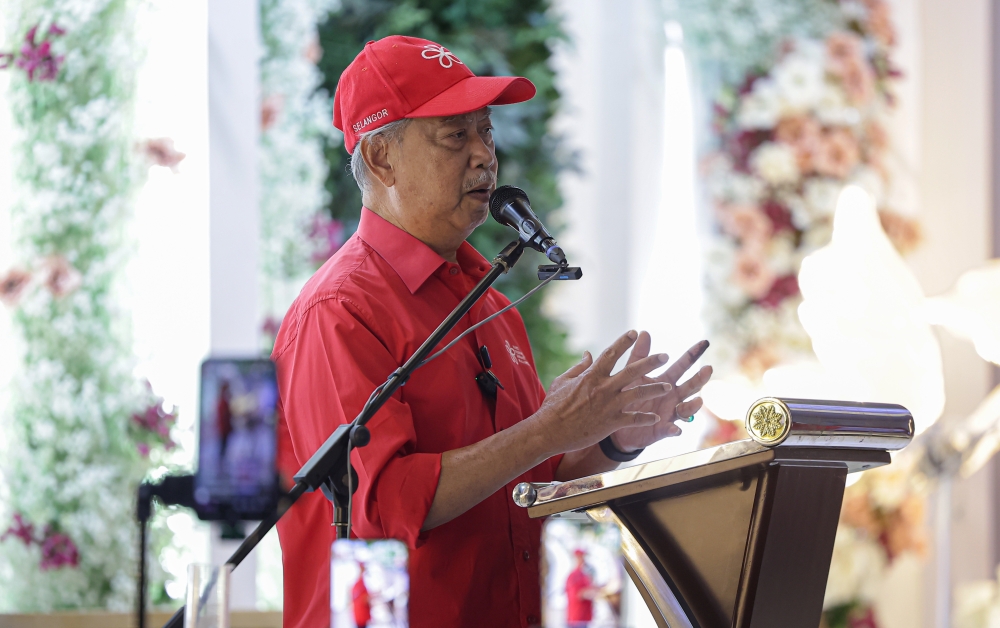
Tan Sri Muhyiddin Yassin has staked a bold claim that Parti Pribumi Bersatu Malaysia now occupies the unique position of being Parliament's genuine opposition force, a declaration that reflects the profound reshaping of Malaysia's political landscape over recent years. The assertion comes at a moment when the traditional binaries that once defined Malaysian politics have dissolved, leaving behind a fragmented parliament where alliances shift fluidly and ideological boundaries have become increasingly porous.
The context for Muhyiddin's pronouncement lies in the unravelling of the opposition coalitions that dominated recent electoral cycles. What were once unified blocs capable of presenting coherent alternatives to government have fractured into competing entities, with many former opposition figures now embedded within the governing apparatus itself. This transformation has fundamentally altered how opposition politics functions in the country, creating a vacuum where a single, uncompromising opposition force could theoretically position itself as the authentic voice of dissent.
Bersatu's journey to this claimed position has been circuitous and marked by profound strategic reversals. The party, which Muhyiddin founded before assuming the prime ministership, has navigated multiple coalitional arrangements and breakups. Its decision to contest independently rather than align with other opposition entities represents a significant departure from the collaborative approaches that characterised opposition politics in the 2018 and 2022 election cycles. This shift reflects both practical calculations about electoral viability and deeper philosophical choices about the party's political identity.
The absorption of opposition politicians into government coalitions has been particularly consequential in reshaping the parliamentary landscape. Members of parties that once stood in stark opposition to the ruling structure have crossed over into ministerial positions and government-linked roles. This migration has hollowed out traditional opposition ranks and created an uncomfortable ambiguity about which parties genuinely represent alternative governance options. For voters seeking a clean distinction between government and opposition, the current arrangement offers minimal clarity.
Muhyiddin's framing of Bersatu as the authentic opposition carries implicit criticism of other parties that he contends have compromised their oppositional credentials. By positioning his party as standing apart from coalitional arrangements and governmental incorporation, he invokes a conception of opposition purity that contrasts sharply with the pragmatic power-sharing deals that have come to characterise Malaysian politics. This rhetorical strategy appeals to voters dissatisfied with the apparent absence of clear alternatives to incumbent governance.
The implications for Malaysia's broader political culture are substantial. Opposition politics traditionally serves a checking function within democratic systems, providing institutional space for dissent, accountability mechanisms, and alternative policy frameworks. When opposition forces become fragmented and absorbed into government structures, this function deteriorates. Muhyiddin's claim, whether accurate or not, gestures towards a genuine democratic deficit: the absence of robust, cohesive institutional opposition within parliament itself.
Regionally, Malaysia's political reconfiguration carries implications for how Southeast Asian democracy operates. The region has witnessed repeated instances of opposition-to-government transitions marked by sudden reversals and unanticipated coalitional shifts. The Malaysian case demonstrates how these dynamics can erode clear institutional boundaries between government and opposition, creating confusion about political accountability and voter choice. This pattern resonates across the region as parties elsewhere grapple with similar pressures towards coalition-building and realignment.
For ordinary Malaysian voters, the current fragmentation raises practical questions about electoral strategy and political participation. Without a clearly defined opposition offering coherent alternatives, citizens encounter difficulty in translating electoral preferences into meaningful governance change. The proliferation of political entities, each claiming particular mandates or constituencies, creates a crowded field where distinguishing substantive differences requires sustained attention to policy detail rather than straightforward institutional identification.
Bersatu's independent positioning also reflects calculations about competitive space within the political market. With traditional opposition coalitions weakened and government-aligned parties dominant, a party asserting uncompromising opposition credentials might attract voters seeking a distinct alternative. This electoral logic underpins Muhyiddin's rhetorical claim, suggesting that parliamentary dynamics have shifted sufficiently to make opposition authenticity a marketable commodity.
The sustainability of Bersatu's claimed position depends substantially on whether the party can maintain consistent distance from governing coalitions while simultaneously demonstrating legislative effectiveness and policy relevance. Opposition parties that become perceived as purely oppositional without constructive contributions risk political marginalisation. Conversely, opposition engagement with governance through cross-party voting arrangements or policy collaboration risks undermining the very authenticity that Muhyiddin emphasises.
Looking forward, Malaysian politics faces an ongoing tension between the presumed benefits of coalition-building and power-sharing arrangements against the democratic costs of blurred government-opposition boundaries. Whether Bersatu ultimately succeeds in consolidating itself as a genuine alternative political force depends not merely on rhetorical positioning but on sustained organisational strength, consistent policy articulation, and demonstrated ability to represent constituencies currently unserved by existing political arrangements.

