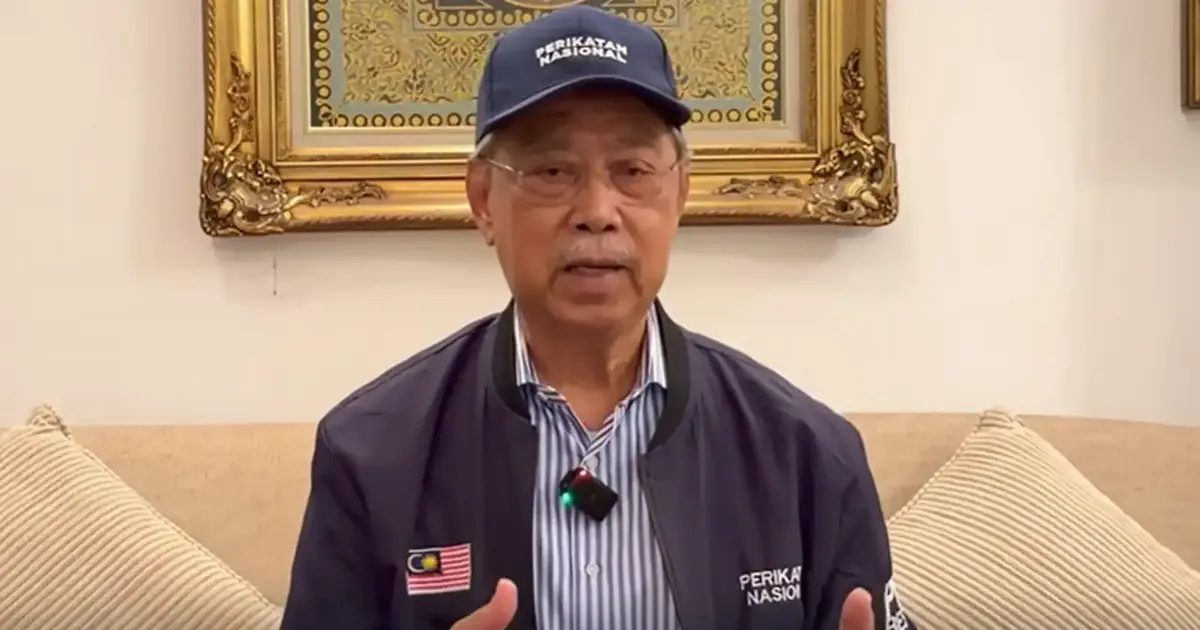
Muhyiddin Yassin, the president of Bersatu and a former menteri besar of Johor, is making a direct appeal to voters in his home state to grant Perikatan Nasional a renewed opportunity in upcoming political contests. Leveraging his deep connections to Johor, Muhyiddin is positioning himself as a native son whose political journey has consistently centred on the welfare and interests of ordinary Malaysians, rather than narrow partisan or personal advancement.
This strategic messaging reflects a broader effort by Perikatan Nasional to rebuild electoral support in a state that has historically been crucial to national political dynamics. Johor's 56 parliamentary seats represent roughly 17 percent of the 222-seat Dewan Rakyat, making it indispensable to any coalition seeking to form or maintain government. The state's political trajectory has significant ramifications not only for federal power-sharing arrangements but also for Malaysia's overall political stability and governance direction.
Muhyiddin's appeal emphasises his provincial credentials and long association with Johor politics. His tenure as menteri besar, coupled with subsequent positions in national government, has given him a visible track record that voters can evaluate. By framing his work as fundamentally about serving the people rather than accumulating power or wealth, he is attempting to counter perceptions that he operates primarily for elite interests. This approach acknowledges that Malaysian voters, particularly in states like Johor, increasingly demand tangible evidence of leadership's commitment to improving living standards, delivering basic services, and addressing economic hardship.
The timing of this appeal is significant. Perikatan Nasional's political fortunes have fluctuated considerably since its emergence as a coalition several years ago. The bloc has experienced both periods of apparent strength and phases of fragmentation or loss of momentum. By returning to his Johor base and invoking his status as a familiar, recognisable political figure with state-level experience, Muhyiddin is attempting to stabilise support among voters who may be undecided or disillusioned with other political options.
For Malaysian voters outside Johor, Muhyiddin's campaign strategy offers a window into how Perikatan Nasional intends to contest elections in crucial battleground states. The coalition's ability to succeed hinges not merely on ideological appeals but on its capacity to present credible leadership with demonstrable local attachment and proven governance experience. Muhyiddin's positioning as a son of Johor—rooted in the state's soil, familiar with its distinctive political culture, and committed to its unique interests—represents an attempt to transcend the impression of distance or detachment that sometimes afflicts national-level politicians.
The emphasis on serving people rather than pursuing personal ambition also reflects recognition of contemporary Malaysian political consciousness. Voters have demonstrated decreasing patience with leaders perceived as self-interested or primarily focused on maintaining privilege. By explicitly centering his narrative on the population's needs and framing his political struggle as fundamentally about representation and improvement of ordinary lives, Muhyiddin is attempting to align himself with voter expectations regarding authentic leadership.
Johor's particular political significance extends beyond its parliamentary numbers. The state has traditionally wielded outsized influence in determining national coalitional arrangements. Whoever commands strong support in Johor gains leverage in federal coalition negotiations and government formation. Additionally, Johor's economic importance—its proximity to Singapore, its role in regional commerce, and its developing industrial base—means that state-level political decisions have cross-border implications affecting Malaysia's standing in Southeast Asia and its relationship with its most significant bilateral partner.
Peikatan Nasional's attempt to secure another electoral opportunity in Johor must overcome several challenges. The coalition competes against Pakatan Harapan, Barisan Nasional, and various independent candidates, all competing for voter attention and support. The fragmentation of Malaysia's political landscape means that winning requires not only persuading core supporters to remain loyal but also attracting swing voters and first-time voters with compelling visions of governance and demonstrable competence.
Muhyiddin's invocation of his Johor identity and his reframing of political struggle around service to ordinary citizens represents a calculated attempt to rebuild Perikatan Nasional's credibility in a state where the coalition's previous performance may have disappointed some voters. The success of this strategy will depend on whether Johoreans view his record as genuinely serving their interests or whether they see his appeals as rhetorical devices intended to obscure other priorities. As Malaysia's political dynamics continue to evolve, the outcome of contests in Johor will significantly shape both state governance and the national power balance for years to come.

