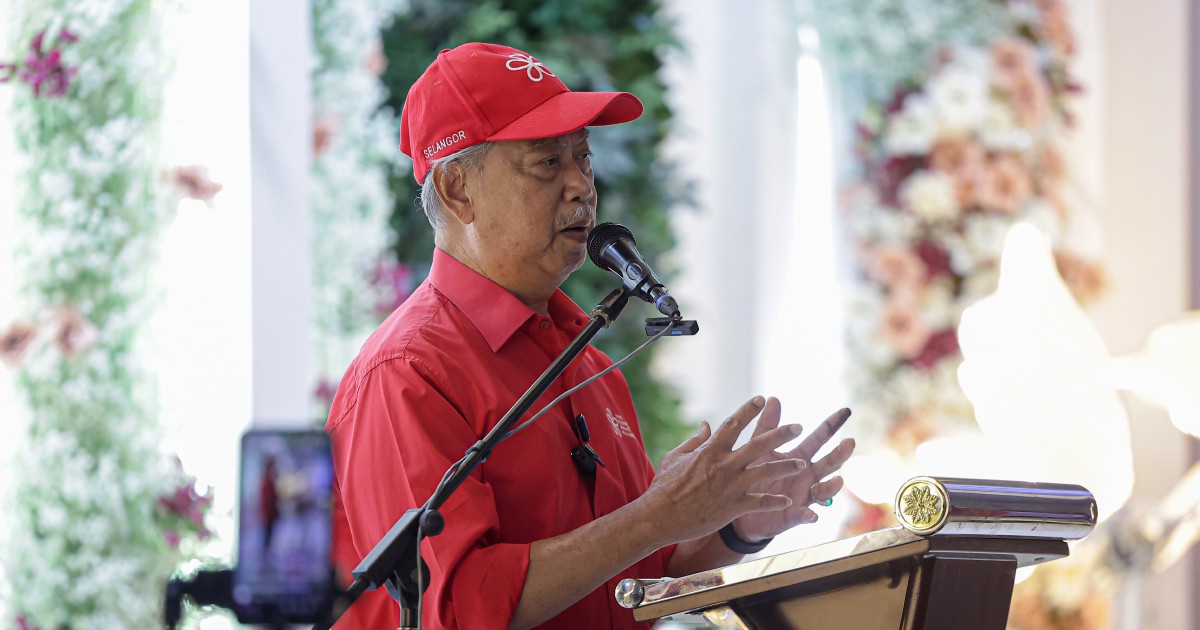
Tan Sri Muhyiddin Yassin, president of Bersatu, has responded sharply to accusations from Umno vice-president Datuk Seri Mohamed Khaled Nordin that his party is playing the role of a 'spoiler' by participating in the Negri Sembilan election. The exchange highlights mounting tensions within Malaysia's Malay-Muslim political coalition as state-level contests force parties to confront fundamental questions about power-sharing and electoral strategy.
Muhyiddin's pushback signals Bersatu's determination to maintain electoral independence despite pressure from larger partners in the government coalition. The characterisation as a 'spoiler' implies that Bersatu's presence fragments the Malay-Muslim vote and undermines the broader coalition's chances of retaining control of the state. However, Muhyiddin's rejection of this framing reflects his party's conviction that it has earned the right to contest seats and compete for voter support on its own terms, a position that carries significant weight given Bersatu's role in several previous government formations.
Negri Sembilan has long been a Umno and Barisan Nasional stronghold, making it a natural flashpoint for intra-coalition disputes. When coalition partners compete against each other at the state level, resources, messaging, and grassroots energy become dispersed across multiple candidates promoting similar ideologies and policies. This fragmentation can indeed benefit opposition parties that maintain unified electoral machinery, which likely explains Khaled's concern. However, the dynamic also reveals deeper anxieties about representation and the principle of democratic competition within the broader coalition framework.
Bersatu's emergence as a significant political force has complicated the traditional bipolar structure of Malaysian politics. The party, which traces its lineage to the 2020 collapse of Mahathir Mohamad's government and Muhyiddin's subsequent rise to the premiership, has cultivated a distinct political brand while simultaneously participating in both federal and state coalitions. This dual positioning occasionally creates friction with established players like Umno, which has long treated Negri Sembilan as part of its electoral patrimony.
The timing of Khaled's 'spoiler' remark and Muhyiddin's response matters considerably. Election season amplifies existing tensions as parties seek to position themselves as the true representatives of Malay-Muslim interests. Khaled's assertion implicitly argues that voter consolidation around established parties serves the community better than fragmentation across multiple contenders. Muhyiddin's rebuttal counters that genuine political competition, even within a coalition context, strengthens democracy and ensures accountability.
For Malaysian voters, particularly those in Negri Sembilan, the debate reflects a broader tension between two competing visions of how the coalition should function. Should it operate as a monolithic bloc that minimises internal competition, or should member parties be permitted to contest against each other while maintaining broader unity on matters of national governance? This question has no easy answer, as both approaches carry advantages and drawbacks.
The exchange also underscores Bersatu's precarious political position. While the party holds significant leverage in federal coalitions due to its parliamentary numbers, it remains numerically smaller than Umno in most state contexts. Participating in elections where it might lose seats carries reputational risks, yet withdrawing from contests could signal weakness and diminish the party's claim to be a full coalition partner. Muhyiddin's combative response suggests he has chosen to embrace competition rather than accommodation, a strategy that may resonate with party members but could complicate broader coalition harmony.
Regional observers should note that Negri Sembilan's election carries implications beyond the state itself. How this dispute between Bersatu and Umno unfolds will send signals to other coalition partners and opposition parties about the stability and cohesion of Malaysia's governing arrangements. A sharp electoral contest between coalition members could embolden the opposition to exploit divisions, while excessive harmony might undermine Bersatu's independence and invite questions about its political relevance.
Khaled's terminology—describing Bersatu as a 'spoiler'—carries a distinctly negative connotation that Muhyiddin would naturally resist. The phrase suggests Bersatu is interfering with a predetermined outcome rather than participating as a legitimate contender. This rhetorical choice reflects Umno's traditional confidence in its dominance within coalition structures, a confidence that has eroded somewhat with the rise of newer parties and shifting voter preferences.
The fundamental issue here transcends Negri Sembilan's state politics. It touches on how Malaysian political coalitions adapt to democratisation pressures and the emergence of new political actors. Umno's presumption that parties should defer to its interests in certain territories represents an older model of consensus-based coalition management. Bersatu's insistence on contested participation reflects newer expectations of intra-coalition competition.
For Southeast Asian political analysts, the Muhyiddin-Khaled exchange demonstrates how coalition governments navigate internal contradictions between maintaining unity and accommodating democratic competition. Malaysia's coalition structures have proven resilient partly because member parties can compete at state level while cooperating at federal level, creating a safety valve for political ambitions and preventing any single party from monopolising power completely.
As Negri Sembilan moves toward polling day, both Bersatu and Umno face pressure to demonstrate they can manage this conflict maturely. The electorate will ultimately determine whether fragmented coalition candidates lose to a more unified opposition or whether competitive primary-style elections strengthen each party's respective slate. Either outcome will shape how Malaysian coalitions conduct themselves in future contests, making this exchange about far more than state representation.

